
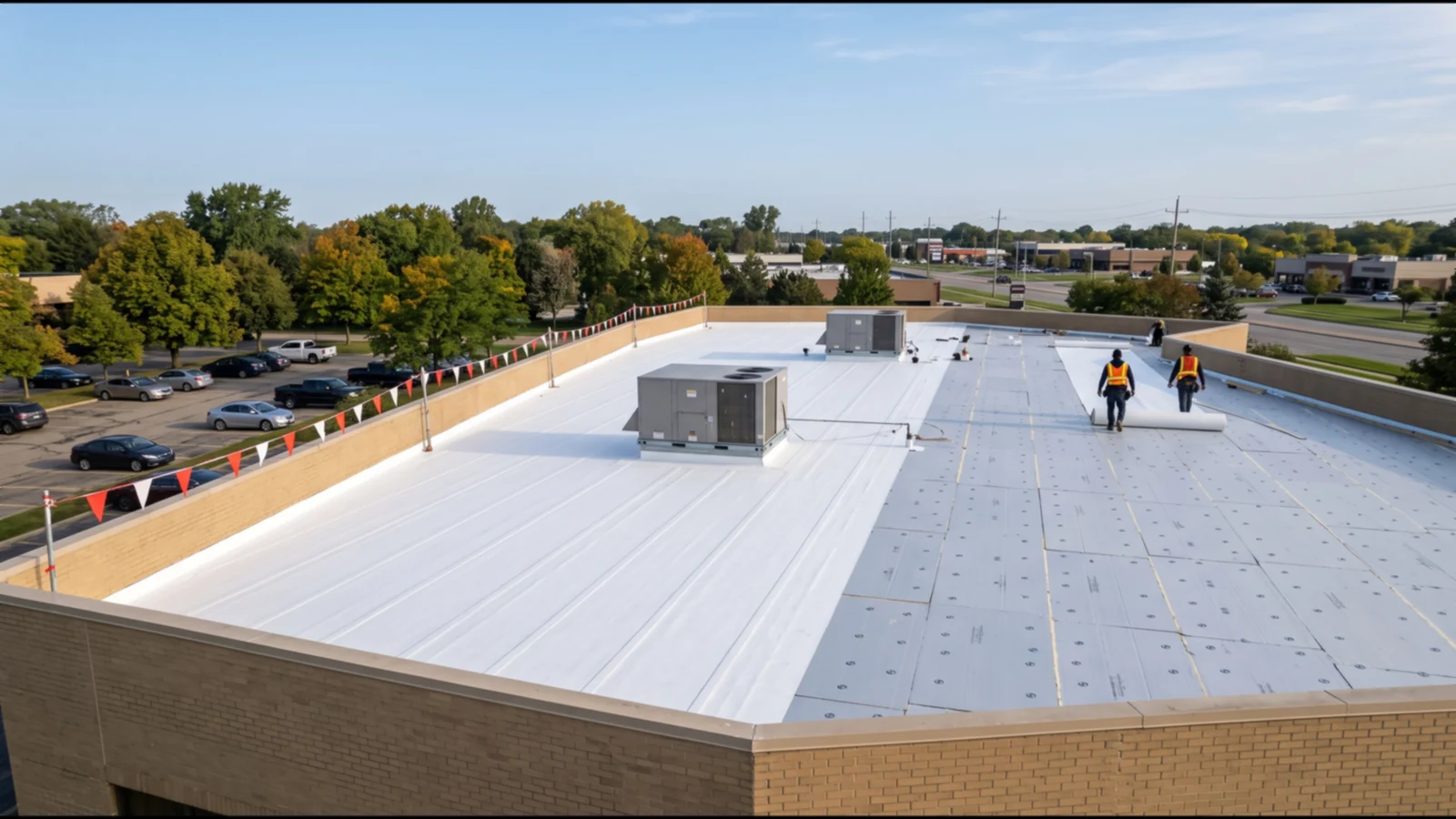
Built-Up Roofing Systems for Troy Buildings
Every built-up roof is made from the same three things: bitumen, felt and a surface. The type of each one changes how the roof behaves and what a repair involves.
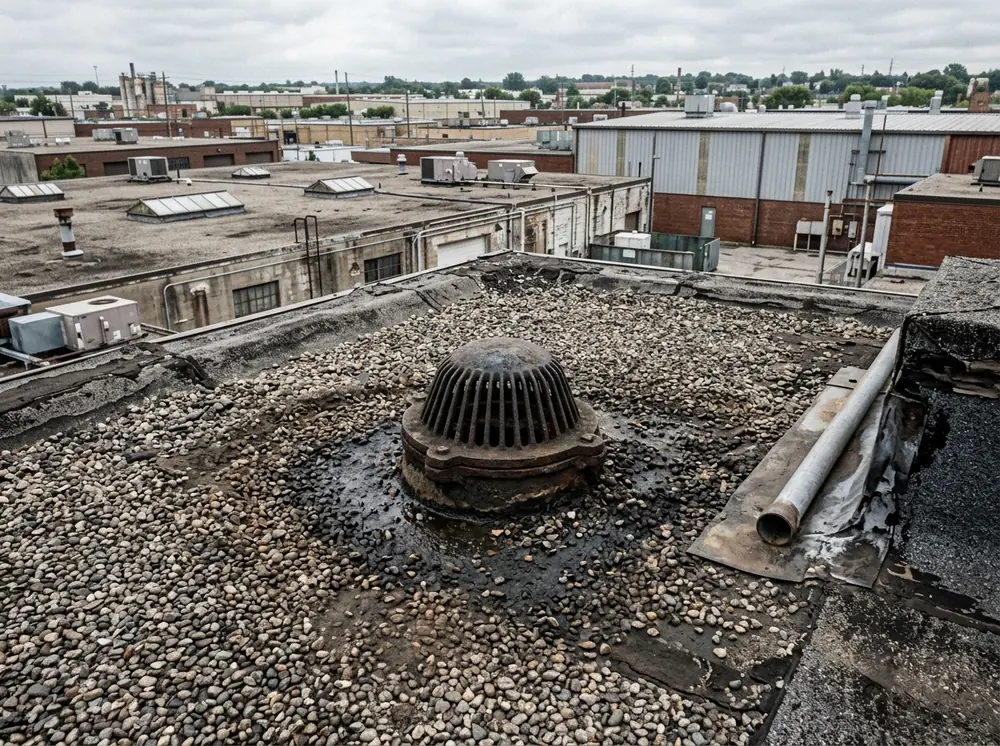
Hot Asphalt BUR with Gravel (Tar and Gravel)
What most owners call a tar and gravel roof is usually asphalt, not tar. The asphalt is melted in a kettle and mopped between plies, then a heavier flood coat holds the gravel. Roofing asphalt is graded under ASTM D312 into four types by how readily it flows at roof temperatures:
- Type I (dead level): the softest, most prone to flow, with good self-healing.
- Type II (flat): moderately prone to flow.
- Type III (steep): relatively resistant to flow, for steeper slopes.
- Type IV (special steep): the hardest, for hot climates and steep slopes.
Types III and IV make up about 95% of the hot asphalt sold for roofing, according to an IIBEC article. The grade matters because asphalt that is too soft for the slope can cold-flow on a hot summer day. The same article puts a typical built-up ply at about 25 pounds of asphalt per roofing square, roughly the thickness of a dime.
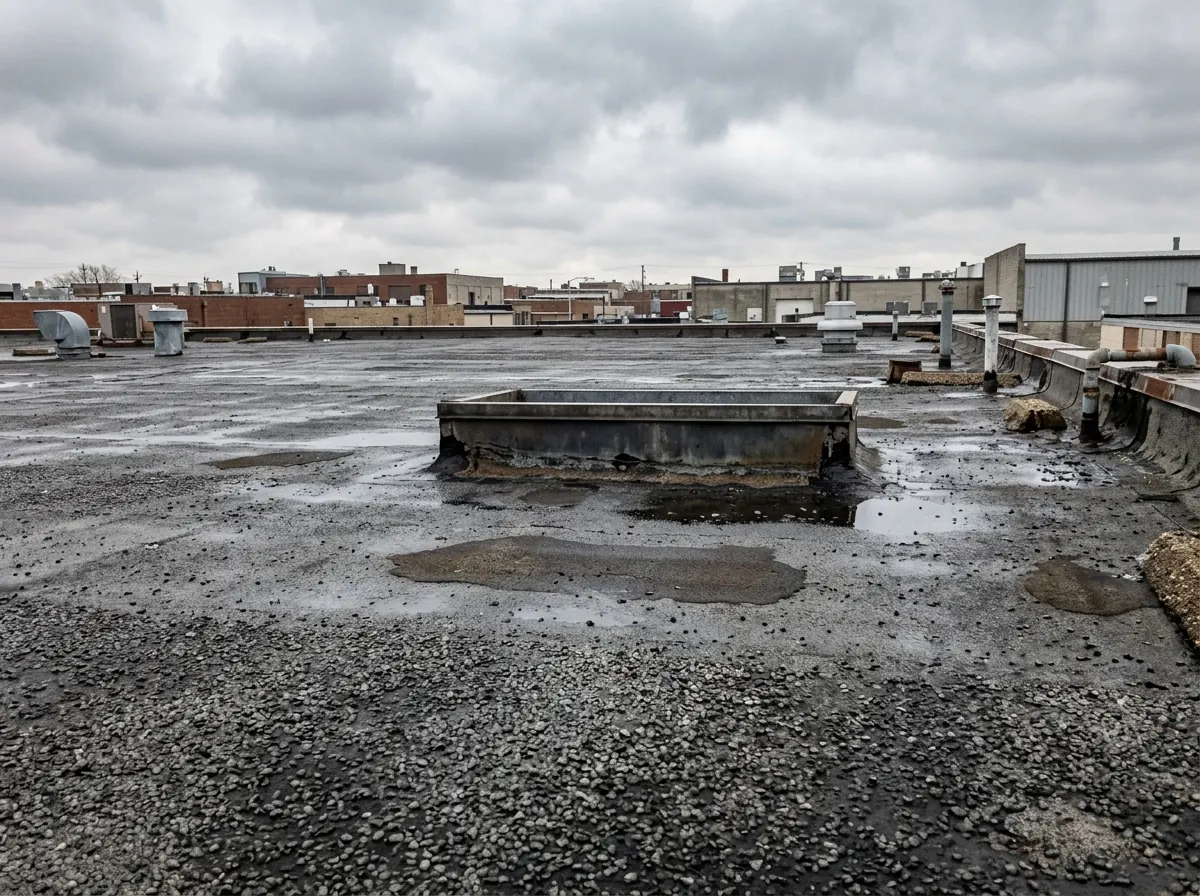
Coal-Tar Pitch BUR
Coal-tar pitch is a by-product of turning coal into coke, not of refining petroleum, and its chemistry differs from asphalt's. The code allows coal-tar roofs a lower minimum slope than other membranes; the slope rules are on commercial roof insulation. The code calls for coal-tar pitch to ASTM D450, Type I or II. ASTM D450 also has a Type III, reformulated for lower fumes, which the code's built-up roofing table doesn't list.
Before any repair, have the roofer confirm whether your roof is pitch or asphalt. Both count as bitumen, but they are incompatible for roofing purposes, so the repair materials have to match the roof.
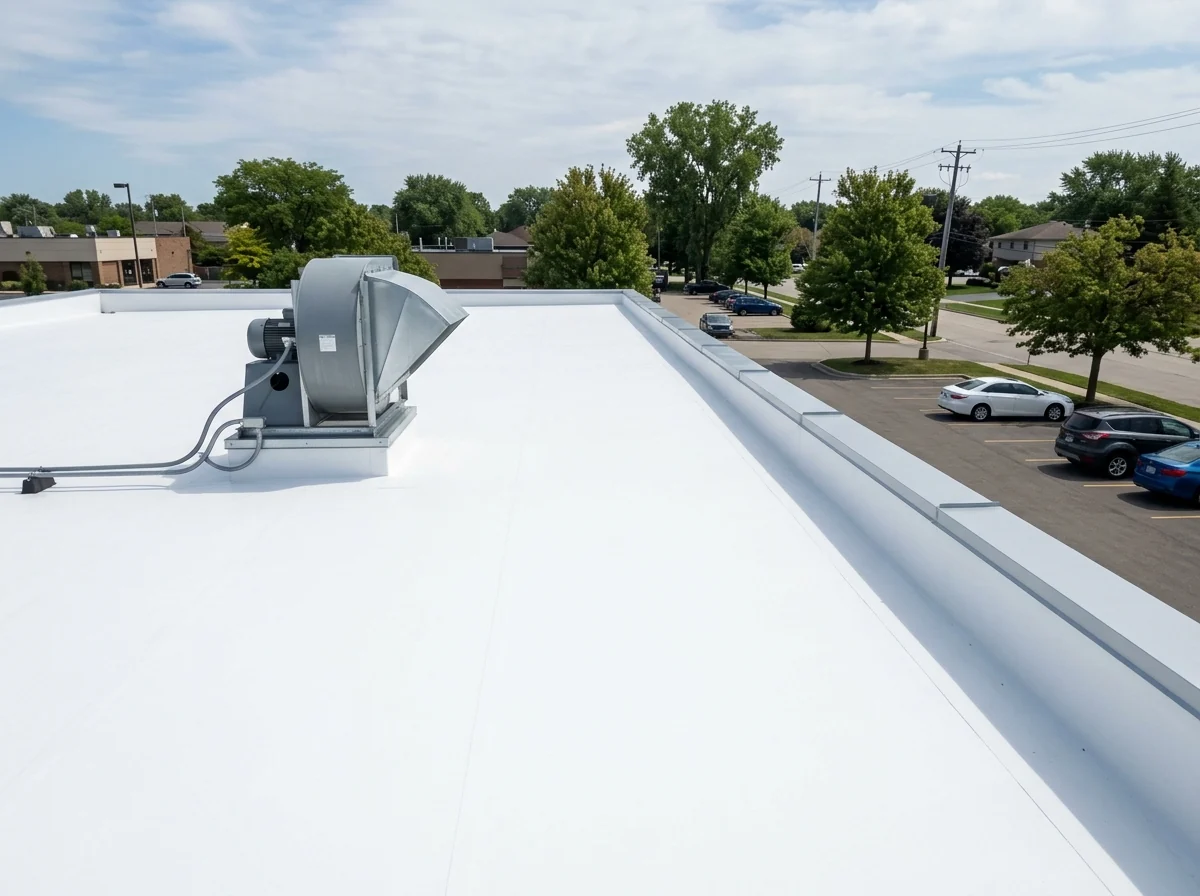
Smooth-Surfaced and Cap-Sheet BUR
Instead of gravel, the top ply can be a mineral-surfaced cap sheet (ASTM D3909) or a smooth surface finished with a coating. These roofs are lighter than gravel and easier to inspect, since you can see the membrane. Glass-fiber felts have mostly replaced the old rag felts, sold under ASTM D2178 as Type IV and Type VI with minimum breaking strengths of 44 and 60 pounds per inch.
Cold-Process BUR
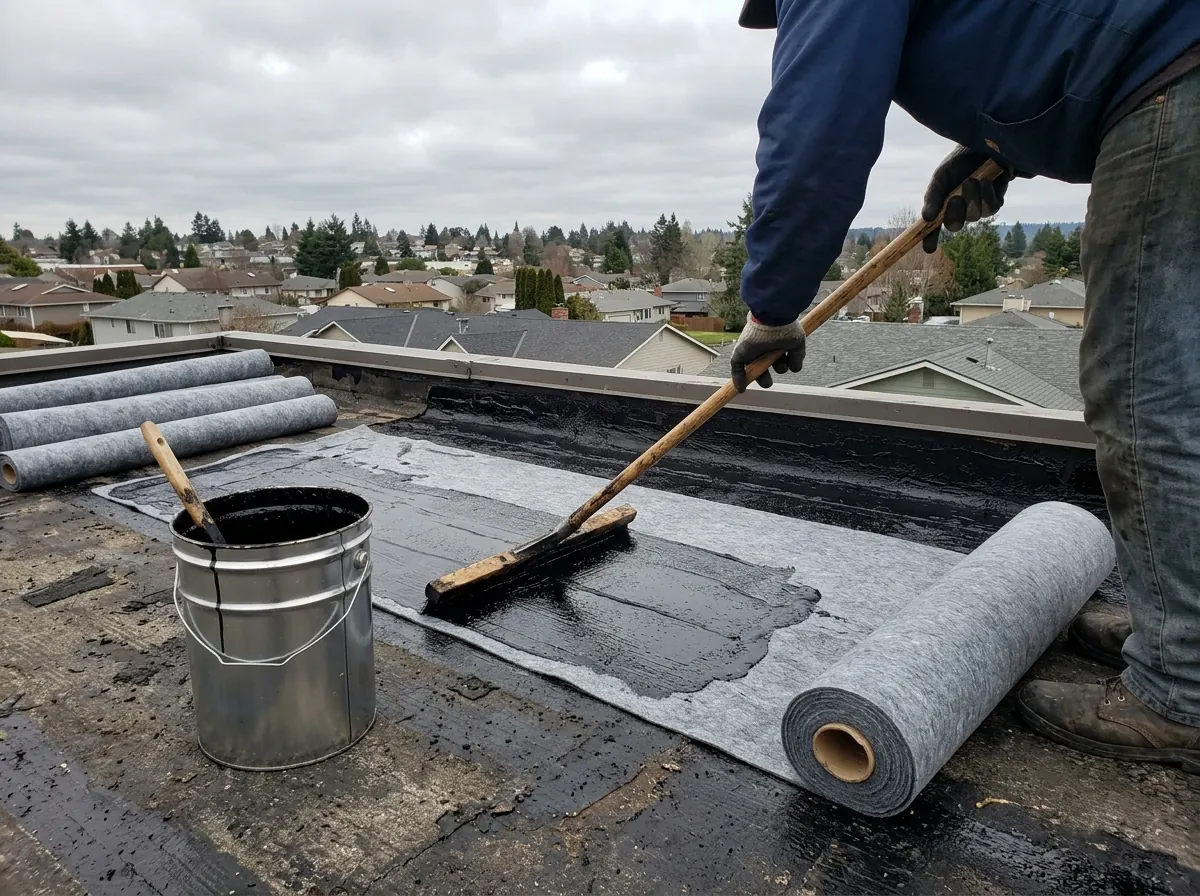
Cold-process systems set plies of fiberglass or polyester felt in a cold adhesive, solvent-based or water-based, in place of hot asphalt. No kettle means no open flame and no hot asphalt fumes near air intakes, which suits a school or an occupied office.
Why Troy building owners call Troy Commercial Roofing
- Free, no-obligation roof assessment and estimate
- Written scope and price before any work starts
- One local commercial roofing contractor per request, not a call list
- No charge to building owners for the referral
Tar and Gravel Roof Repair
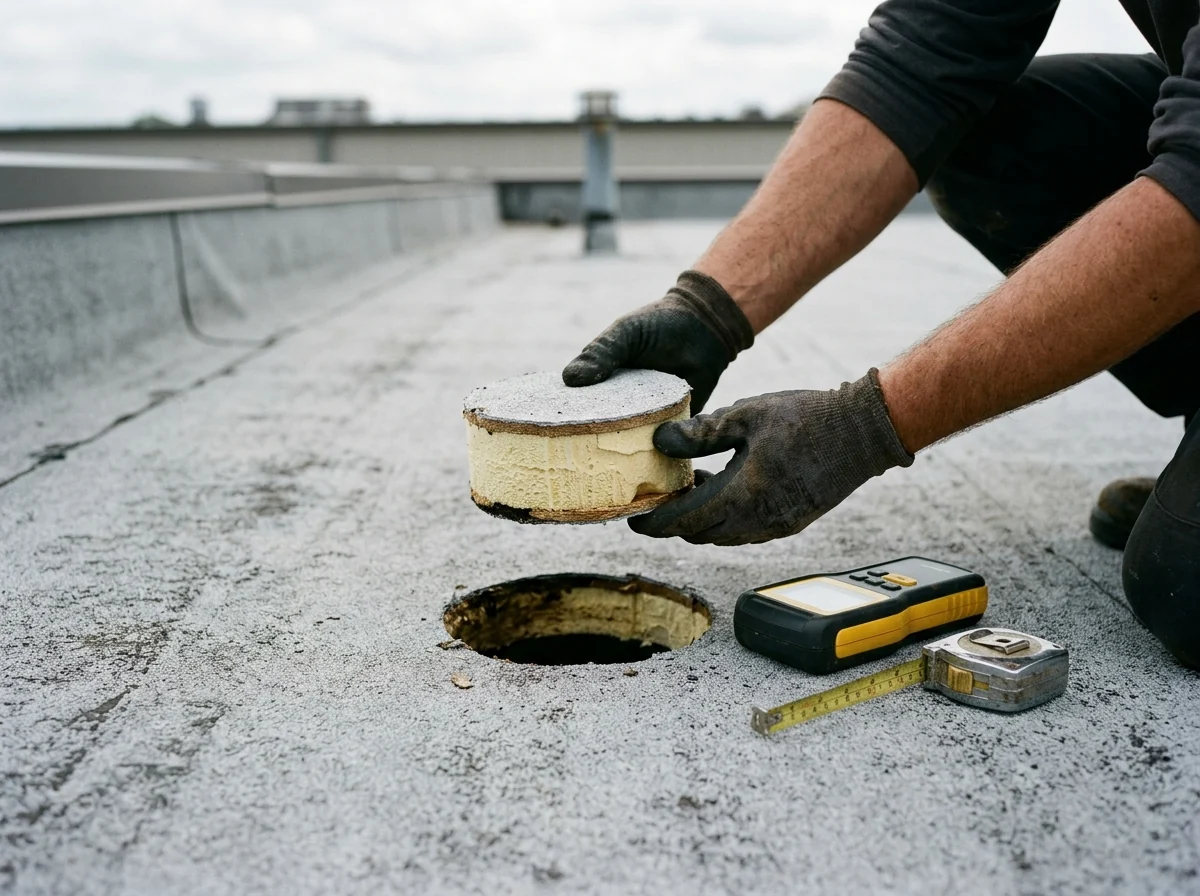
A gravel roof hides its problems. Leaks usually trace to blisters, cracked flashings, bare spots where wind or foot traffic moved the gravel, and splits at gravel stops along the edge. A good repair scrapes back the gravel, cuts out the damaged plies, builds new plies in with matching bitumen and embeds gravel again.
Ask what asphalt grade the repair will use and whether it suits your slope. Ask, too, for the edge metal to be priced as a separate line: on a reroof, the code bars reinstalling rusted or damaged metal edging and reusing old built-up roof aggregate. If repairs are piling up, the next question is replacement or a recover; the code's limits on recovering are on our commercial roof replacement page, and a moisture survey tells you how much of the insulation is still dry.
Asbestos and Older Built-Up Roofs in Troy
Older built-up roofs and their flashings can contain asbestos, and EPA's rule for roof removal turns on how the roofing is cut as well as how much there is. EPA treats removing 5,580 square feet or more of nonfriable asbestos roofing with a rotating-blade roof cutter as creating enough regulated material for its asbestos rule to apply. Slicing methods that don't sand, grind, cut or abrade the roofing fall outside it.
A lab sample before tear-off is cheap insurance. Ask the roofer to take cores for testing, and to state in the bid which removal method they'll use if the result comes back positive.
Built-Up Roofing Cost and Replacement Options
HomeGuide lists built-up roofing at $3.50 to $7.50 per square foot installed, a published national estimate. Replacing a failing BUR doesn't have to mean another BUR. The realistic choices:
New built-up roof
Same system and same details, suited to buildings where the deck and edge heights were designed around it.Modified bitumen
The same asphalt family in fewer, factory-made plies; GAF, for one, sells SBS, APP and BUR as related asphaltic systems. See modified bitumen roofing.Single-ply
TPO, EPDM or PVC over new insulation, with no gravel to carry. A PVC sheet can't sit directly on old asphalt; see PVC roofing.Coating
If the BUR is dry and sound, a restoration may add years for less.
Call or send the form with the roof's age and any leak history, and we'll forward it to an independent roofer familiar with built-up roofs, who can tell you which of these options fits your building.