
Roof Snow Removal Services for Troy Buildings
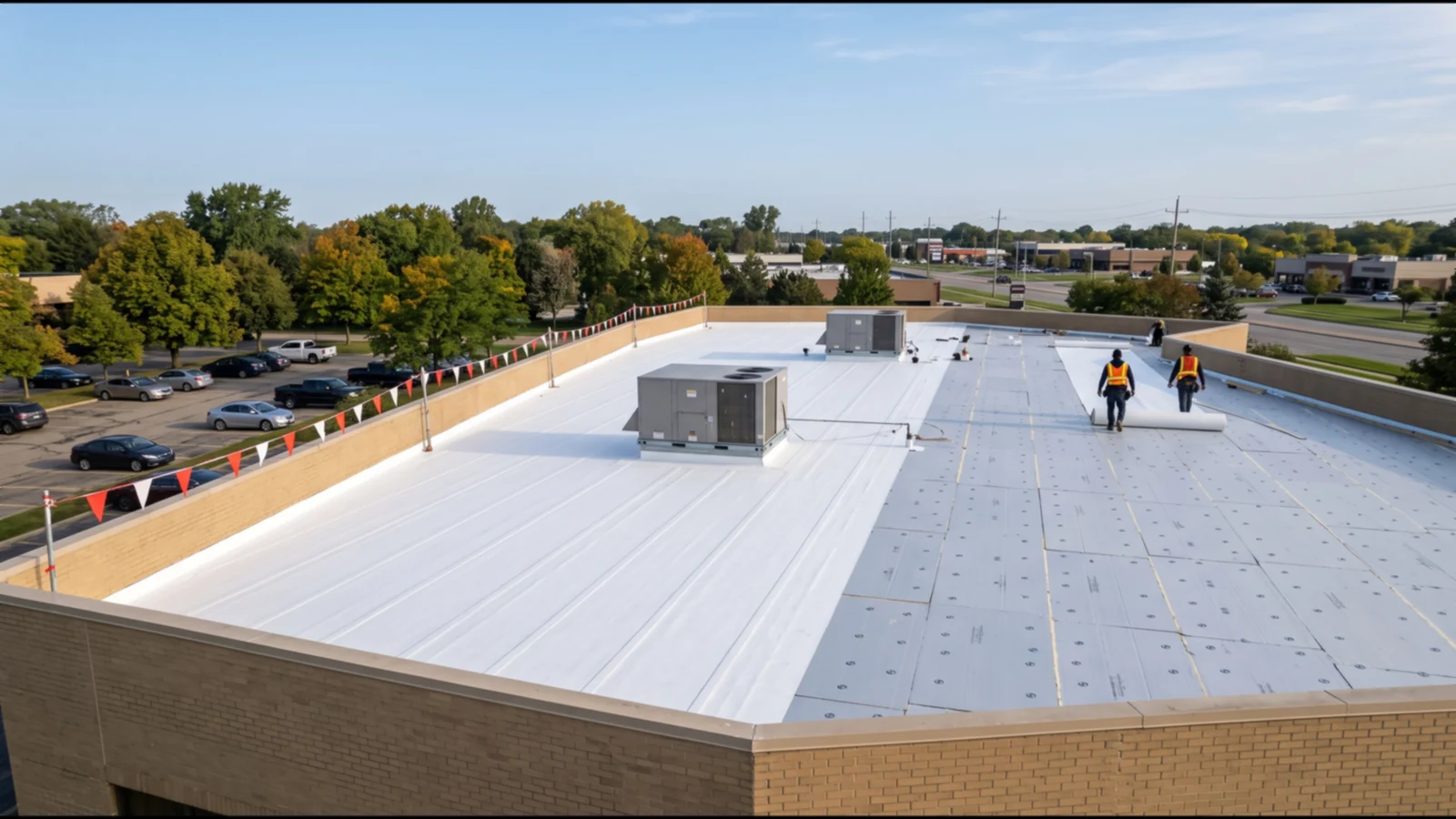
A flat roof doesn't shed snow the way a pitched one does. It keeps it, and the wind moves it around. Most of this page leans on FEMA's Snow Load Safety Guide, which singles out warehouses, manufacturing plants and big-box stores as the buildings that most need a plan.
Drift Removal at Parapets, Roof Steps and Rooftop Units
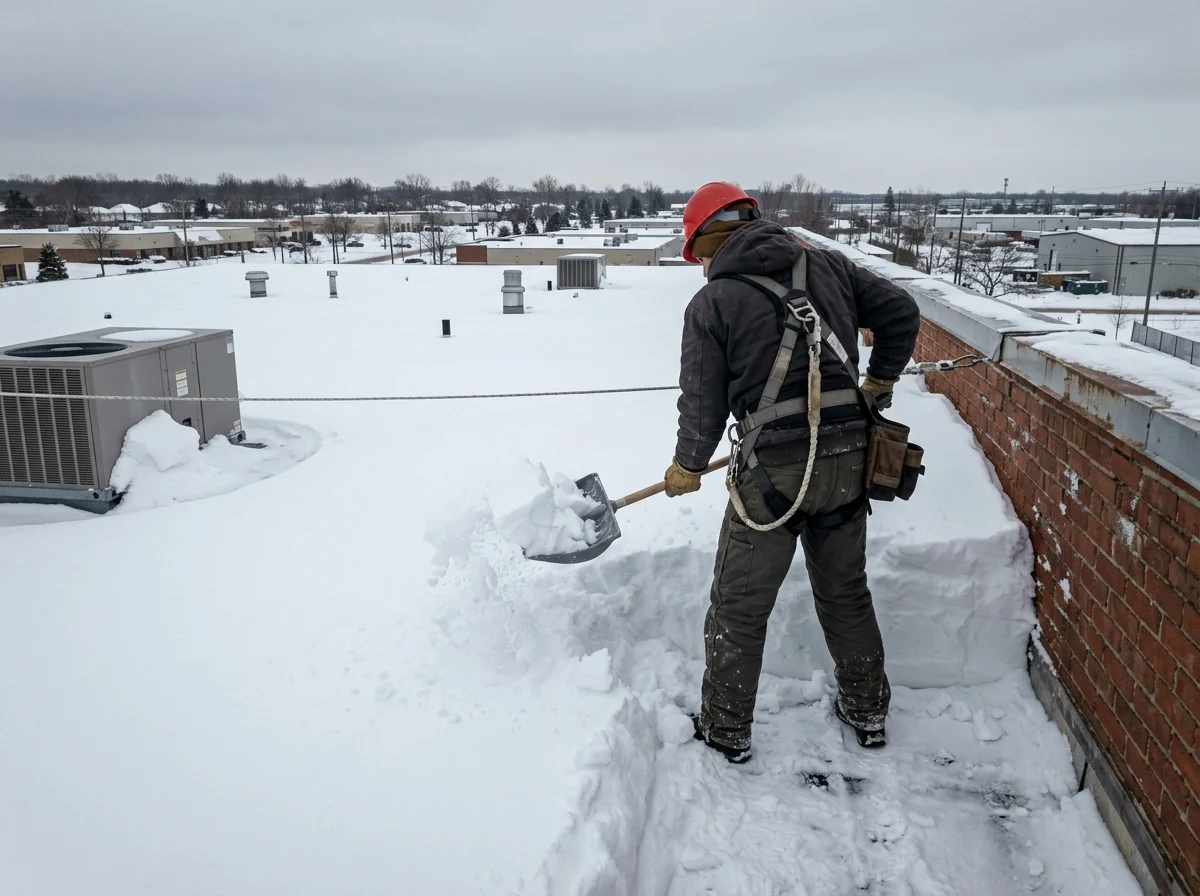
Wind picks snow up off the open roof and drops it in sheltered spots: on a lower roof in the wind shadow of a taller one, and against parapets, rooftop units and neighboring walls. The guide notes that the snow there is deeper, and the load heavier, than anywhere else on the roof. Drifts come off first. Rooftop units deserve extra attention, since equipment added during a renovation may never have been checked by an engineer, and it takes up capacity the roof would otherwise have for snow.
Full-Roof Snow Load Reduction
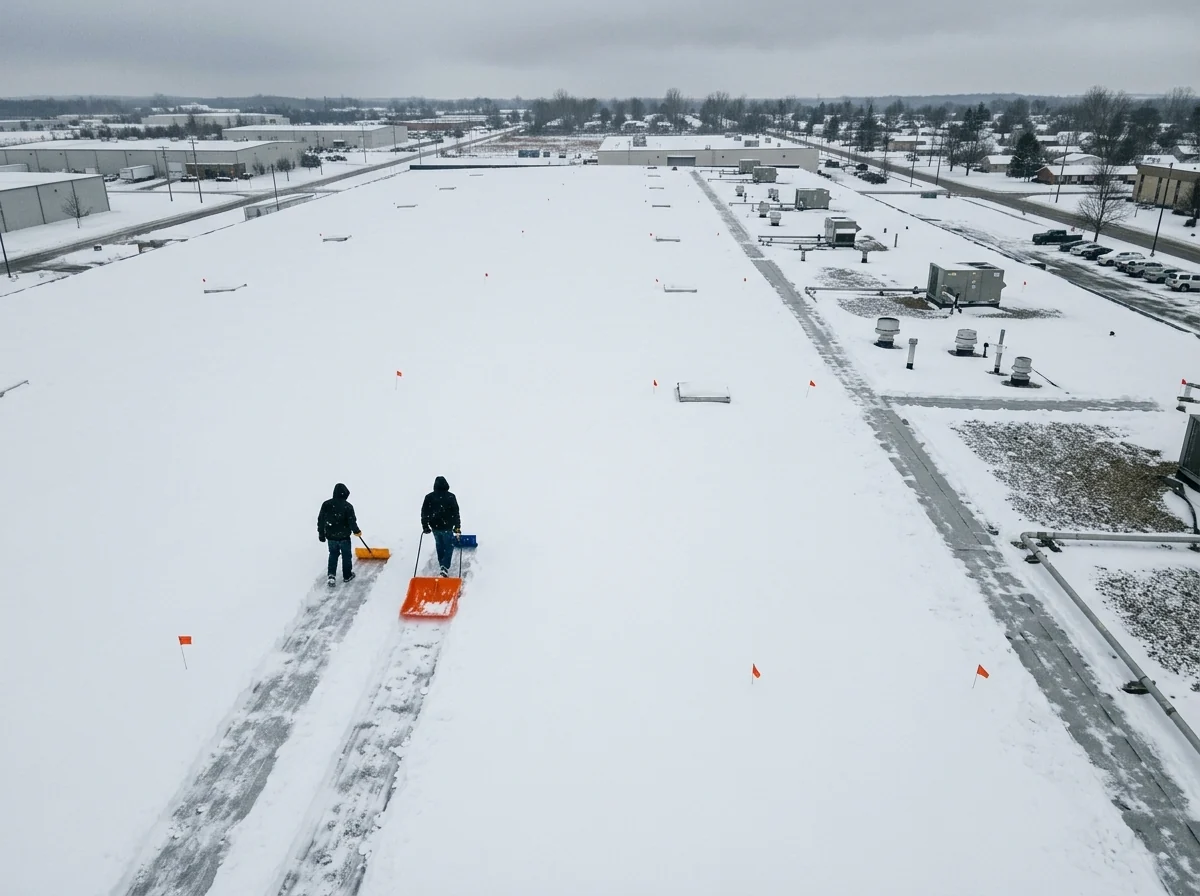
Once the drifts are down, the crew works outward from the center of the roof, moving snow in the direction of the main structural members, which the guide specifies to avoid loading the roof unevenly. At least 2 inches stay on the roof to protect the membrane. Nothing gets piled on the roof; snow goes to a marked area on the ground, away from exits, downspouts, vents and equipment. The guide rules out snow blowers and other mechanical equipment, picks and metal shovels, because the damage to the membrane and rooftop gear outweighs the speed.
Clearing Drains, Scuppers and Buried Hazards
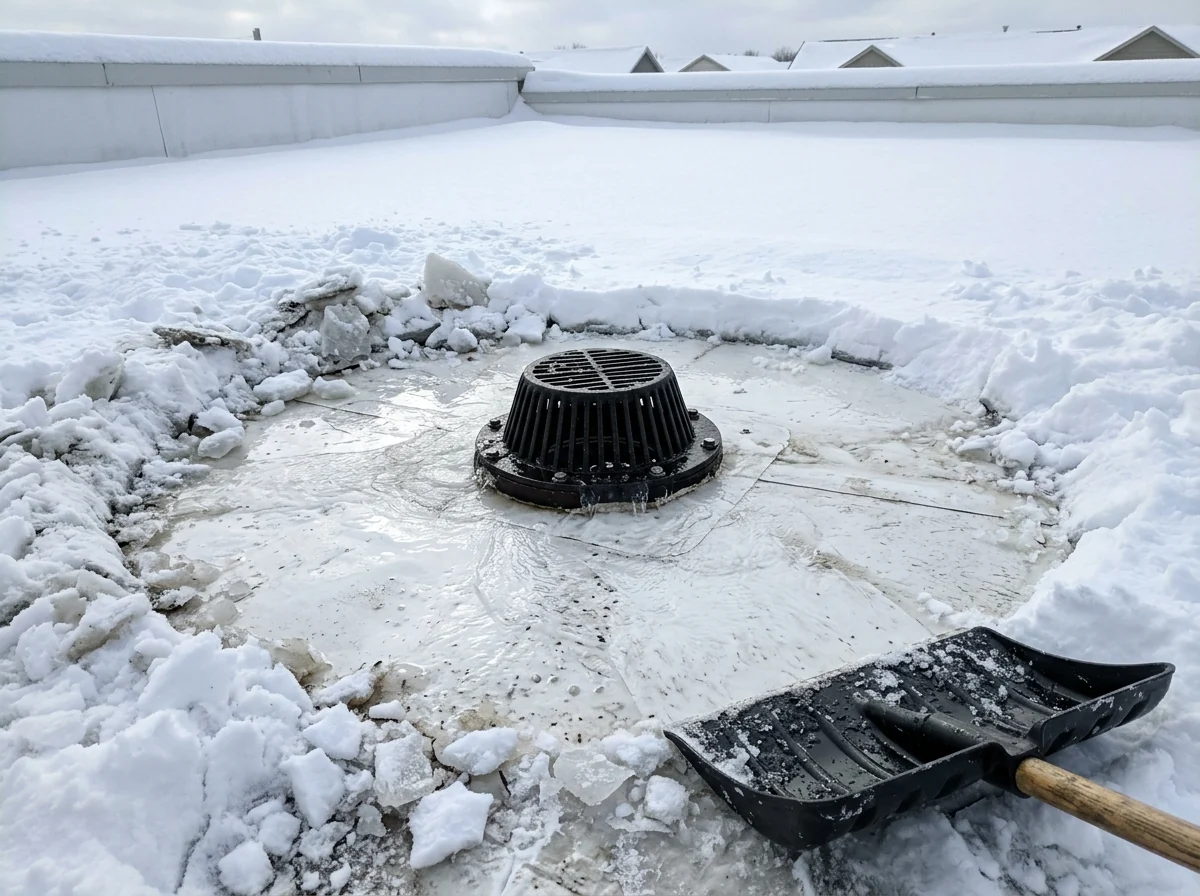
Melt water has to leave the roof, and a frozen or buried drain turns a thaw into a heavy pond sitting on one bay. The guide's checklist for the gap between storms starts with drains, gutters, downspouts and vents. The same snow hides the hazards: skylights, vents, conduit, gas lines and lightning protection. OSHA's hazard alert says falls cause most deaths and injuries in rooftop snow removal, skylights among them; the fall-protection rules are on commercial skylights. What ponding is and how drains get fixed is on roof drain repair.
Emergency Removal When the Roof Shows Stress
Sometimes the building tells you first. FEMA lists the warning signs: sagging ceiling tiles, sprinkler lines sagging or heads dropping below the ceiling, popping or cracking sounds, sagging metal deck, doors and windows that start to stick, new cracks in walls, severe leaks, and water collecting where it normally drains. If any of these appear, stop all removal, get people out and have a professional engineer look at the structure. That's a call to make before calling a roofer.
Why Troy building owners call Troy Commercial Roofing
- Free, no-obligation roof assessment and estimate
- Written scope and price before any work starts
- One local commercial roofing contractor per request, not a call list
- No charge to building owners for the referral
Roof Snow Load in Troy
The 2021 Michigan Building Code includes its own table of ground snow loads by jurisdiction, and it lists 25 pounds per square foot for all of Oakland County, Troy included. That figure is a starting point, not your roof's limit. The code requires a building's construction documents to state the ground snow load and, where it is over 10 psf, the flat-roof snow load and any drift surcharge the engineer designed for. FEMA is blunt about a common shortcut: measuring snow on the ground and assuming the roof carries the same load is wrong.
Weight adds up faster than most people expect. FEMA puts a foot of fresh snow at about 3 psf when it is light and dry and up to 21 psf when it is wet and heavy; an inch of ice weighs a little under 5 psf. A foot of wet snow over an inch of ice comes to nearly 26 psf by our arithmetic. Detroit's climate normals put 14.0 inches of snow in January and 12.5 in February, and in every month from December through March the normal high is above freezing and the normal low below it. Thaw and refreeze turns light snow into heavy snow and ice.
Some Troy buildings have less margin than others:
Older buildings
FEMA says drift loads first entered the BOCA code in 1975, so a roof designed before then may never have been checked for drifts.Pre-engineered metal buildings
They have little reserve capacity; see industrial roofing.Recovered roofs
A recover adds weight to the assembly, and thicker insulation keeps more snow on the roof because less building heat melts it from below.Heavy rain on snow
The code's design loads include light rain on snow, not a heavy downpour, which an engineer has to account for separately.
If you don't know your roof's design snow load, find the structural drawings now. Without them, hire a licensed design professional before the season, not during a storm.
Planning and Pricing Roof Snow Removal
FEMA tells large facilities to write a snow response plan before winter: who removes the snow, in-house staff or a contractor on retainer; where it goes on the ground; and which rooftop hazards, columns and main beams get flagged so the crew knows the sequence. The reason for the retainer is practical: once a big storm starts, contractors are in high demand and hard to find. The guide also recommends a licensed, insured professional roofing contractor with roof snow experience, because such crews know the safety protocols.
Not every snowfall needs a crew. When accumulation is minor, FEMA says the risk of damaging the roofing, or of putting people on the roof at all, outweighs the benefit. The time to call is when the load is close to the roof's capacity, or approaching it with more snow forecast.
Angi's published estimates run $200 to $600 per visit, $0.20 to $0.50 per square foot, and $500 to $1,500 for a seasonal contract. Those come from homeowner jobs; a large flat roof with fall protection, rooftop equipment and lift access will price differently, so ask for a written quote.
A snow removal agreement worth signing states:
- the trigger for a visit (a snow depth, a forecast or your call) and how fast the crew responds;
tools and method
Plastic shovels, no snow blowers, at least 2 inches left on the membrane;- the removal sequence, including drifts first;
- the fall-protection plan and how skylights and hatches will be marked;
- where snow is dumped on the ground;
- an inspection of the roofing afterward, with photos of any damage.
Have the roofing checked after every removal, as FEMA advises; a cut made under a layer of snow is easy to miss until it leaks. If it does, the commercial roof inspection and storm damage roof repair pages cover what comes next. Send the form with the roof size and building type and we'll pass it to one independent local roofer; there's no charge for the referral.