
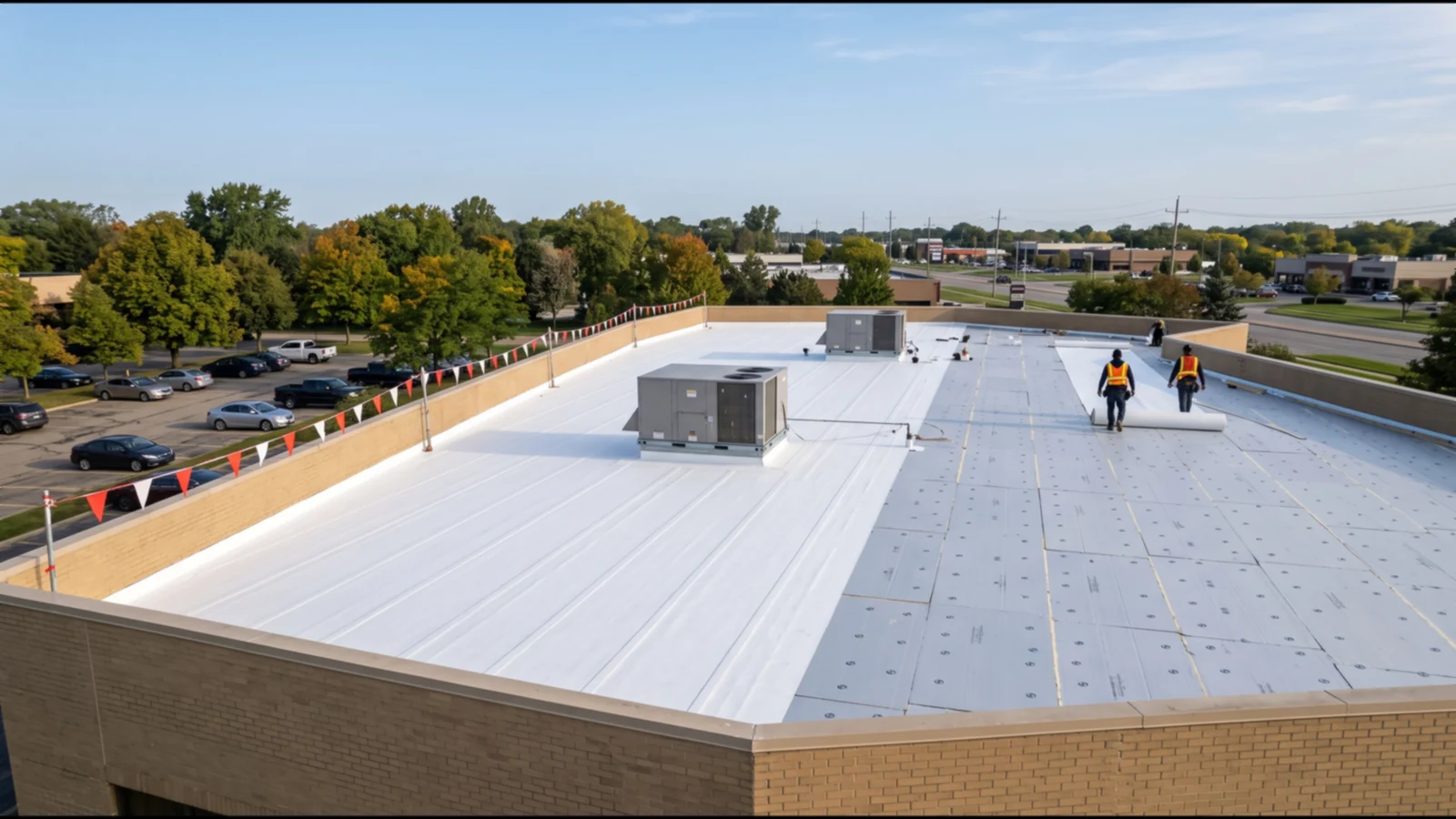
Commercial Roof Restoration by Roof Type
The coating gets the attention, but most of a restoration's labor goes into preparation, and that work differs by what's on the roof now. A FacilitiesNet article on coating projects, written around Roof Coatings Manufacturers Association advice, calls surface preparation the most critical part of the job.
Metal Roof Restoration
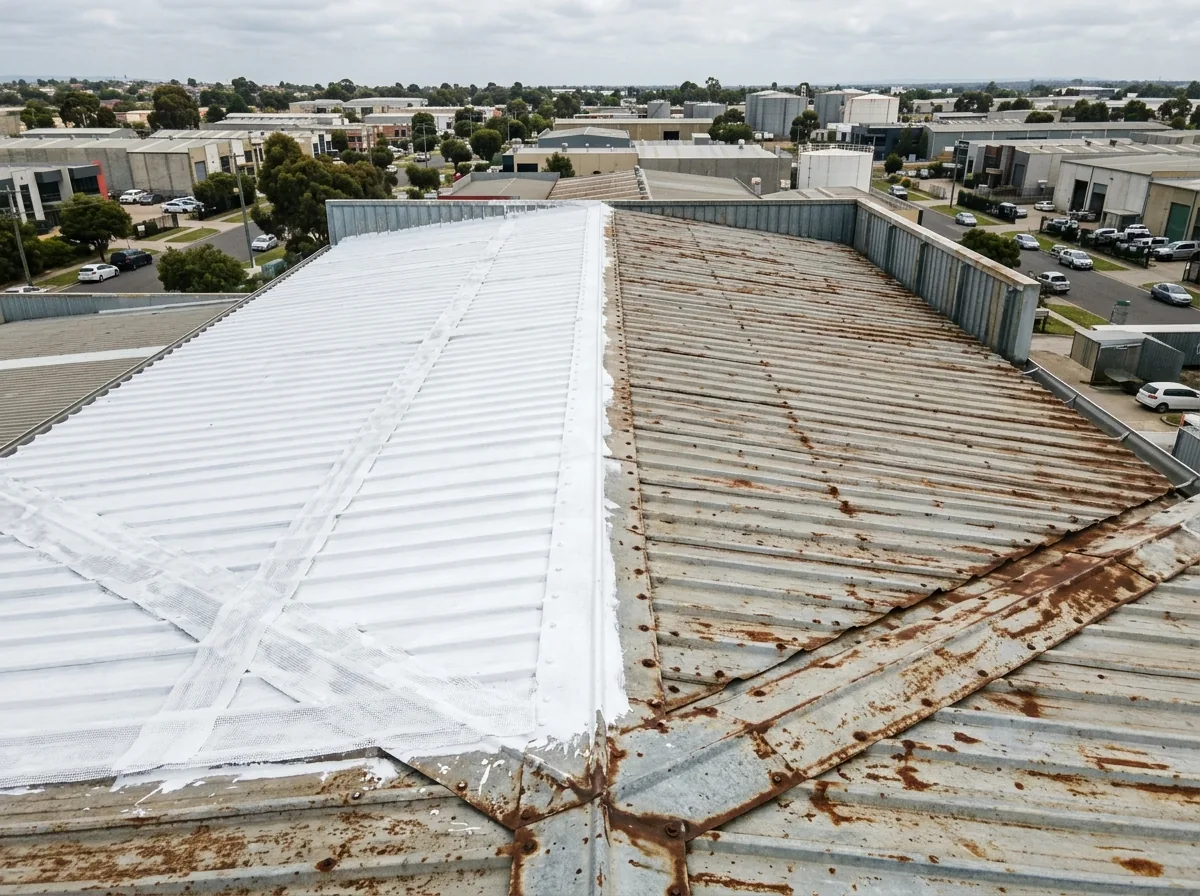
On an older screwed-down panel roof, the scope usually runs: pressure-wash, treat rust (the FacilitiesNet article describes grinding metal down to bright metal where adhesion depends on it), replace or oversize fasteners, seal end laps and side laps with fabric and mastic, prime where the coating maker calls for it, then coat. Panels rusted through get replaced before any coating goes on. Repairs that stop short of a full coat are covered on commercial metal roofing.
Single-Ply Restoration (TPO, EPDM, PVC)
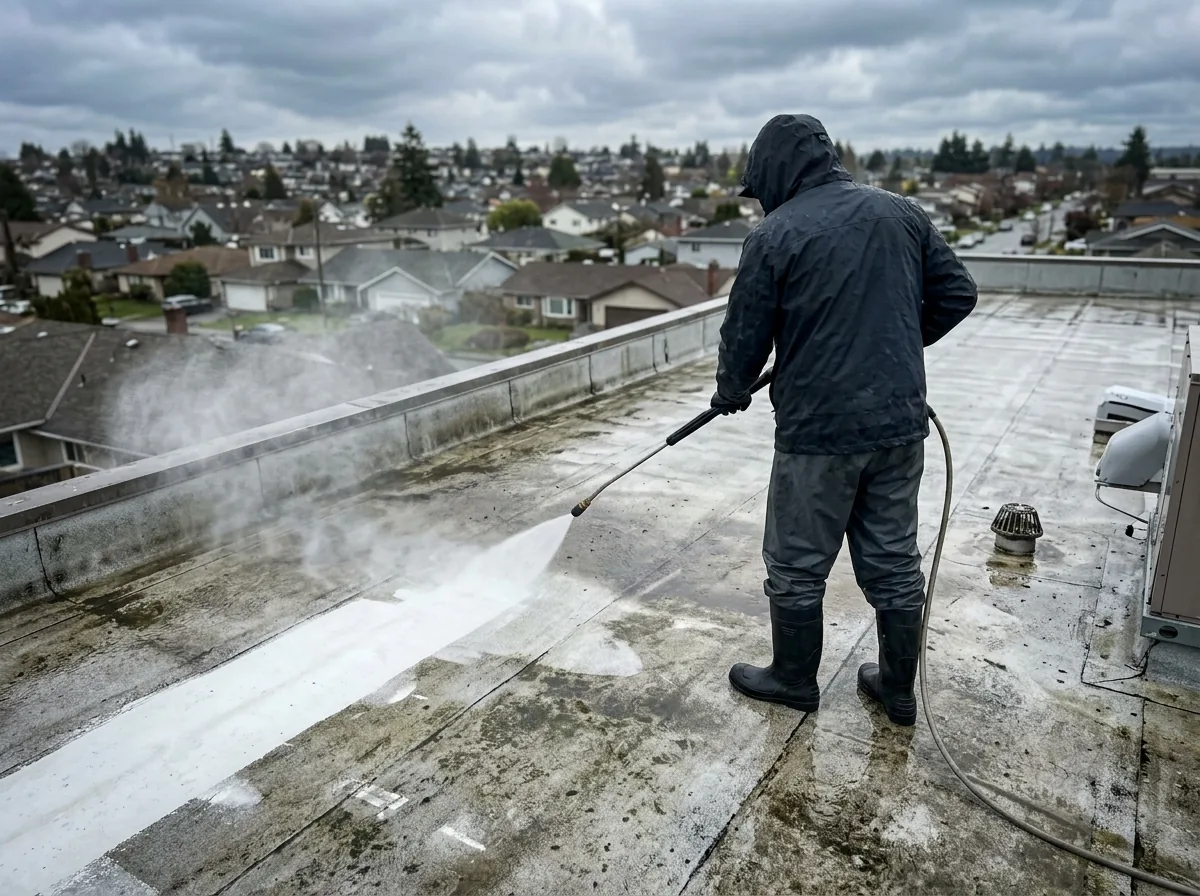
Aged single-ply roofs weather and collect dirt on top, and can open at seams and flashings. Restoration cleans the surface, re-welds or re-tapes failing seams, reinforces the field seams and flashings, and primes before coating. Polyglass, a coating maker, notes that adhesion is the main worry over aged, weathered or contaminated surfaces, which is why an adhesion test (below) is not optional on an old membrane.
Modified Bitumen and Built-Up Roof Restoration
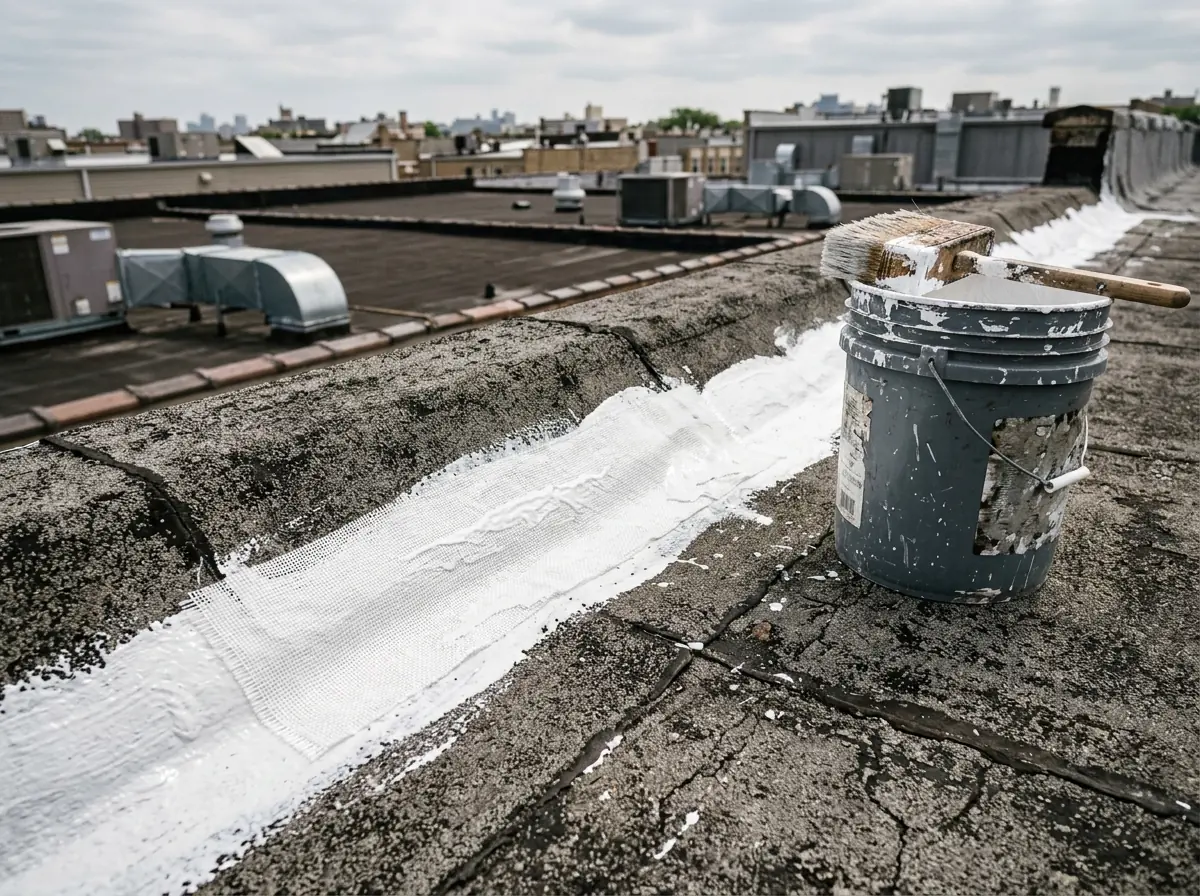
Asphalt roofs bring two extra steps. Loose gravel on a built-up roof has to be dealt with, either removed or locked down, and the coating has to be one its maker approves over asphalt. Blisters get cut out and patched, splits get reinforced, and granule loss on a mod-bit cap sheet is cleaned and primed. Ask the roofer how the bid handles the gravel and which coating they'd use over asphalt, and why. Coating chemistries are compared on commercial roof coatings.
Spray Foam Recoat
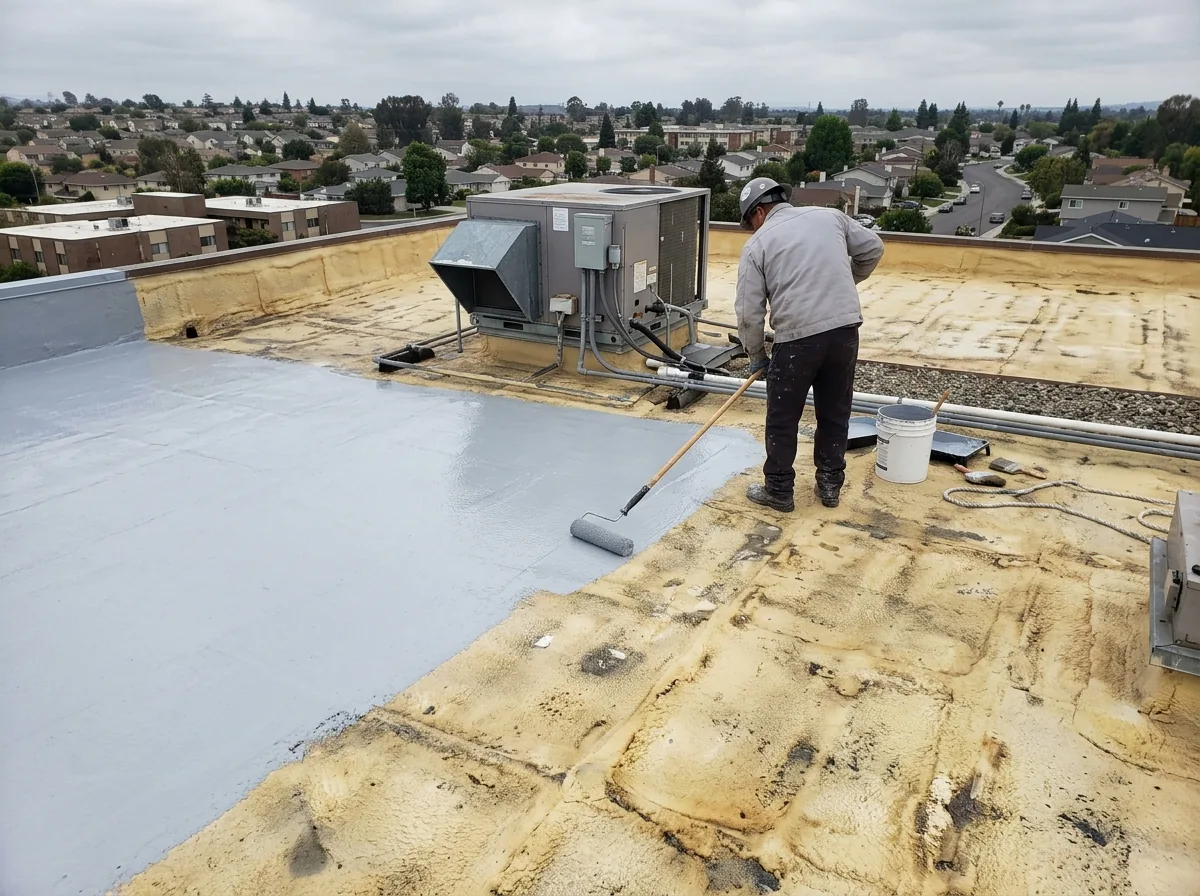
A foam roof is built to be recoated, so its restoration is mostly cleaning, repairing damaged foam and renewing the topcoat before the foam is exposed. The details are on spray foam roofing.
Why Troy building owners call Troy Commercial Roofing
- Free, no-obligation roof assessment and estimate
- Written scope and price before any work starts
- One local commercial roofing contractor per request, not a call list
- No charge to building owners for the referral
Is Your Roof a Restoration Candidate?
Restoration works on a roof that is old on top and sound underneath. Before taking a bid seriously, you need answers to four questions:
- 1
Is the insulation dry?
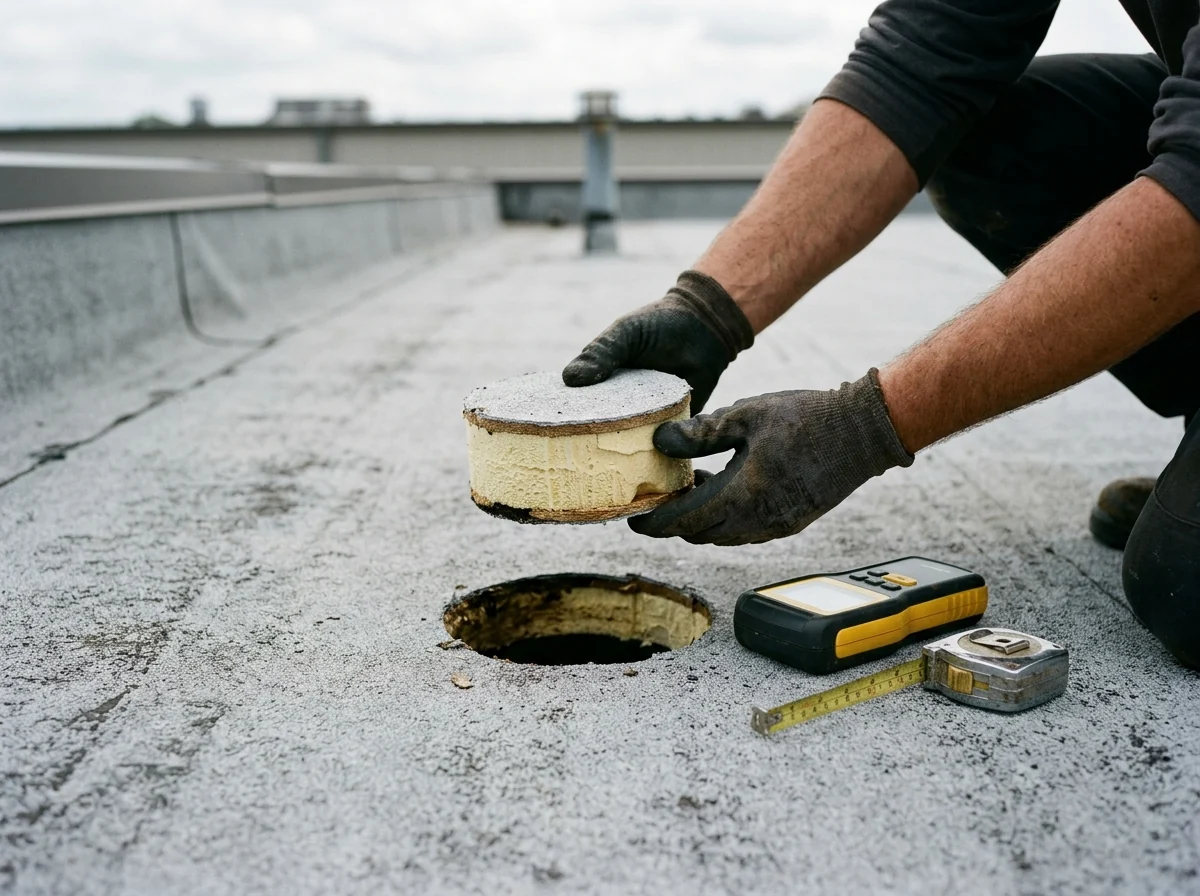
Wet insulation under a coating stays wet. A moisture survey with core samples settles it; methods are on roof leak detection. - 2
Is the deck sound?
Rusted steel deck or rotted wood deck has to be fixed from above or below, which usually means opening the roof. - 3
Does it drain?
Ask whether the coating's warranty covers areas where water stands after rain. See roof drain repair for what counts as ponding. - 4
What's the rest of the plan?
If you'll replace the building's HVAC curbs or add equipment in two years, plan that work first.
A restoration coat is also a way to get a reflective surface on a roof that doesn't need replacing. DOE's cool roof guide says it's rarely economical to replace a mechanically sound roof just to raise its reflectance; a coating gets there without that.
The Roof Coating Adhesion Test
A coating that peels is worse than no coating, because water travels under it. Polyglass, one coating maker, recommends a field adhesion test before any restoration, using a method similar to ASTM C794:
- Pick at least three typical spots on the roof and clean an area of about 4 square feet at each.
- Brush on base coat, embed a 1-inch by 12-inch strip of polyester fabric with one end left loose, and coat over it.
- Let it cure, typically about 7 days, depending on temperature and humidity.
- Pull the loose end straight up at 90 degrees with a scale. The bulletin looks for about 10 pounds of force, with the coating tearing within itself rather than peeling off the roof.
Ask for the test locations, pull results and photos in writing, and ask what primer was used on each test patch. If a roofer won't do a test on an old EPDM or asphalt roof, get another opinion.
Restoration Cost Against Replacement
HomeGuide's installed coating prices run $0.50 to $3.00 per square foot for acrylic and $1.50 to $4.50 for silicone. Its range for a full commercial flat roof installation is $4 to $11, plus about $1 to $2 for tear-off. Those are national published estimates, and repairs, fabric and primer add to the coating price, but the gap is wide enough that a sound roof deserves a restoration quote alongside the replacement quote. Part of that gap is code-driven: the building code lets a coating go over an existing roof without tear-off, and since nothing comes off down to the deck, the energy code's insulation upgrade for replacements doesn't come into play (see commercial roof insulation).
Ask the roofer to price both on the same roof: restoration with its prep and repair lines itemized, and replacement with insulation. Then ask what manufacturer warranty, if any, each option qualifies for, and for how long; warranty types are explained on commercial roof replacement.
Send us the roof type, its rough age and where it leaks. One independent roofer who does restoration work receives it and, after a roof walk and cores, can tell you whether your roof is a candidate.