
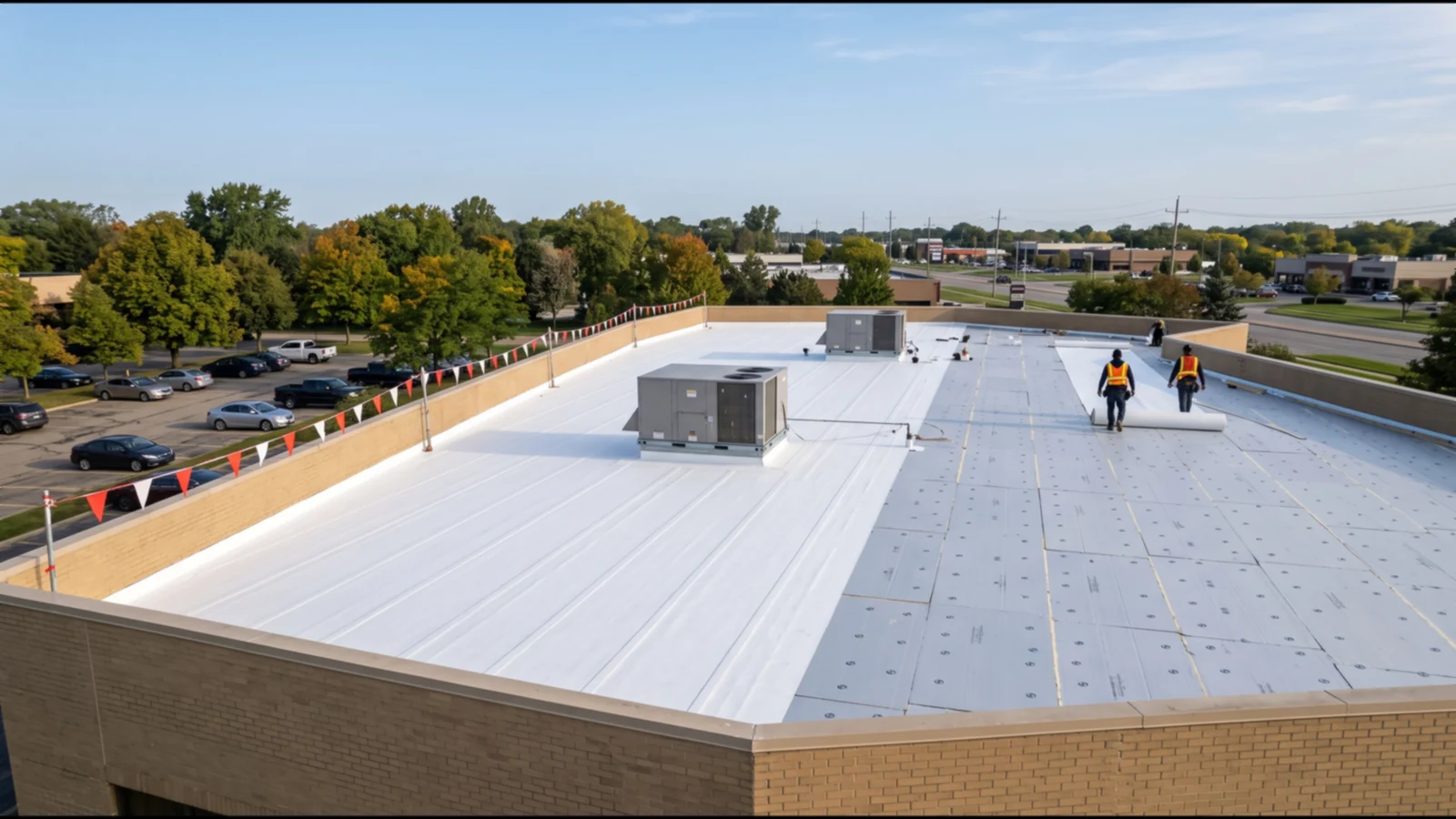
Spray Foam Roofing Systems for Troy Buildings
SPF is insulation and roof in one layer. The foam has to meet ASTM C1029 Type III or IV, or ASTM D7425, and the coating on top has its own standard. The types below are really the situations a foam roof gets sprayed into.
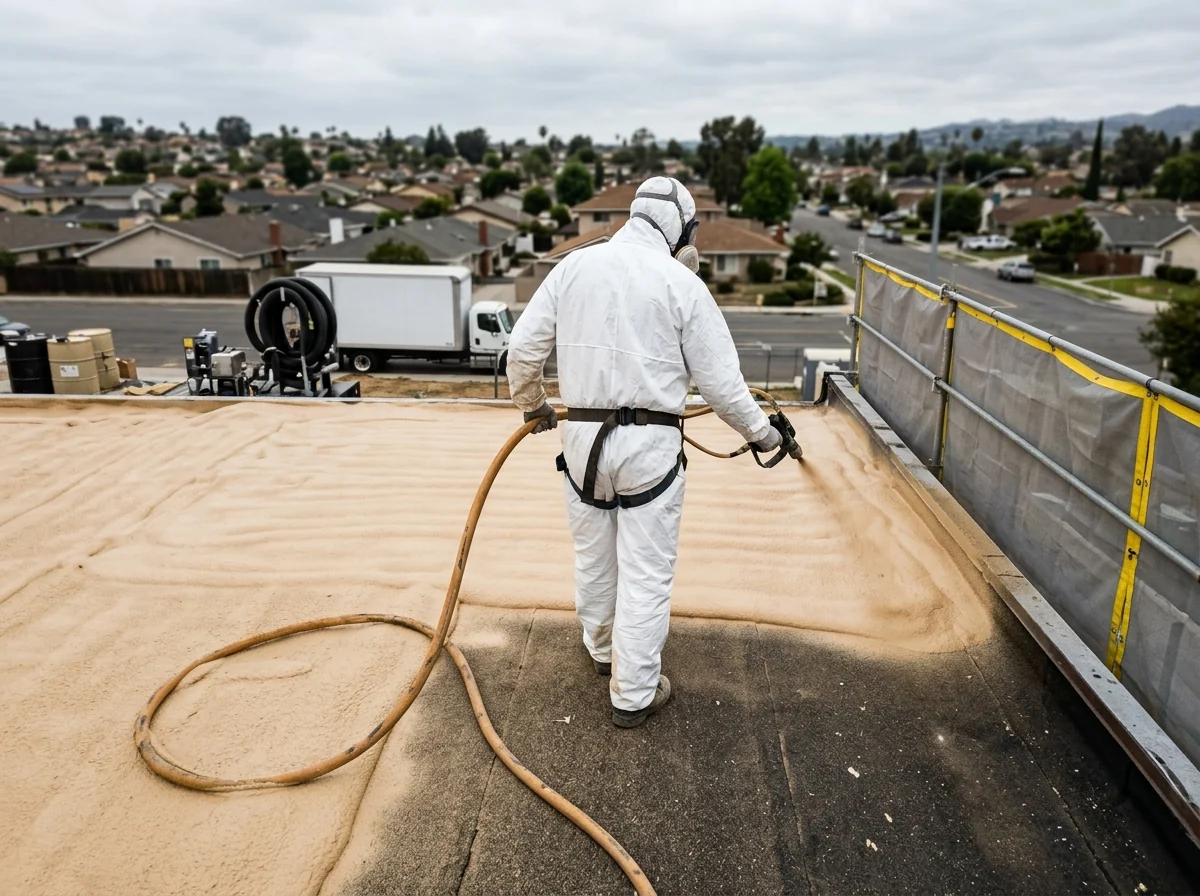
SPF Over a New or Stripped Deck
After a tear-off, foam can go directly on the deck or over board insulation. EPA describes high-pressure SPF as sprayed at over 150°F and about 1,200 psi. Gaco's roofing foam spec lists a nominal density of 2.7 to 3.4 pounds per cubic foot and a 1-inch minimum thickness, with 2 inches in its standard application. Where foam meets a wall, curb or pipe, the same spec runs it up at least 3 inches.
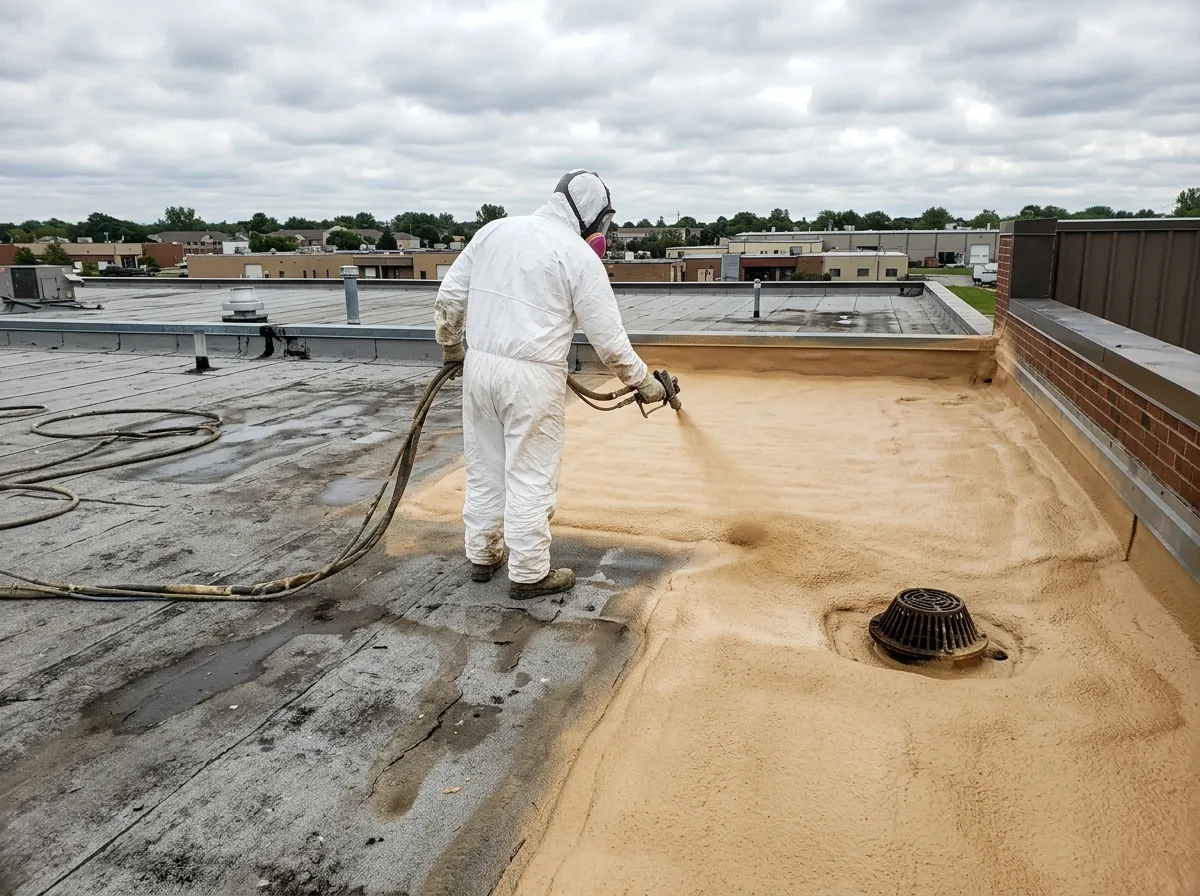
SPF Recover Over an Existing Roof
Foam can also be sprayed over an old built-up or modified bitumen roof, which saves the tear-off. Because thickness can be varied as it goes on, the applicator can build up low areas so water runs toward the drains, which helps on older roofs with ponding.
Two limits apply. The code's rules on when a roof may be recovered still govern (see commercial roof replacement), and all wet material has to come out before foam goes over an old roof, along with repairs to blisters, ridges and splits. A moisture survey should come first.
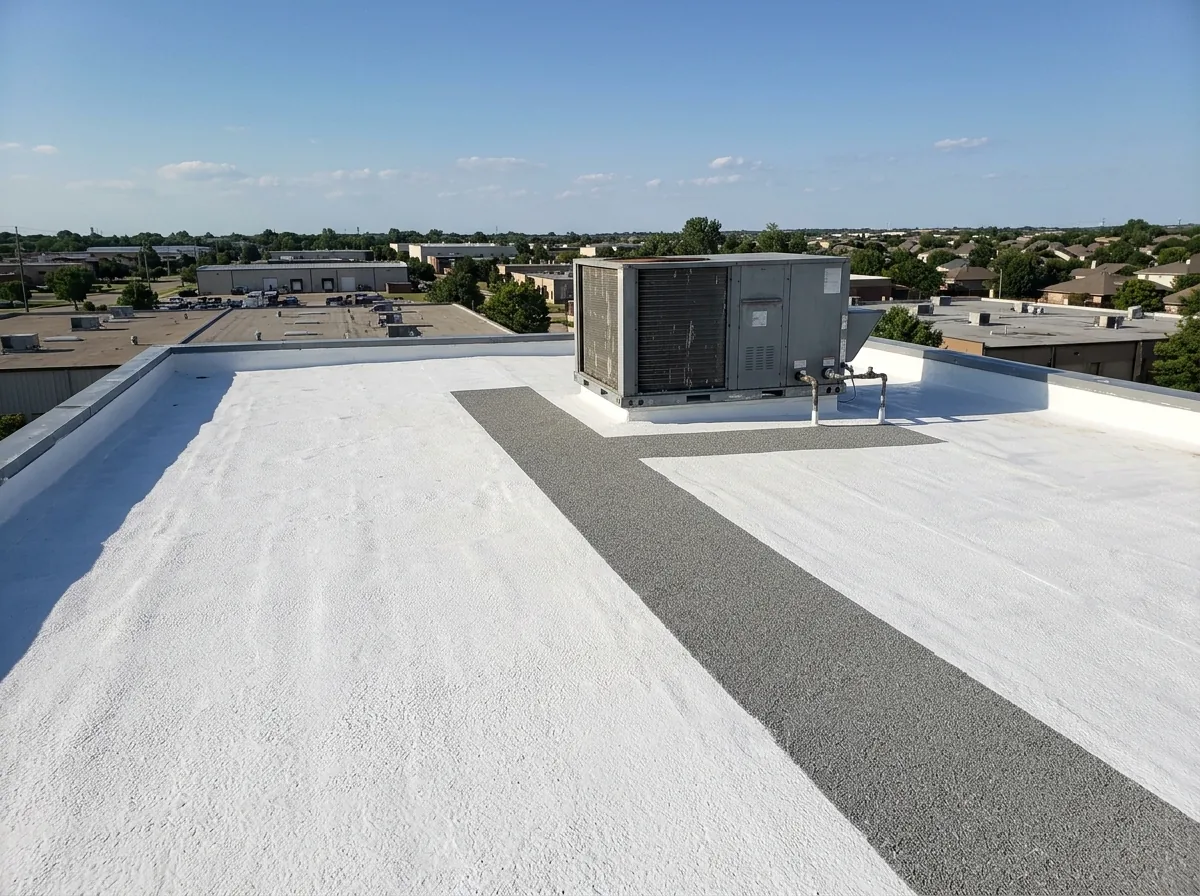
Acrylic, Silicone and Urethane Topcoats
The coating is the wearing surface, and the code requires it within 2 to 72 hours of spraying. It lists three coating types for SPF: acrylic (ASTM D6083), silicone (ASTM D6694) and moisture-cured polyurethane (ASTM D6947). Granules can be broadcast into the coating for traffic areas and walkways. Which chemistry suits your roof, and how reflective each one is, is covered on commercial roof coatings.
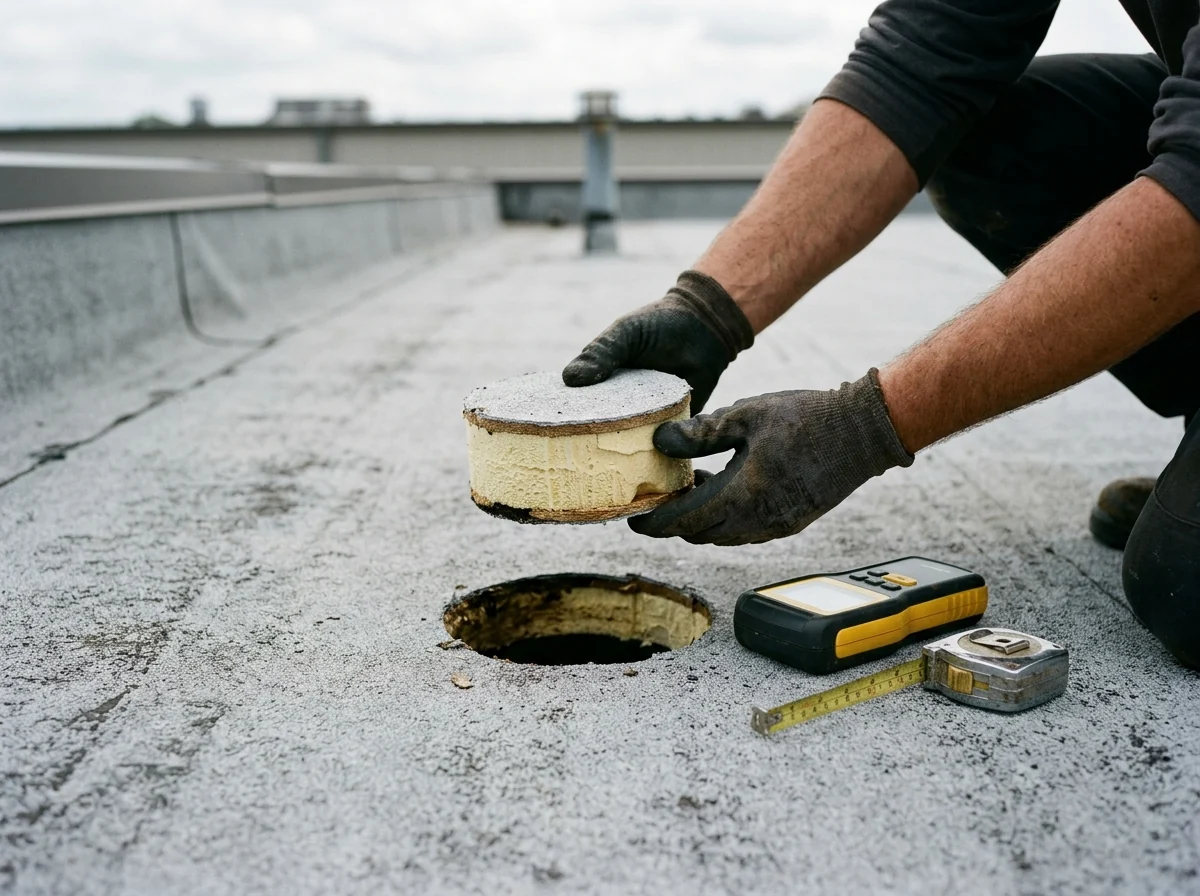
Coating thickness is where SPF jobs go right or wrong. Ask for the specified dry film thickness in mils, and for the measured thickness of each coat in the closeout records. Gaco's spec requires the applicator to measure and record foam and coating thickness for every coat.
Spray Foam Roof Repair and Recoat
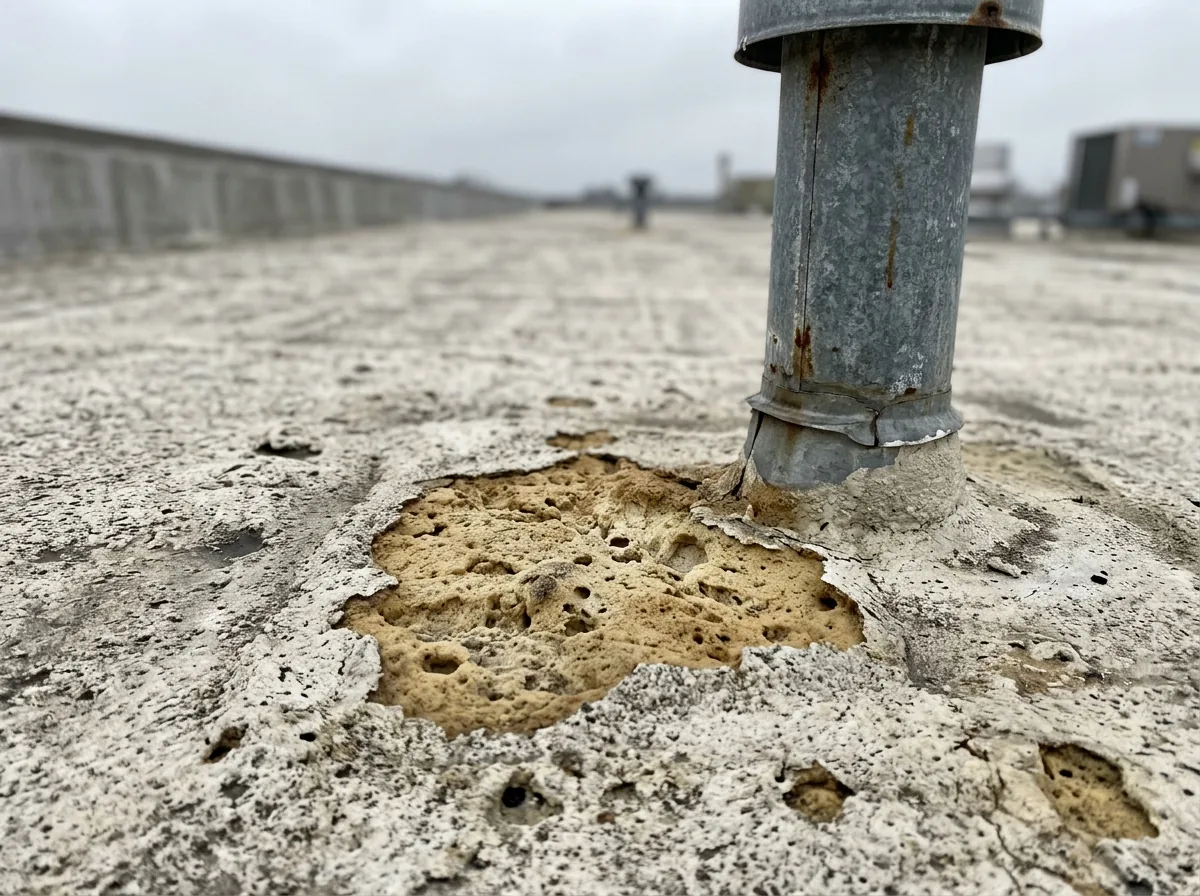
Damage to a foam roof is often local: punctures from dropped tools, bird pecking, hail dents, and spots where the coating has worn through and the foam has started to erode. Repair means cutting out damaged foam, filling with new foam or sealant and recoating the patch. When the coating is thin across the whole roof, the roof gets cleaned and recoated before the foam itself is exposed. Ask the roofer to put the recoat in your maintenance plan with a date, not just "when needed."
Why Troy building owners call Troy Commercial Roofing
- Free, no-obligation roof assessment and estimate
- Written scope and price before any work starts
- One local commercial roofing contractor per request, not a call list
- No charge to building owners for the referral
Spray Foam Weather Limits in Michigan
Spray foam has hard weather limits. Gaco's spec stops spraying when the surface is below 50°F or above 160°F, when relative humidity is over 80% or the temperature is within 5°F of the dew point, and when wind is over 15 mph without a windscreen. A Roofing Contractor technical article gives a 40°F minimum air temperature and wind under 12 mph without windscreens, and rules out spraying in wet conditions or when rain is forecast before the foam has cured.
Detroit's normals explain the calendar: from December through March, normal lows sit below freezing, and May is the wettest month. In practice, plan an SPF roof for late spring through early fall, and expect weather days. A roofer who sprays on a damp morning to stay on schedule is not doing you a favor.
Overspray, Fumes and an Occupied Building
The chemistry calls for planning on a building people are using. EPA's SPF guidance lists asthma, sensitization and other breathing problems among the hazards of the isocyanates on the A side, and its work practices for high-pressure spraying include vacating unprotected workers and building occupants.
On a roof, the practical risks are air intakes and overspray. Foam mist can drift onto cars, windows and neighboring buildings. Gaco's spec requires protecting windows, facades, parking lots and vehicles, and posting overspray hazard signs within 400 feet of the work. Before work starts, ask:
- Which rooftop units and intakes will be shut down or covered, and for how long.
- Where staff and tenant cars should park on spray days.
- What windscreens will be used, and the wind speed at which spraying stops.
Spray Foam Roofing Cost and R-Value
HomeGuide puts SPF roofing at $2 to $6 per square foot installed, a published national estimate, and notes that the foam needs an elastomeric or silicone topcoat. EPA lists closed-cell foam at about R-6.5 per inch, and PNNL lists high-density spray foam at about R-6. At R-6 per inch, the 2 inches in Gaco's standard application adds about R-12 (our arithmetic), well short of what the energy code asks when a roof is replaced. On a tear-off, ask how the foam and any board insulation under it will meet the code; the requirement is explained on commercial roof insulation.
Send the roof size and what's on it now. We pass it to one independent roofer who sprays foam, who can tell you whether your roof suits SPF and when the weather window opens.