
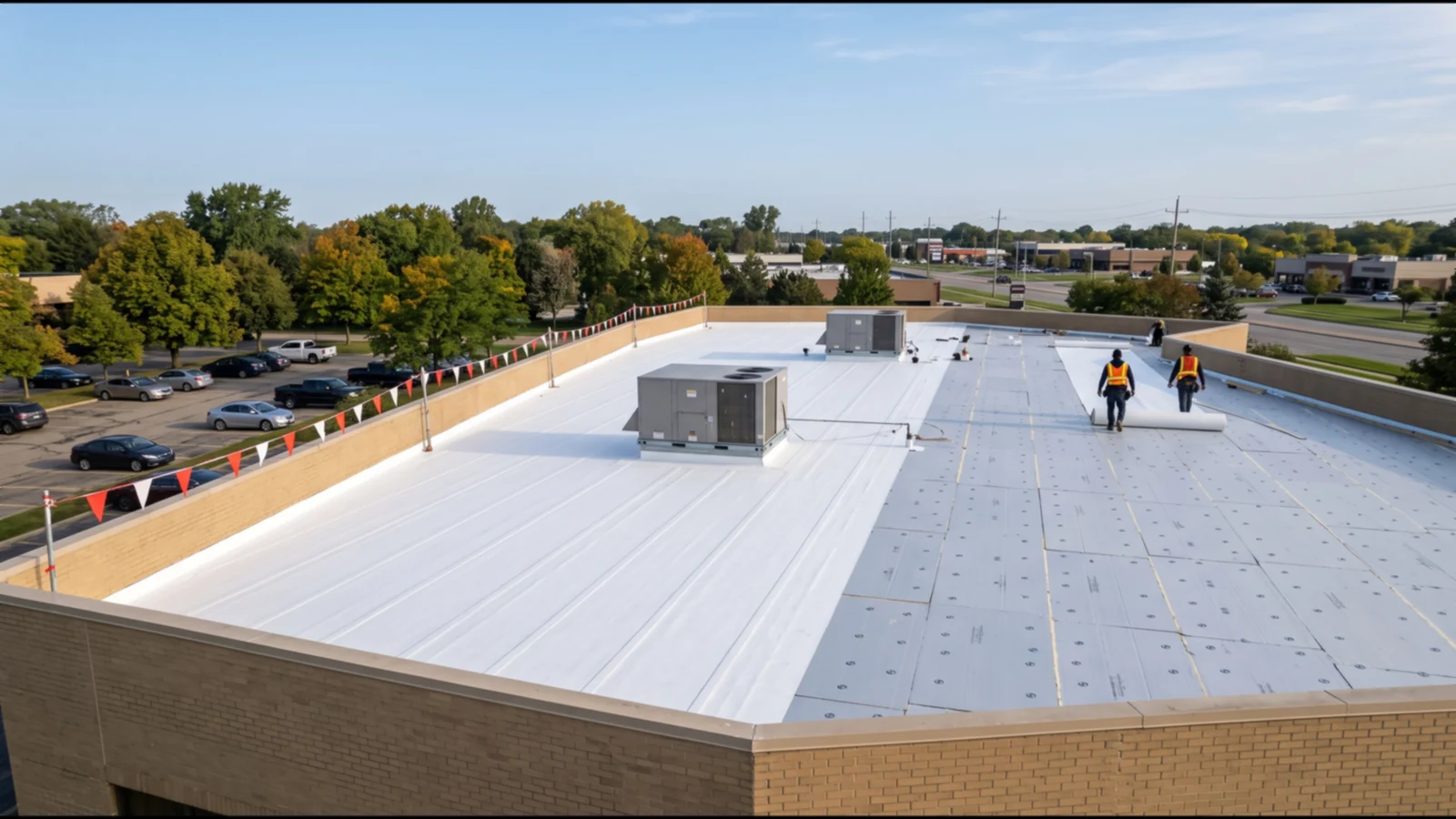
Commercial Roof Maintenance Services for Troy Buildings
Maintenance is what happens after the inspection writes its list. Some items are housekeeping, some are small repairs, and some change how people use the roof.
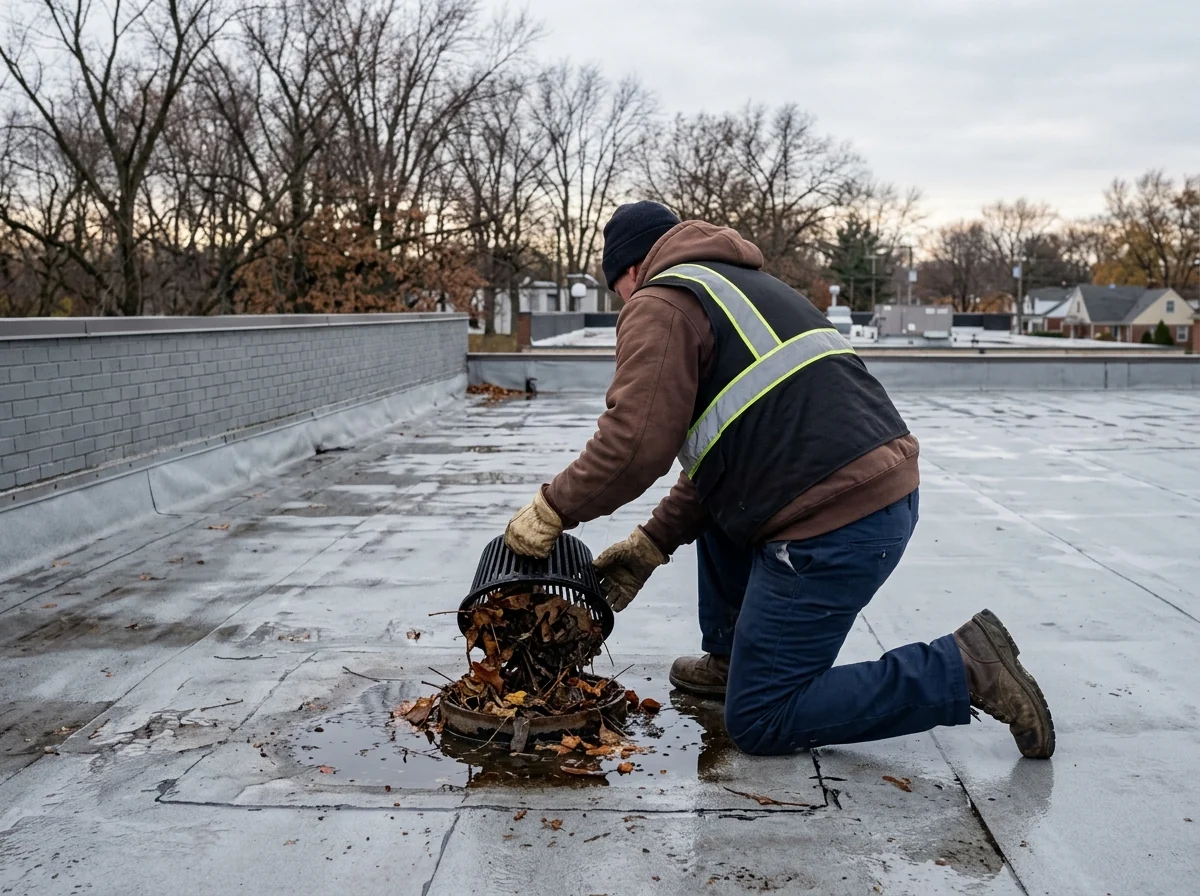
Drain, Scupper and Debris Clearing
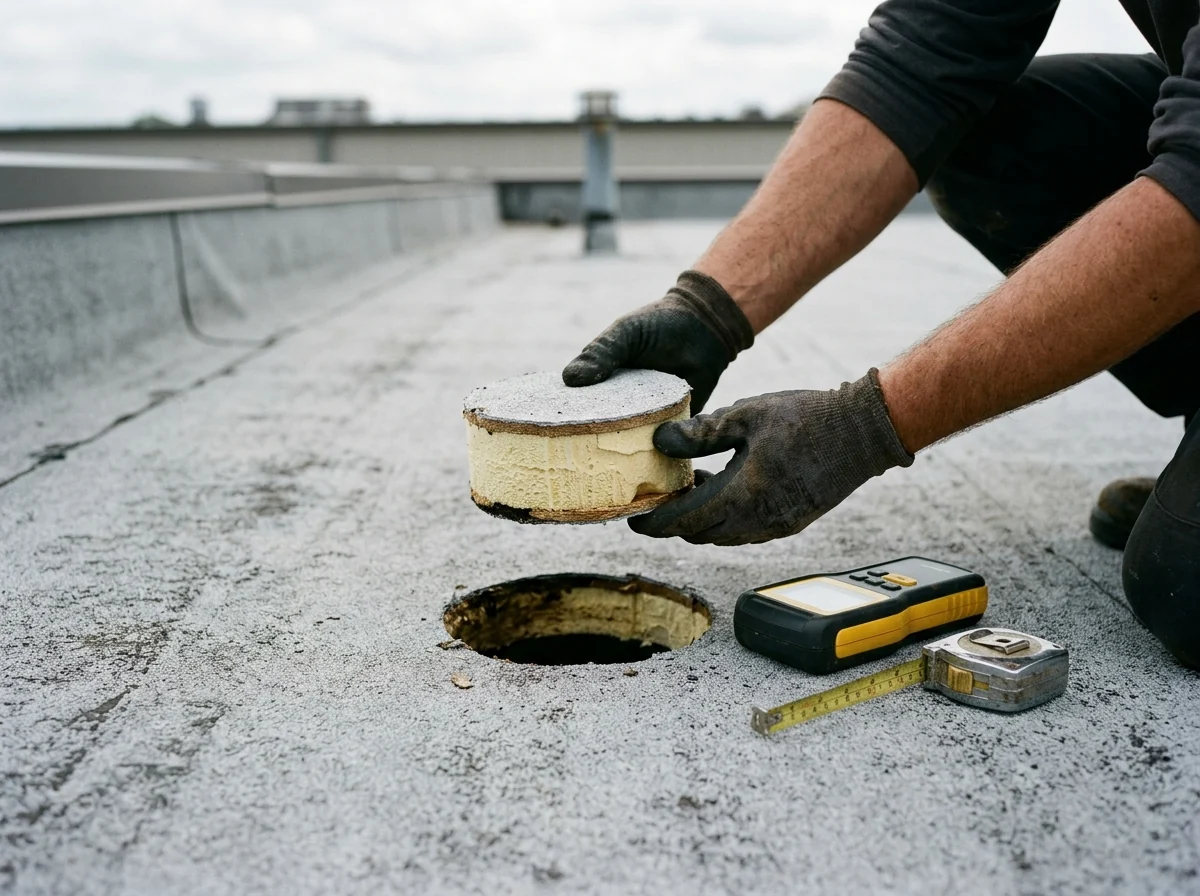
Leaves, sand, bird nests and loose gravel collect at the low points, which is exactly where the drains are. One manufacturer's owner's manual says water should drain from a roof and any ponded water should evaporate within 48 to 72 hours after rain, and that debris gets in the way of that. Clearing it is the cheapest roof work there is. Strainer domes that are cracked or missing should be replaced at the same visit, because the dome is what keeps debris out of the pipe below. For persistent standing water, see roof drain repair.
Seam, Flashing and Sealant Touch-Ups
Small defects found on a walk get fixed before they leak: a lap edge that has started to open, a pipe boot whose clamp has loosened, a counterflashing joint whose sealant has dried and cracked, a pitch pan that needs topping up. Each repair should use materials compatible with the membrane on your roof. Anything larger than a touch-up moves to a quoted commercial roof repair, and failing edge or parapet details go to roof flashing repair.
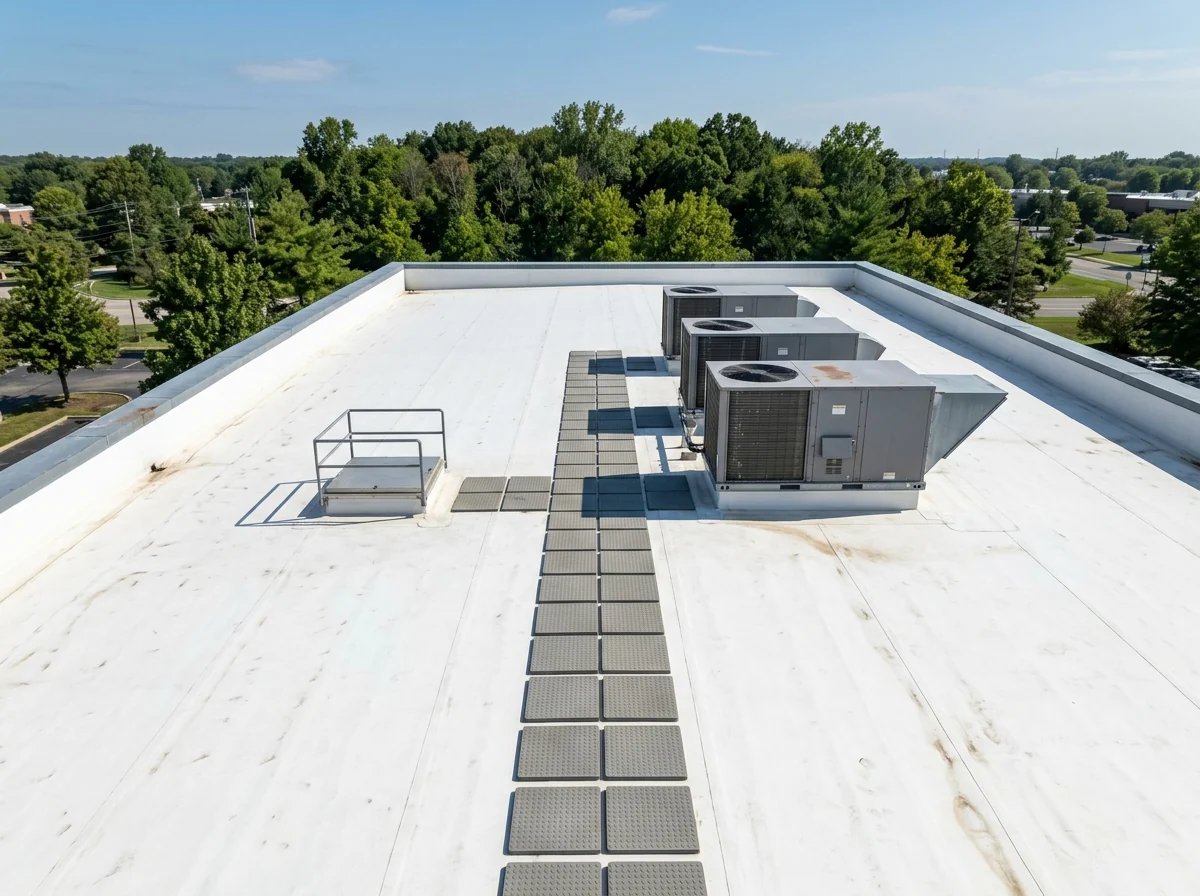
Walkway Pads and Rooftop Traffic Control
Every technician who services a rooftop unit walks the same line across the membrane. The same manual says walkways must be provided where regular roof traffic is needed or where rooftop equipment is serviced every 30 days or less. Pads take the wear instead of the membrane and show visitors the route. It also recommends restricting roof access and keeping a log of who goes up and why, which makes it far easier to connect a new leak to the visit that caused it.
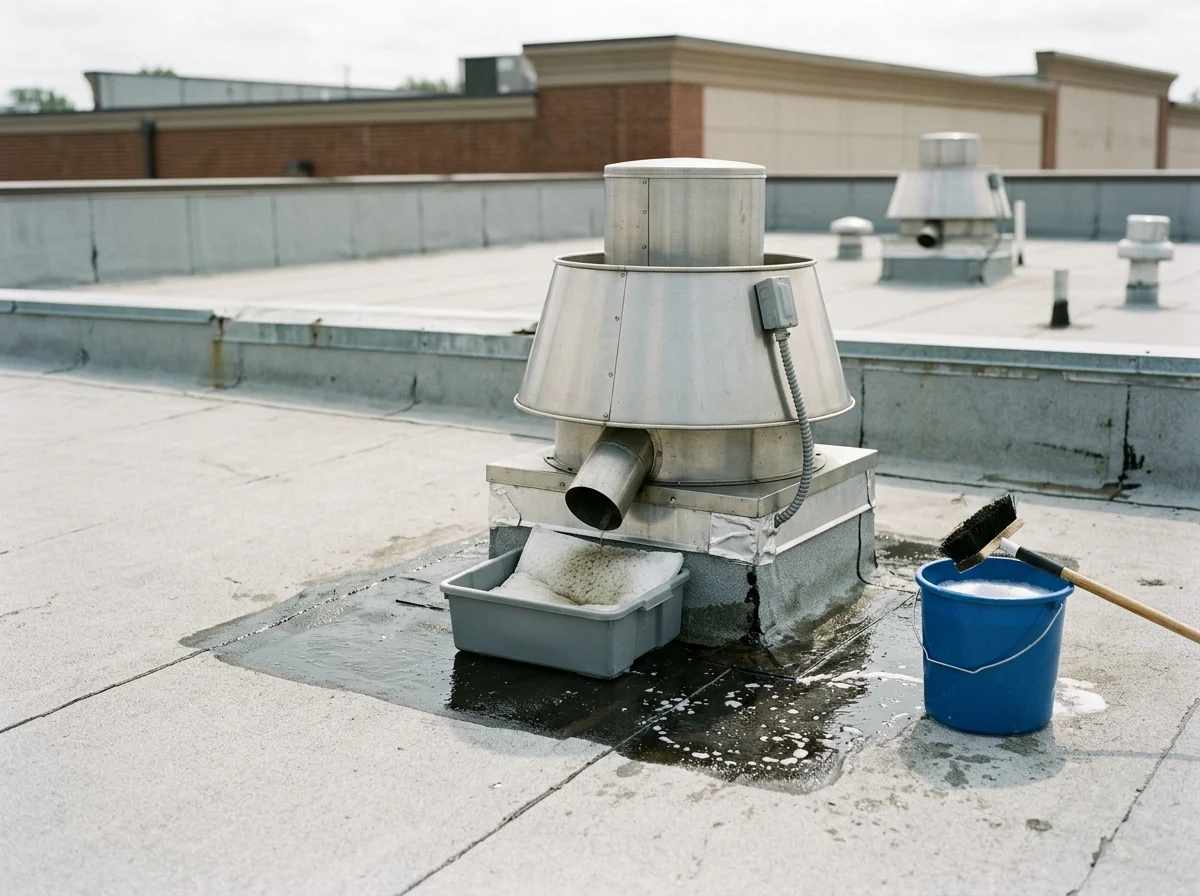
Grease and Chemical Cleanup
Petroleum products and chemicals should stay off the membrane. Animal fats and vegetable oils from kitchen exhaust are a particular problem: that manual says not to exhaust them onto EPDM at all, and on TPO and PVC to remove them regularly and wash the area with soap and water. Restaurants and food buildings should treat this as a scheduled task. Membrane choice for kitchens is covered on the restaurant roofing page.
Why Troy building owners call Troy Commercial Roofing
- Free, no-obligation roof assessment and estimate
- Written scope and price before any work starts
- One local commercial roofing contractor per request, not a call list
- No charge to building owners for the referral
Commercial Roof Maintenance Programs
A program puts the inspections and the upkeep under one written agreement with one roofer. NRCA lists what that buys: problems caught early while they are cheap, leak sources found before they leak, and roof spending planned rather than reactive. It also notes that most roofing warranties require the roof to be properly maintained, and that many roofing contractors offer formal long-term maintenance agreements. How often visits should happen is set out on the commercial roof inspection page.
Manufacturer warranties raise the stakes. One manufacturer's warranty, as quoted in its owner's manual, is void if anything is altered, repaired or attached on or through the roof without the manufacturer's written approval, and it wants that revision work done by one of its authorized applicators. The same manufacturer runs a program that extends its total system warranty by 5 years for owners who keep the roof regularly inspected and maintained. If your roof carries a manufacturer warranty, give the roofer a copy before the first visit so the work stays inside its terms.
When comparing program proposals, make sure each one states:
- the number of visits a year and the months they fall in;
- what is included at each visit (drain clearing, debris removal, minor sealant and seam work up to a stated limit);
- how extra repairs are priced and approved before work starts;
the report format
Photos, roof plan and a ranked repair list;- who the building calls when a leak appears between visits.
What Building Staff Should and Shouldn't Do
Maintenance staff are the eyes on the building between visits, but NRCA advises that inexperienced property management personnel shouldn't walk roofs or attempt repairs without the experience and equipment to do it safely. On a low-slope roof, anyone near an unprotected edge also falls under fall-protection rules; the commercial skylights page covers what OSHA requires around edges and skylights.
Useful jobs from inside the building:
- keep the roof access log and the key to the hatch;
- after heavy rain, check top-floor ceilings and note any new stain with the date and location;
- photograph water standing on the roof from a window or hatch, without stepping out;
- after a heavy snowfall, watch top-floor rooms for sagging ceiling tiles, sprinkler heads dropping or doors that start to stick, which FEMA lists among the signs of an overloaded roof;
- forward every inspection and repair report to one folder with the warranty.
Flat Roof Maintenance Through a Michigan Year
Spring. Detroit's normals show highs above freezing and lows below it from December through March, so seams, sealant and drain clamps go through months of daily freeze and thaw. The first spring visit looks for what opened up.
Summer. Cold limits a lot of roof work. One membrane maker recommends heated storage for its adhesives once air temperatures drop below 40°F, and one silicone coating specification calls for a dry substrate above 40°F. The warm months are when larger maintenance repairs and any coating work fit most easily, so book them in spring.
Fall. Clear drains and scuppers after the leaves are down and before the first snow. Mark drains, hatches and skylights that snow will hide.
Winter. Melt water needs an open drain. FEMA notes that on a low-slope roof with blocked or poorly working drains, melt water collects into ponds that put a concentrated load on the structure. Drift and removal questions are on the roof snow removal page.