
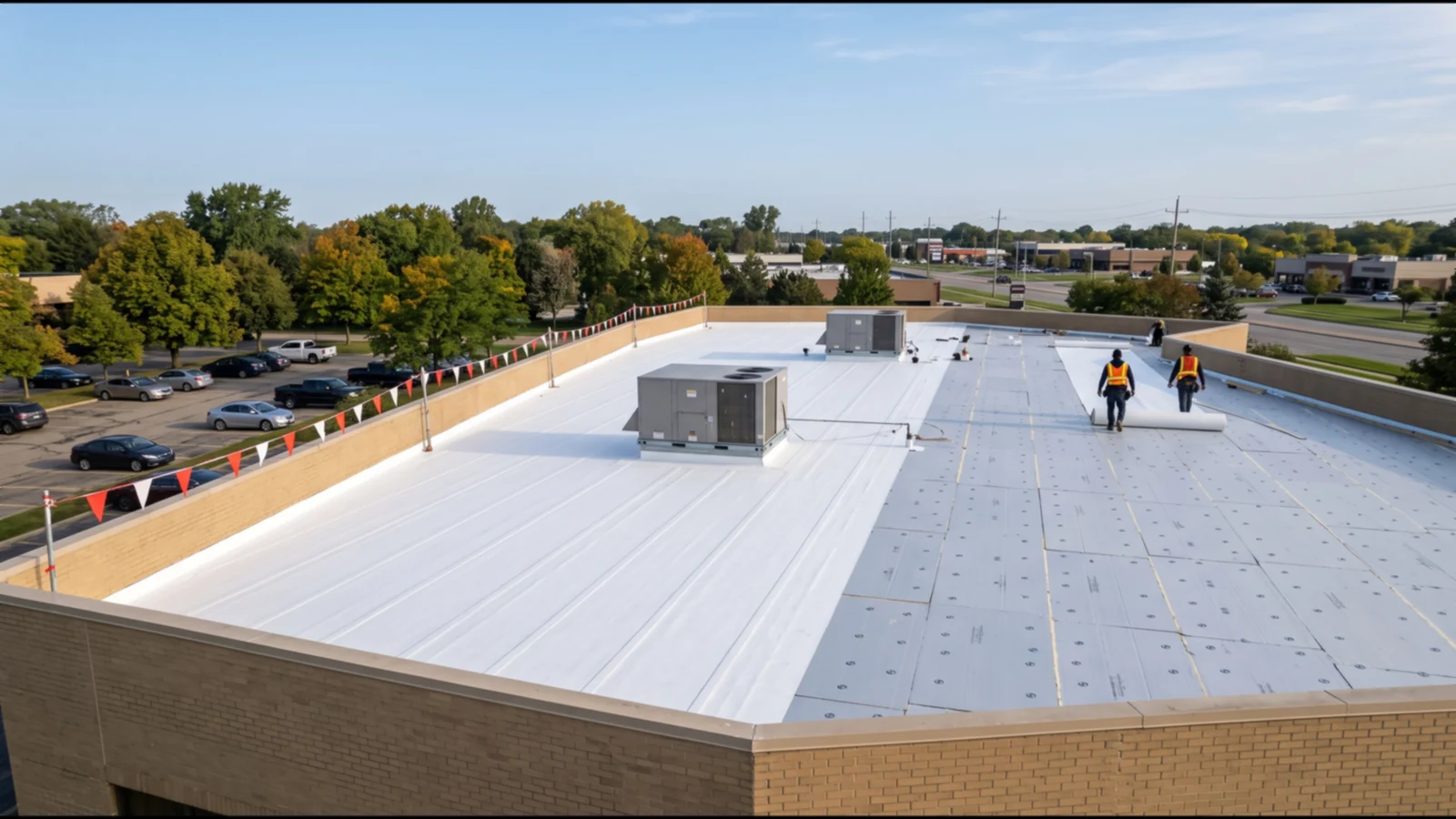
PVC Roofing Systems for Troy Buildings
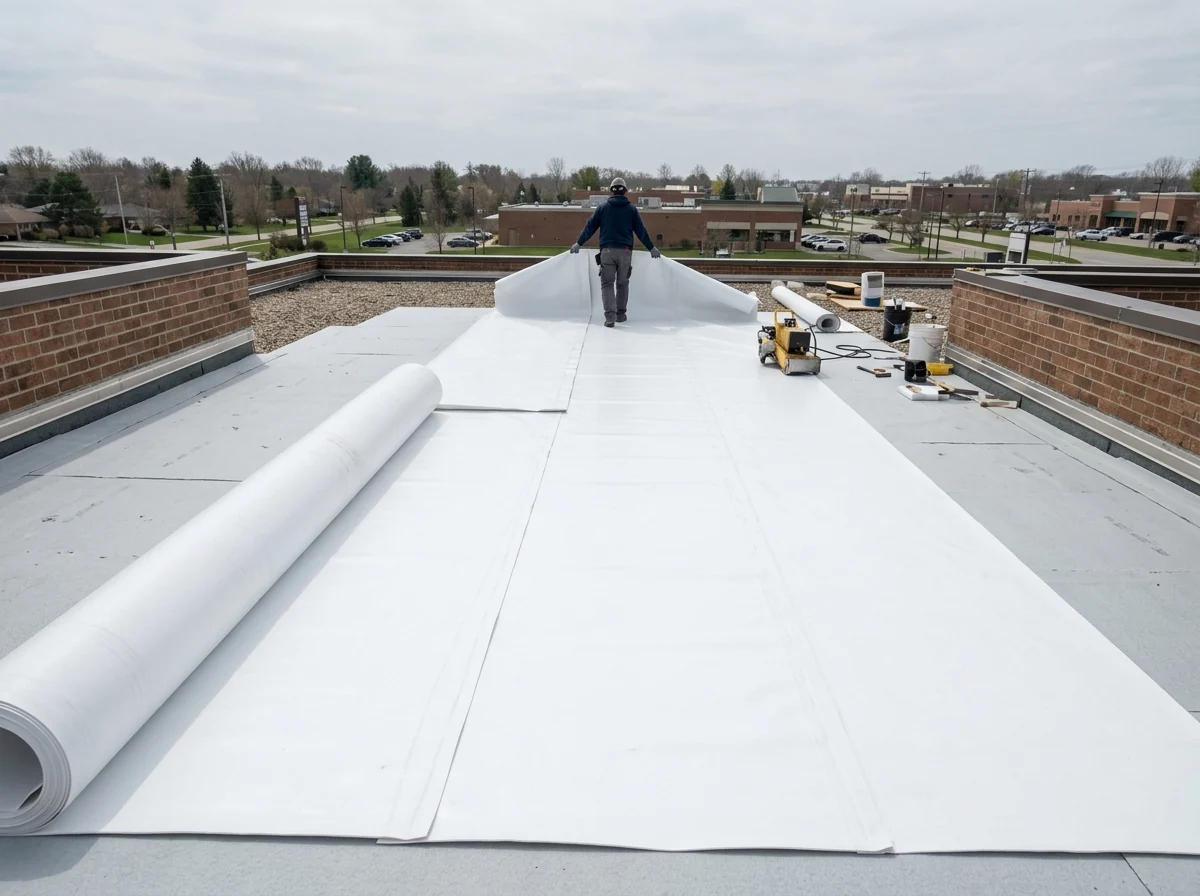
A PVC roof is defined less by the sheet than by how the sheet is held down. The same membrane can be screwed, glued or bonded to plates under the sheet, and that choice drives the price and the wind design. Duro-Last, for example, makes its flagship PVC in 40, 50 and 60 mil and says the deck sheets can be mechanically attached, adhered or induction-welded.
Mechanically Attached PVC
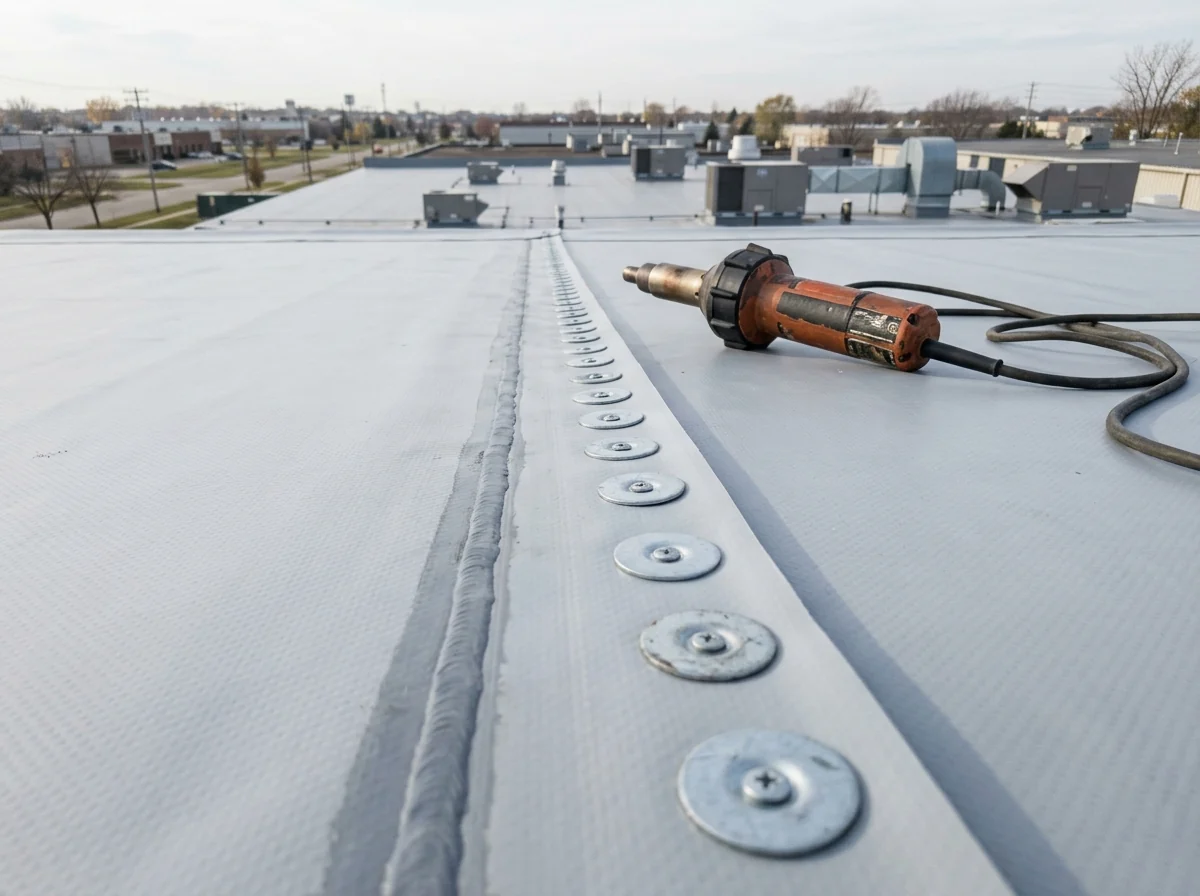
The sheet is screwed through the lap into the deck with round plates, and the next sheet overlaps and is welded over the fasteners. No adhesive goes down across the field, which keeps labor down, and it suits steel decks on warehouses and light-industrial buildings. The trade-off is movement: between rows of fasteners the sheet can lift in wind. Wind uplift is highest at the corners, then the perimeter, then the field, so ask for the fastener spacing in each zone; the corners and edges should be tighter than the middle of the roof.
Fully Adhered PVC
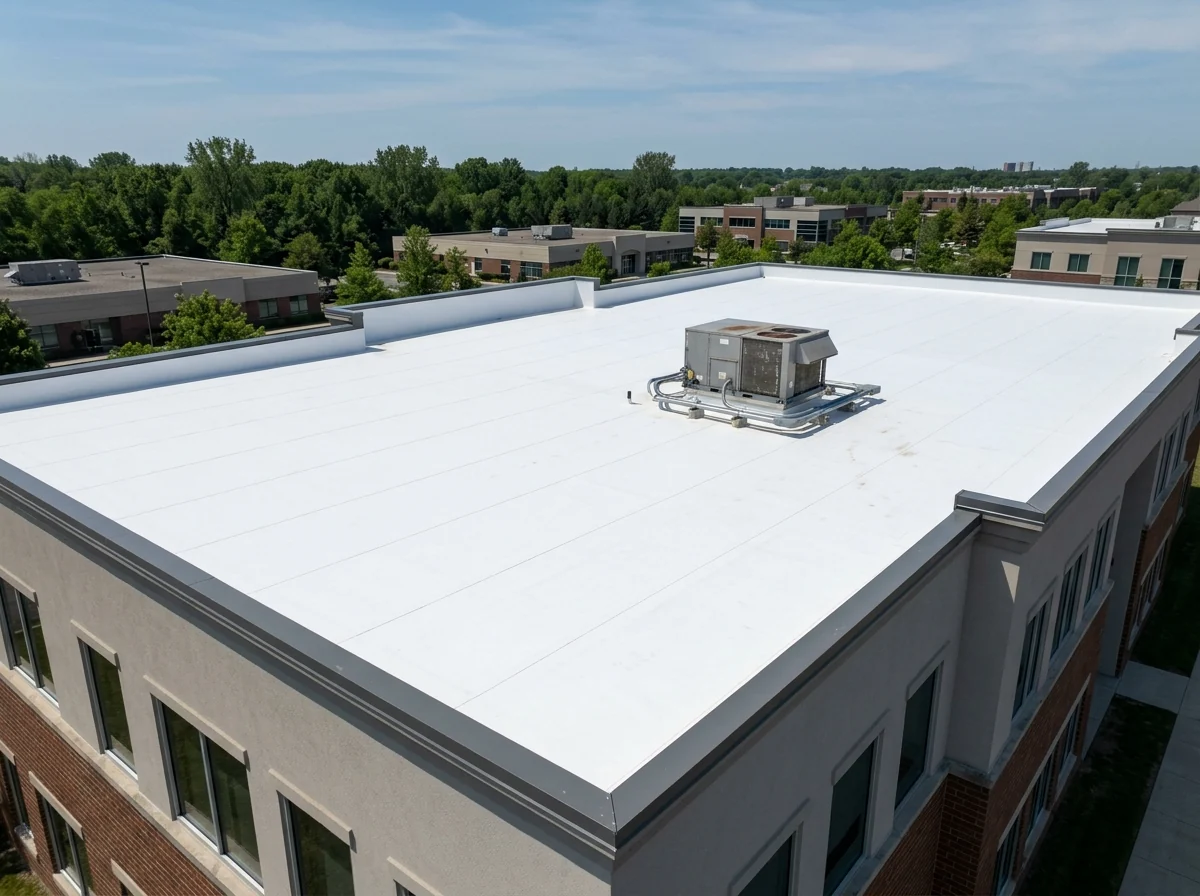
The membrane is glued to a cover board or insulation across its whole underside, either with bonding adhesive or as a fleece-backed sheet set in adhesive. Adhered roofs lie flat, look tidy from the parking deck next door, and don't flutter. They cost more in labor and adhesive, and adhesives have temperature limits (one maker's water-based PVC bonding adhesive needs more than 50°F and rising), so a Troy job in late fall may get scheduled around the forecast.
Induction-Welded PVC
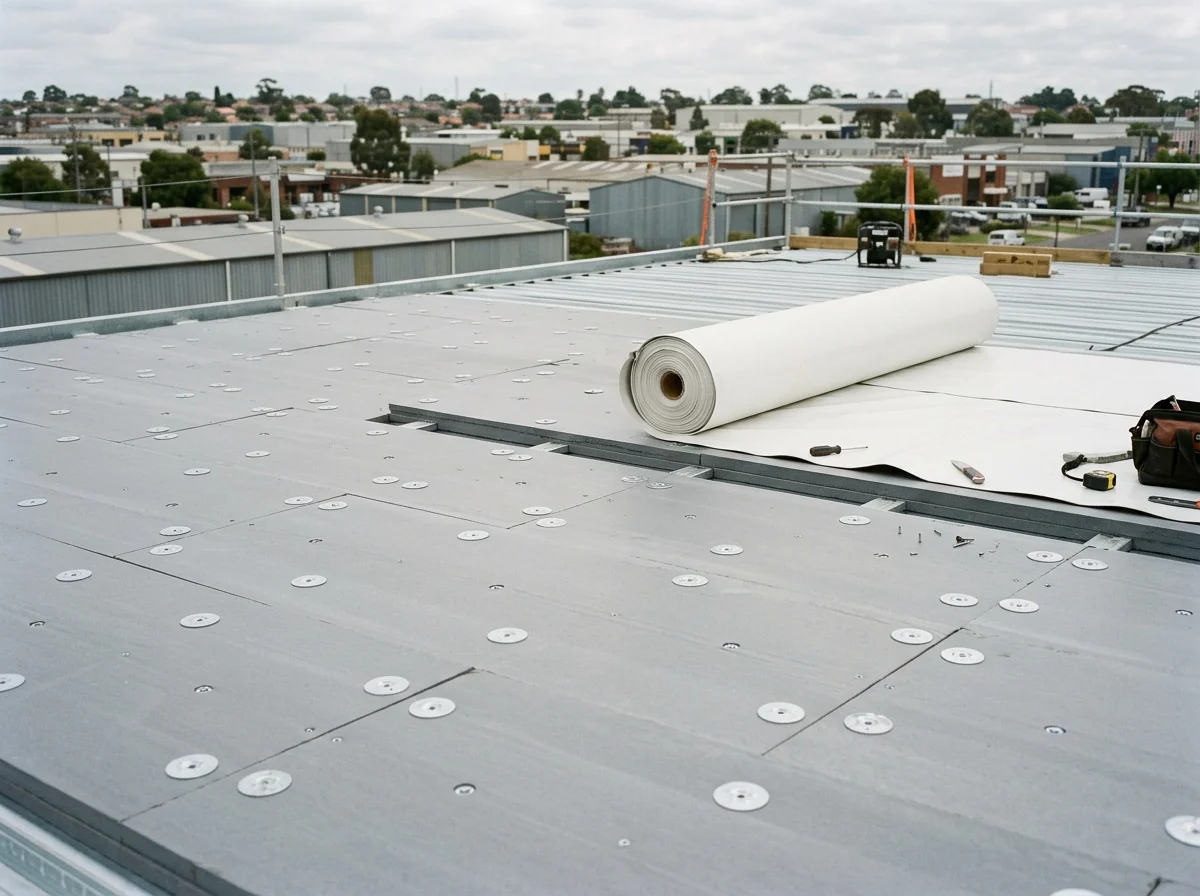
Here the same screws and plates that hold the insulation down also hold the PVC, without piercing it: once the sheet is unrolled, an induction tool set on the membrane over each plate warms the plate's coating for a few seconds and fuses it to the sheet's underside. No screw goes through a lap. On a recover, it gives the wind resistance of a fastened roof without perforating the new sheet at every seam.
Prefabricated PVC Deck Sheets
Duro-Last, headquartered in Saginaw, Michigan, makes custom-fabricated PVC deck sheets and says up to 85% of the membrane seams are welded in its factory before the sheets arrive. Fewer field welds means fewer welds done in wind and cold. If a roofer proposes a prefabricated system, ask to see the shop drawing so you know which seams and curb flashings were made in the plant and which will be welded on your roof.
PVC/KEE blends sit in this family too. The code covers PVC and PVC/KEE under the same ASTM D4434 standard, with straight KEE sheets under D6754.
Why Troy building owners call Troy Commercial Roofing
- Free, no-obligation roof assessment and estimate
- Written scope and price before any work starts
- One local commercial roofing contractor per request, not a call list
- No charge to building owners for the referral
PVC Roof Compatibility: What It Can't Touch
This is where PVC parts ways with TPO and EPDM. Its plasticizers try to reach balance with whatever the sheet is touching, and some materials pull them out. Versico lists expanded and extruded polystyrene, rubberized asphalt (some air and vapor barriers), asphalt and old PVC roofs as surfaces that draw plasticizers out of the membrane. Carlisle warns the loss can leave the PVC brittle or cracked, and Versico notes that against asphalt, the asphalt softens and flows.
The fix is cheap: a separator. Versico says a simple bond break such as polyethylene, a metal plate, insulation or fleece is enough, and names an aluminum separator as the best answer where PVC would touch asphalt shingles. This matters most on a recover over an old built-up or modified bitumen roof. If a PVC bid doesn't say what goes between the old roof and the new sheet, ask before you sign.
Two other checks belong here. Whether the old roof can stay at all depends on the code's recover rules, covered on our commercial roof replacement page. And if the building has a commercial kitchen, read the grease section on restaurant roofing before choosing between sheets.
PVC Roof Repair and Seam Work
Most PVC leaks start at a detail: a weld that was never fully fused, a pipe boot split by ice, a puncture where someone dropped a tool near a rooftop unit. A repair on a thermoplastic roof means cleaning the old sheet, welding a patch of new PVC over the damage and probing the edge of the weld.
Whether an older sheet will still take a good weld is something to test, not assume. Ask the roofer to make a test weld on your existing sheet and pull it before quoting a large repair. If the test fails, a patch won't hold, and the conversation shifts to a section replacement or a recover. Ask for photos of each repaired spot so the next inspection can find them.
PVC Roofing Cost and Thickness in Troy
HomeGuide's national installed range for PVC is $5 to $12 per square foot, topping its TPO ceiling by $2, and it gives PVC a 20 to 30 year life range. Those are published averages, not quotes.
What changes a PVC price on a Troy building:
Attachment
Fastened costs least, induction-welded sits in the middle and fully adhered costs most, mainly in labor.Thickness
Duro-Last sells a second PVC line, Duro-Tuff, in 50, 60 and 80 mil. Thicker sheet adds material cost and wear layer; get prices on two thicknesses if you plan to hold the building.Separators and cover board
A recover over asphalt needs a separation layer; a tear-off needs new insulation to meet the energy code, explained on the roof insulation page.Detail count
Every curb, drain and pipe is a welded flashing. A roof with forty penetrations prices differently from one with four.Prefabrication
Factory-welded sheets shift labor off the roof, which can shorten the job on an occupied building.
Send us the roof size, the deck type if you know it and what sits on the roof. One independent roofer gets the request and can price PVC next to any other membrane that fits, so you can compare them on the same scope.