
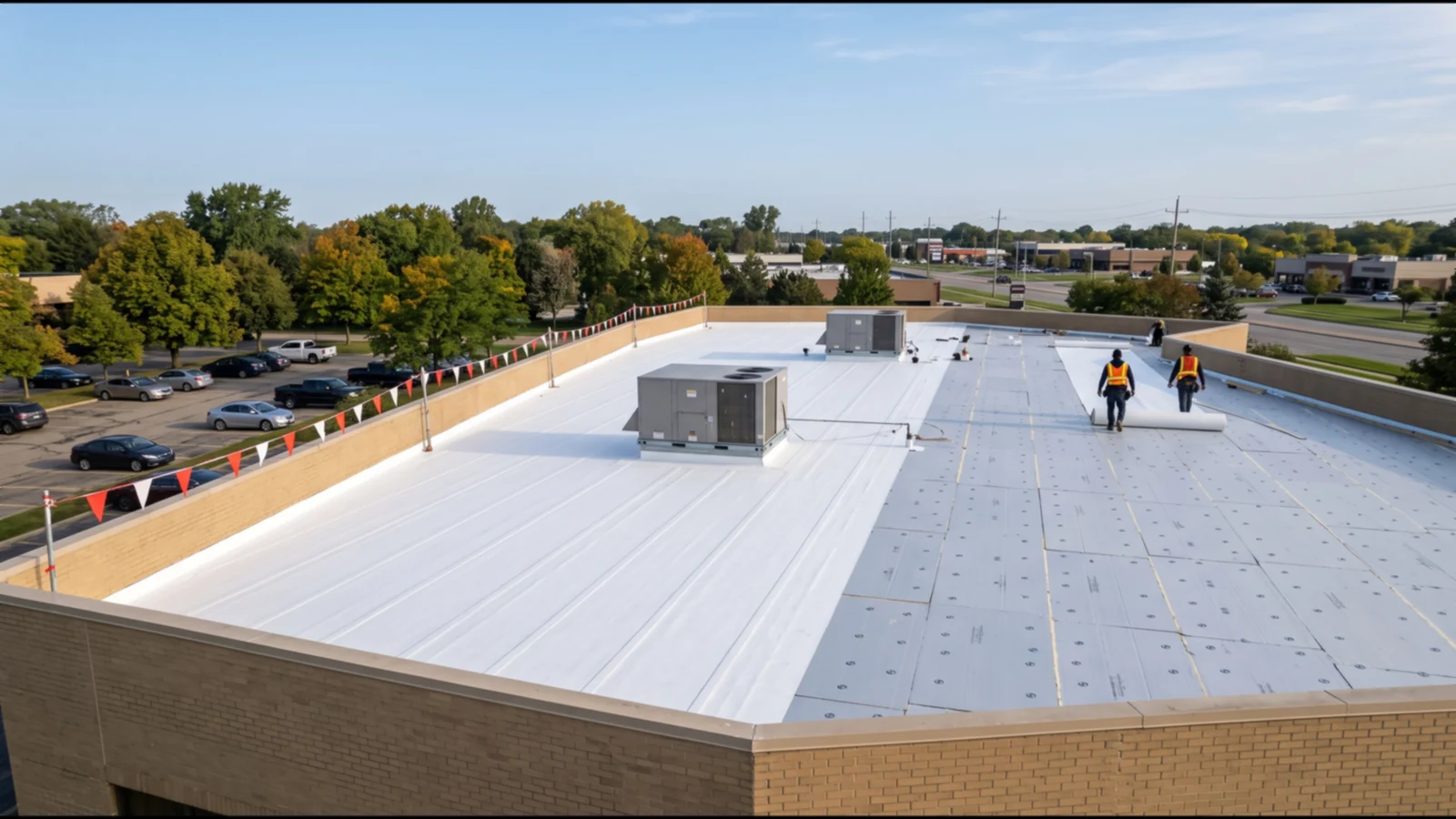
Commercial Roof Replacement Options for Troy Buildings
There are three ways to put a new roof on a commercial building, and they differ in cost, code limits and what they reveal about the old roof.
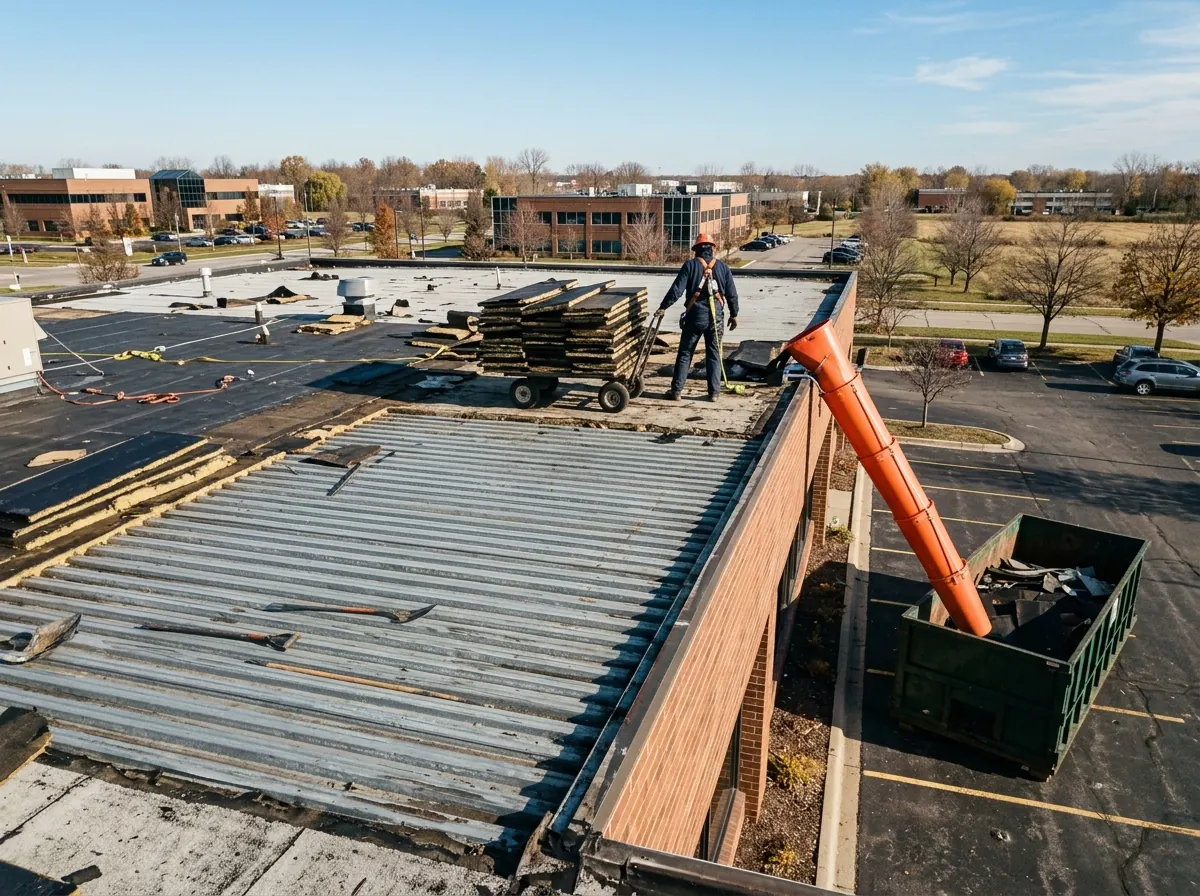
Full Tear-Off to the Deck
A tear-off strips every layer to the deck, which is the only way to see the deck itself. Rusted steel flutes, soft wood plank or spalled concrete get fixed while the roof is open, which is why deck work belongs in the bid before anyone starts. Ask for unit prices for deck replacement in the bid, per square foot or per sheet, so surprises are priced before work starts.
New insulation goes down next, and how it is fastened decides how the roof handles wind. MuleHide calls the attachment of insulation and cover boards to the deck "the most crucial factor" in a roof system's performance; skipping the manufacturer's fastener or adhesive pattern fails the warranty inspection. When a roof is torn off, the energy code also sets the new insulation level; see commercial roof insulation.
Removal adds cost of its own. HomeGuide estimates $1 to $2 per square foot for a flat roof tear-off with disposal, and Angi gives $1 to $5.
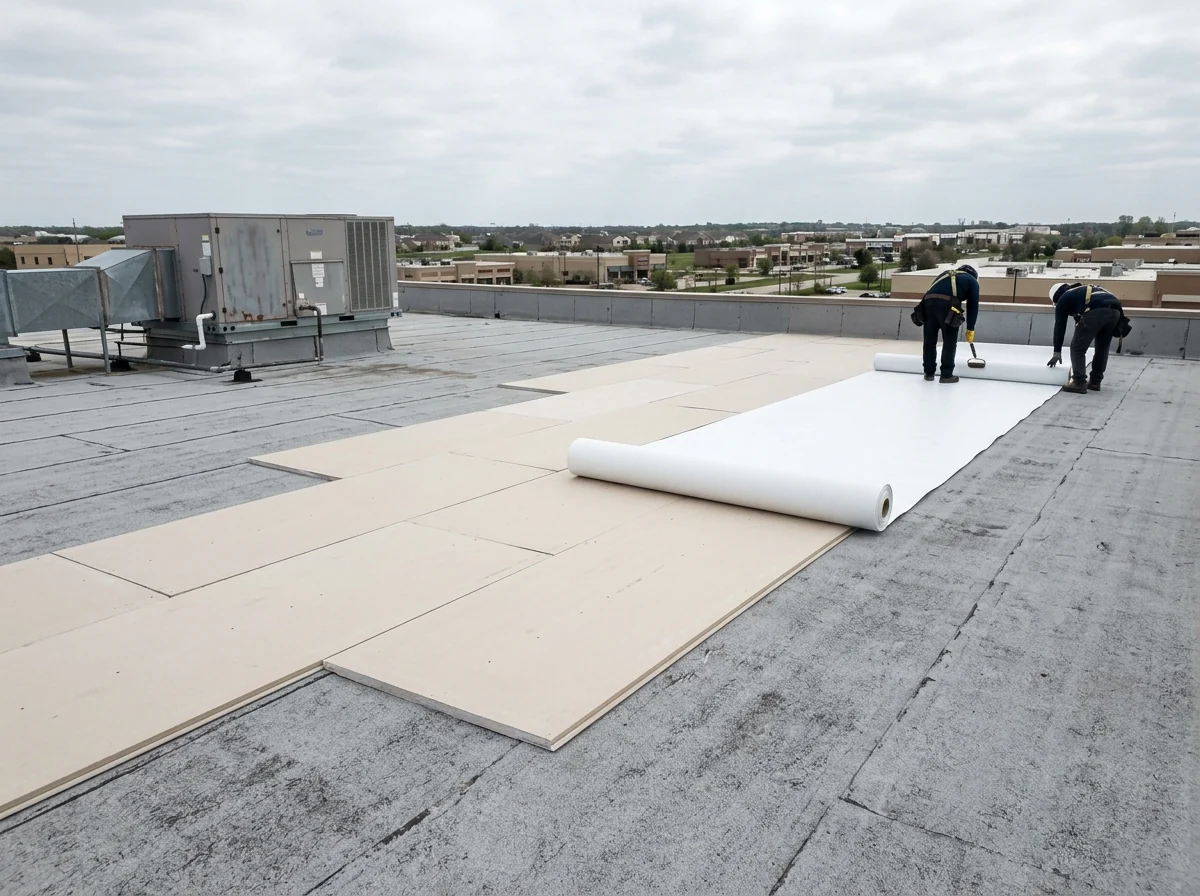
Roof Recover Over the Existing Roof
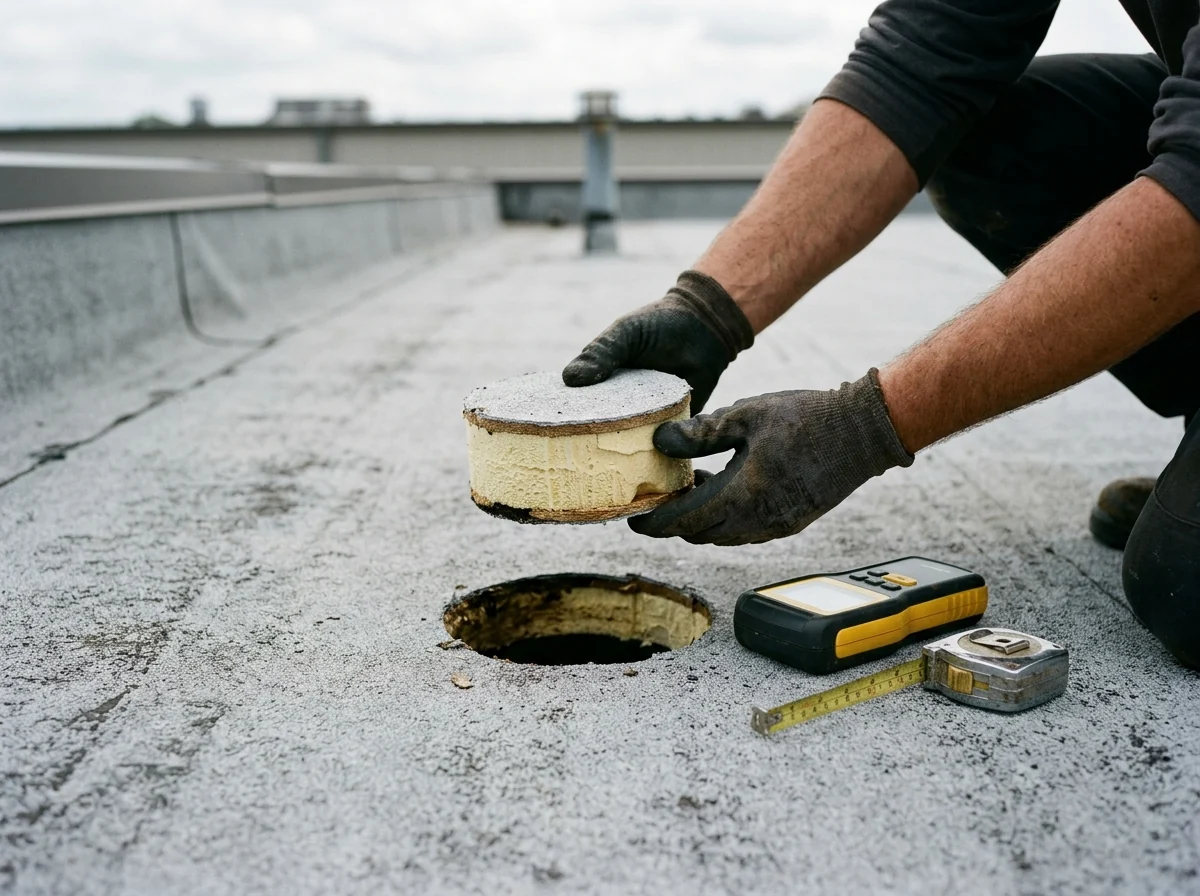
A recover leaves the old roof in place and builds over it, usually with a cover board and a new membrane. It saves the tear-off and keeps the building closed to weather during the work. It only works on a dry, sound roof, so core cuts come first: MuleHide's assessment pulls samples down to the deck to see whether the insulation is wet and whether the roof has already been recovered. Isolated wet areas can be cut out and replaced before the recover; wet insulation throughout means tear-off. The code limits are below.
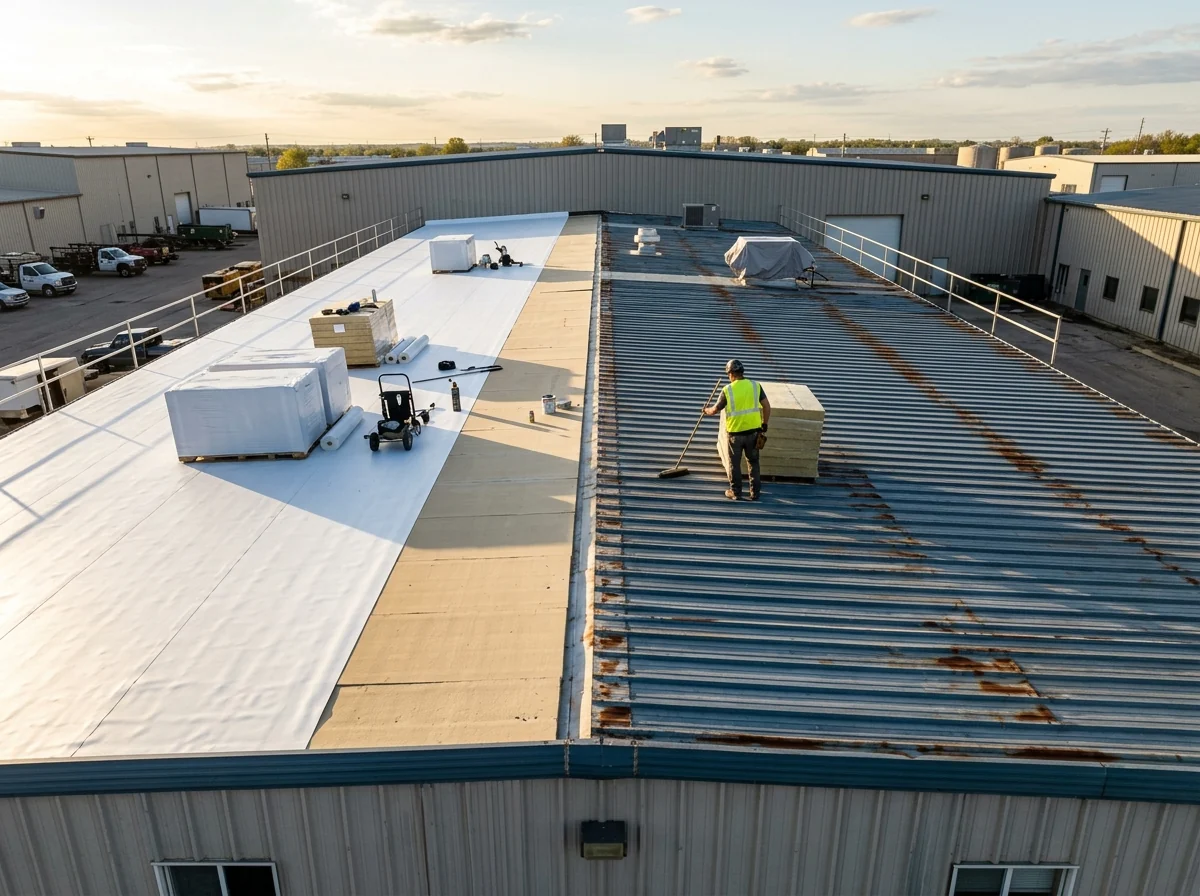
Retrofit Over Metal Roofs
Old exposed-fastener metal roofs on warehouses and shops have two retrofit routes. One is a new standing seam system on its own framing; the code allows a complete, separate system that carries loads straight to the structure to go on without removing the old roof. The other is insulation and a single-ply membrane over the panels. OMG says its induction-welded RhinoBond attachment suits metal retrofits because the membrane seams don't have to land over the purlins. See commercial metal roofing for the panels themselves.
Why Troy building owners call Troy Commercial Roofing
- Free, no-obligation roof assessment and estimate
- Written scope and price before any work starts
- One local commercial roofing contractor per request, not a call list
- No charge to building owners for the referral
Michigan Code Limits on Recovering a Roof
Troy enforces the 2021 Michigan Building Code, in effect since April 9, 2025, and Michigan's Rule 401 adopts the 2021 International Building Code by reference. Its list of deleted sections includes nothing from the roofing chapter, so the model reroofing rules in Section 1512 apply as written (our reading of the rule).
Under Section 1512, a new roof may go over an old one when it is installed to the roof manufacturer's approved instructions. A recover is not allowed when:
- the existing roof is water-soaked or too deteriorated to serve as a base;
- the existing covering is slate, clay, cement or asbestos-cement tile;
- the roof already has two or more applications of any roof covering.
Coatings sit outside that limit: the same code section lets a coating go over most existing roof types without a tear-off, which is why a dry, sound roof is often coated rather than recovered (commercial roof coatings). Slope and overflow drain rules on reroofing are covered on commercial roof insulation and roof drain repair.
City of Troy Reroof Permit
Troy accepts roofing permit applications online through BSAonline.com. Each online submittal needs a completed building permit application, project cost verification and supplemental specifications attached as PDFs. A few details are worth knowing before the job is scheduled:
Who can pull it
Only a registered contractor and the people it names on Troy's registration form can obtain permits. The form asks for a license number and a workers' comp carrier, and building registration costs $35.What it costs
The 2026-27 fee schedule charges $215 plus $10 for each additional $1,000 of job value from $10,001 to $1,000,000, plus plan review. Our arithmetic for a $150,000 reroof: about $1,615 before plan review. Starting without a permit adds a $125 fee.When plans are involved
If the work goes through commercial plan review, with sealed drawings for structural or mechanical changes, the city's cover sheet gives an average review time of two weeks and accepts only digitally sealed PDFs.Keeping it alive
Troy warns commercial applicants that a permit not extended within 30 days of its expiration date is lost, and the replacement permit needs a fresh plan review.
The Building Department (248-524-3344) can confirm what a particular roof needs.
Commercial Roof Warranty Types
Three different promises can come with a new roof, from two different parties. Read each one separately.
Manufacturer system (NDL) warranty
Covers material and labor on covered leaks with no dollar limit. Elevate's Red Shield, as an example, covers the membrane, insulation and metal edge, runs from 5 to 30 years and transfers between owners. The longest terms carry conditions: its 30-year Platinum needs fully adhered EPDM of at least 90 mil or TPO of at least 80 mil, with optional coverage for 2-inch hail and 100 mph wind.Material or product-only warranty
Covers the product. Manufacturers issue these too (Elevate mentions product-only warranties in its transfer terms). Check in writing whether labor to remove and replace a defective sheet is included.Contractor workmanship warranty
The roofer's own promise on installation. Its length and exclusions are whatever the contract says, so get it on paper with the bid.
System warranties are issued only on roofs installed by the manufacturer's licensed applicators and inspected at the end. Changes to a warrantied roof later on, such as a new rooftop unit, have to be reported through a licensed contractor, or coverage may be at risk.
Commercial Roof Replacement Cost Drivers
Installed prices by system are on the homepage. On top of those, HomeGuide puts flat roof labor at $2.00 to $4.50 per square foot. A replacement quote moves most with tear-off versus recover, deck repairs, the insulation the energy code requires, warranty term (longer terms can require thicker membrane), crane days and how many rooftop units have to be lifted. Ask for each as its own line item. Your request goes to one local roofer, free of charge, and the written scope comes from that roofer.