
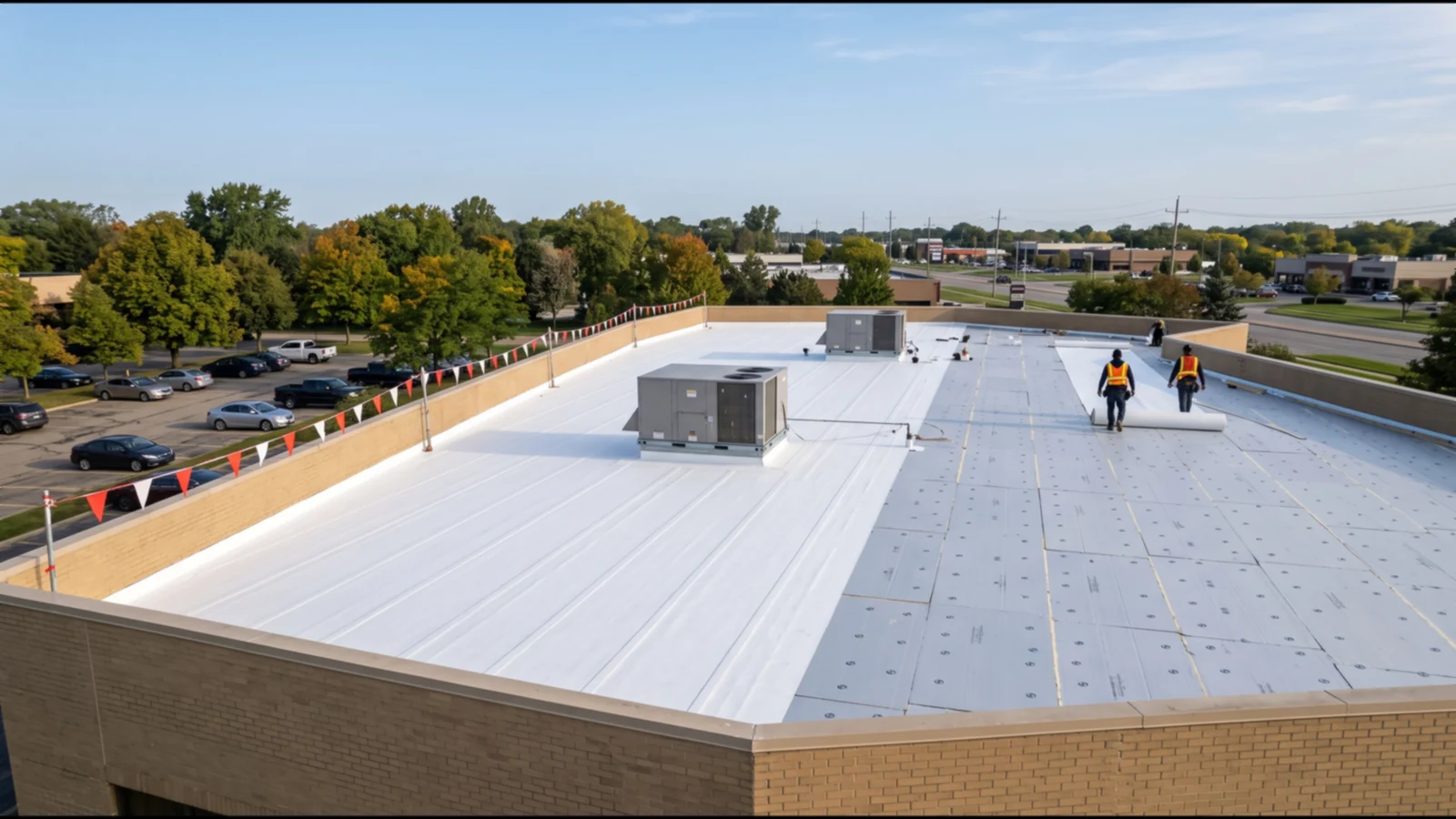
Roof Flashing Repair Types on Troy Flat Roofs
The building code lists where flashing has to go: at wall and roof intersections, at gutters, wherever the roof changes slope or direction, and around every roof opening. Its job is to keep water out of the wall and the roof at coping joints and at parapets. Here is how each piece fails.
Base Flashing at Parapet Walls
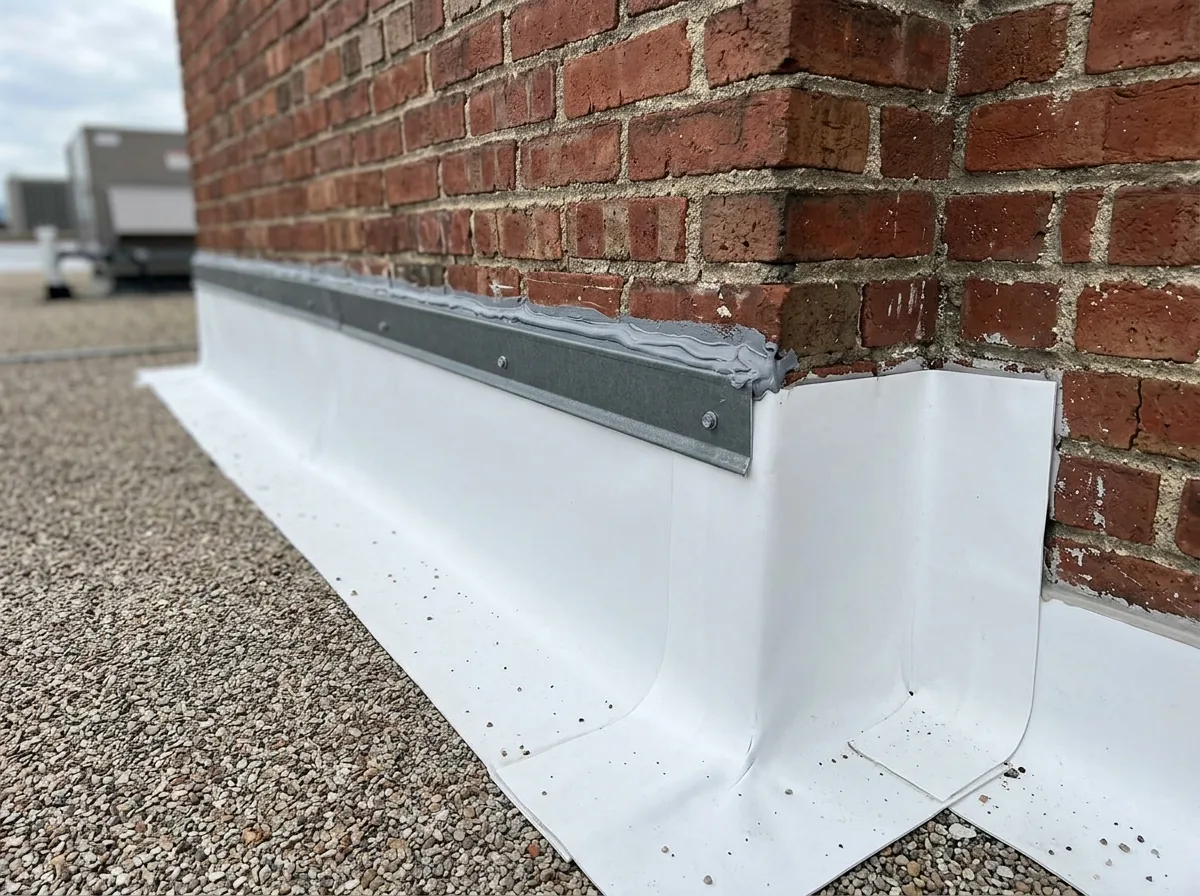
Base flashing is the strip of membrane that turns up from the roof onto the face of a parapet and is fastened at the top with a termination bar. Over years the field membrane shrinks and pulls on it until it lifts off the wall and bridges the corner instead of sitting tight in it. Seams at inside and outside corners split, and adhesive lets go where the wall stays damp. A repair strips the loose flashing, primes the wall and installs new flashing of the same membrane family, welded or taped to the field sheet.
Coping Caps and Parapet Tops
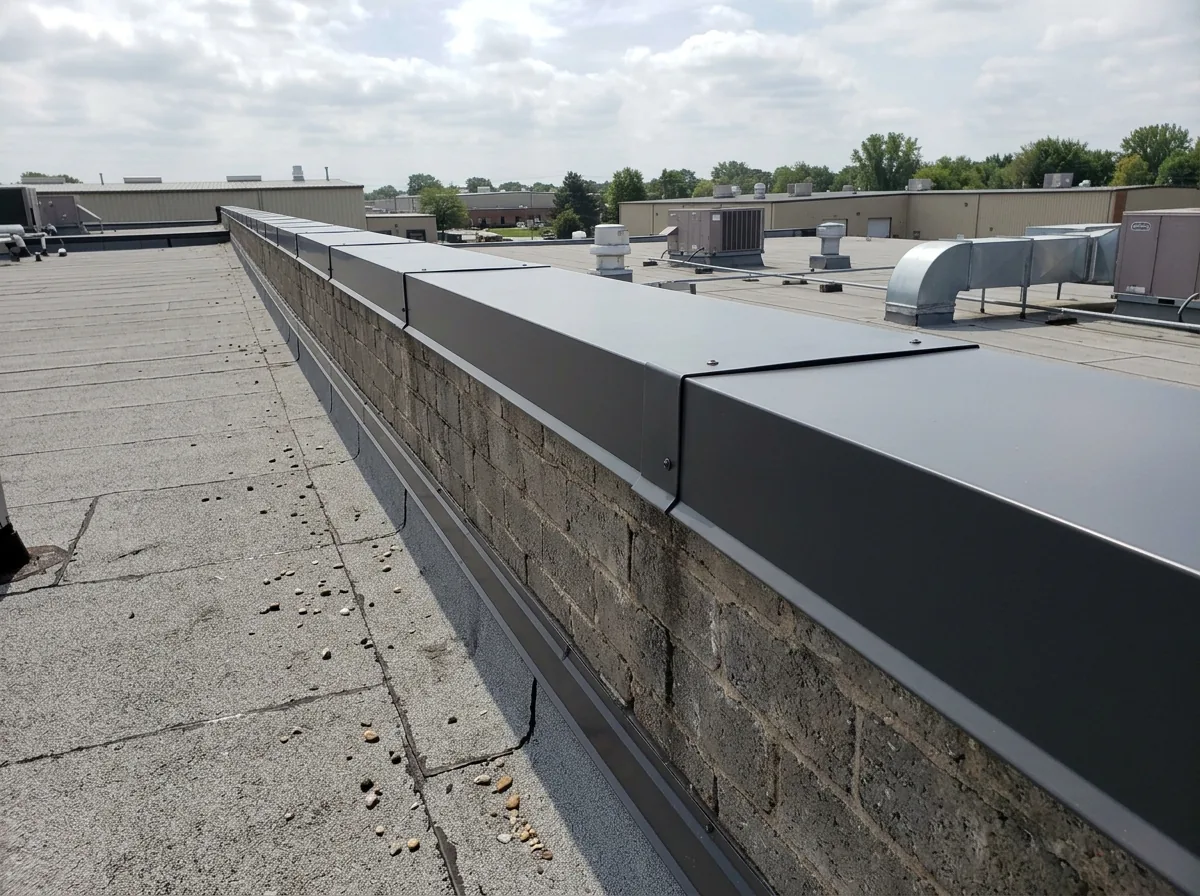
The top of a parapet has to be coped or covered with weatherproof material at least as wide as the wall is thick, and that top surface has to drain. Metal copings slope inward toward the roof and run on continuous cleats, with joint covers or sealed laps every few feet. Water gets in when joint sealant dries out, when copings are face-nailed instead of cleated, or when a coping was cut too narrow and the wall's top edge is exposed. Once water is inside a masonry parapet, it shows up as stains on the facade or as leaks below the base flashing, nowhere near the joint that let it in.
Cracked brick and failed mortar in the parapet itself are mason's work. A good roofer will tell you when the wall needs repointing before new coping goes on.
Counterflashing and Reglets
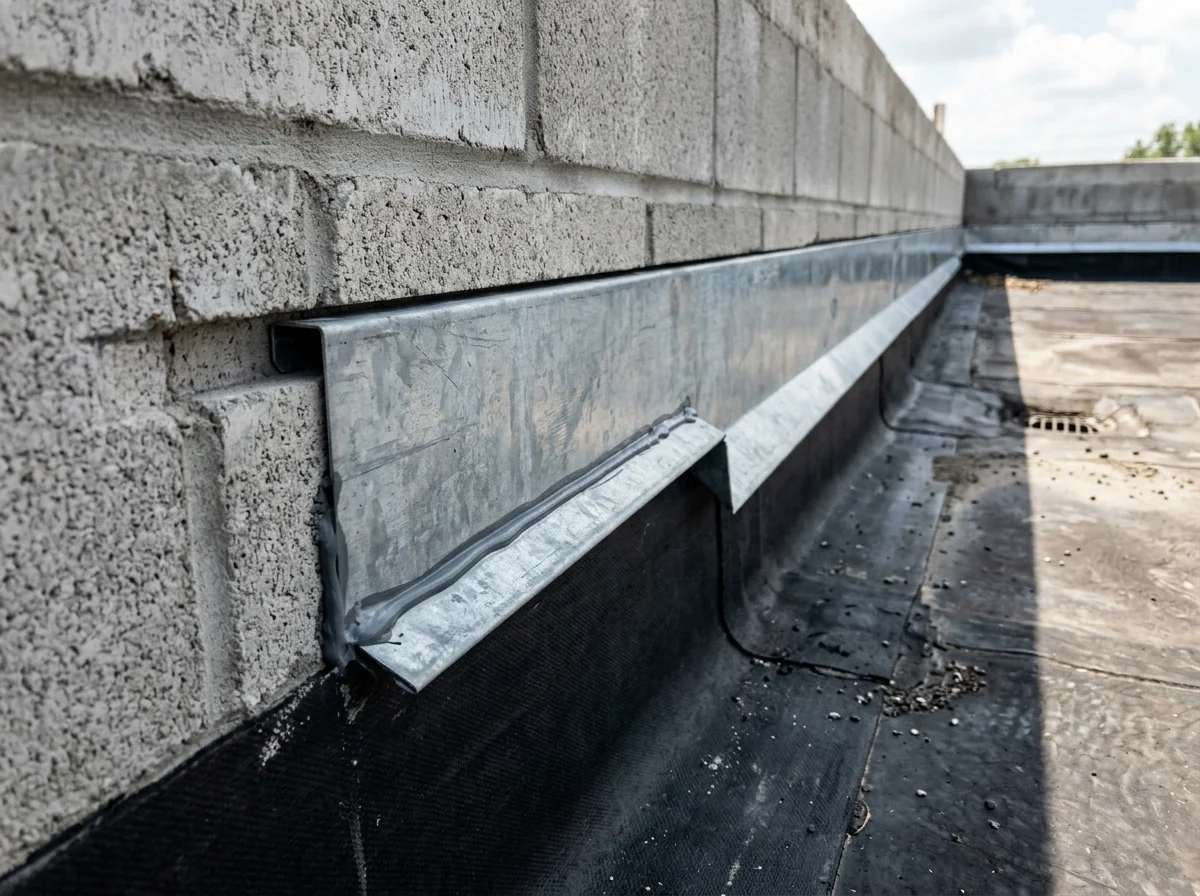
Counterflashing is the metal strip that laps down over the top of the base flashing so water running down the wall can't get behind it. It is either surface-mounted with a sealant bead or let into a reglet sawn into the masonry. Metal flashing must be corrosion resistant and at least 0.019 inch thick, the weight of No. 26 galvanized sheet. Surface-mounted counterflashing depends on its sealant, which needs renewing on a cycle; reglets cost more up front but keep the joint under the metal.
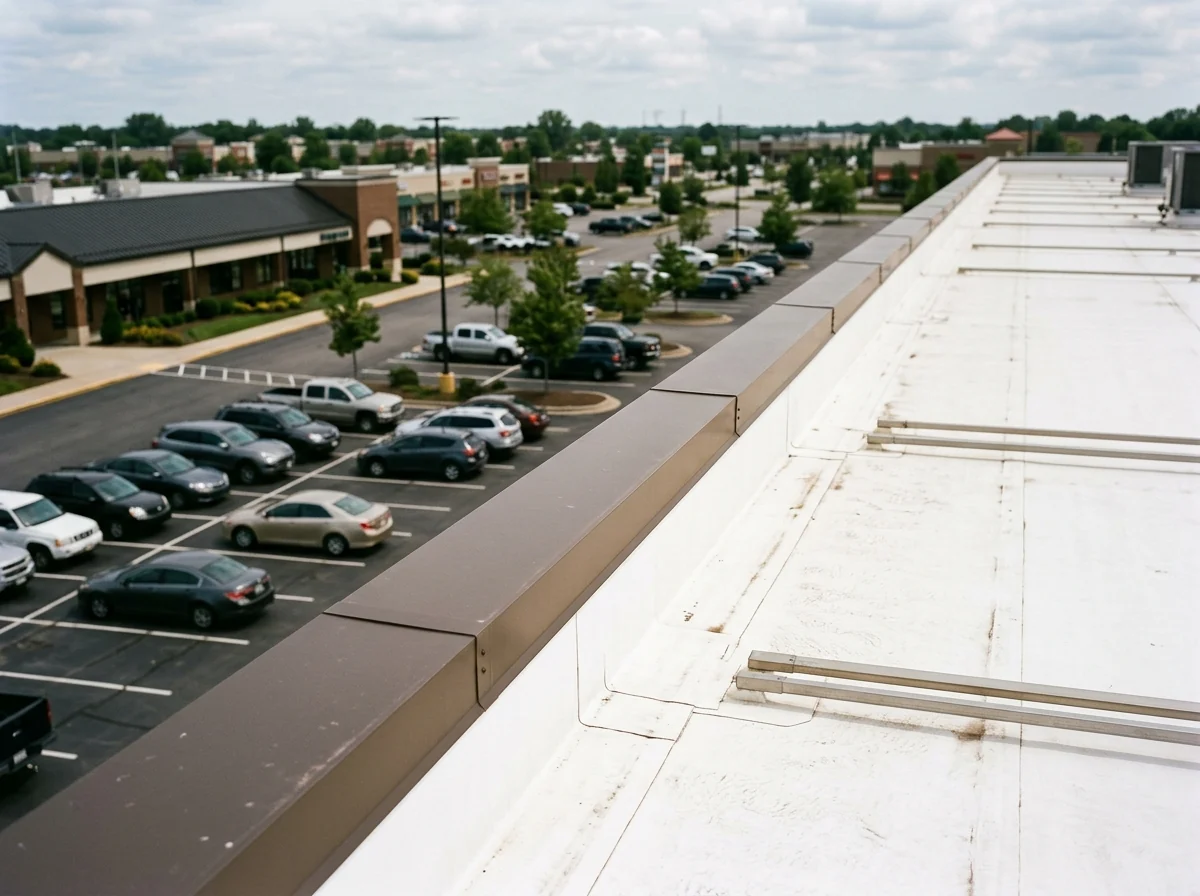
Edge Metal and Gravel Stops
Perimeter edge metal clamps the membrane at the roof's outer edge, where wind uplift is highest. On built-up, modified bitumen and single-ply roofs below 2:12, the code requires edge systems designed for wind and tested to the ANSI/SPRI ES-1 standard. A loose or bent fascia lets wind under the membrane, and that is how many flat roofs start to peel back in a storm. Repairs to a short run can be made in matching metal; a long run that is pulling free should be replaced with a tested system.
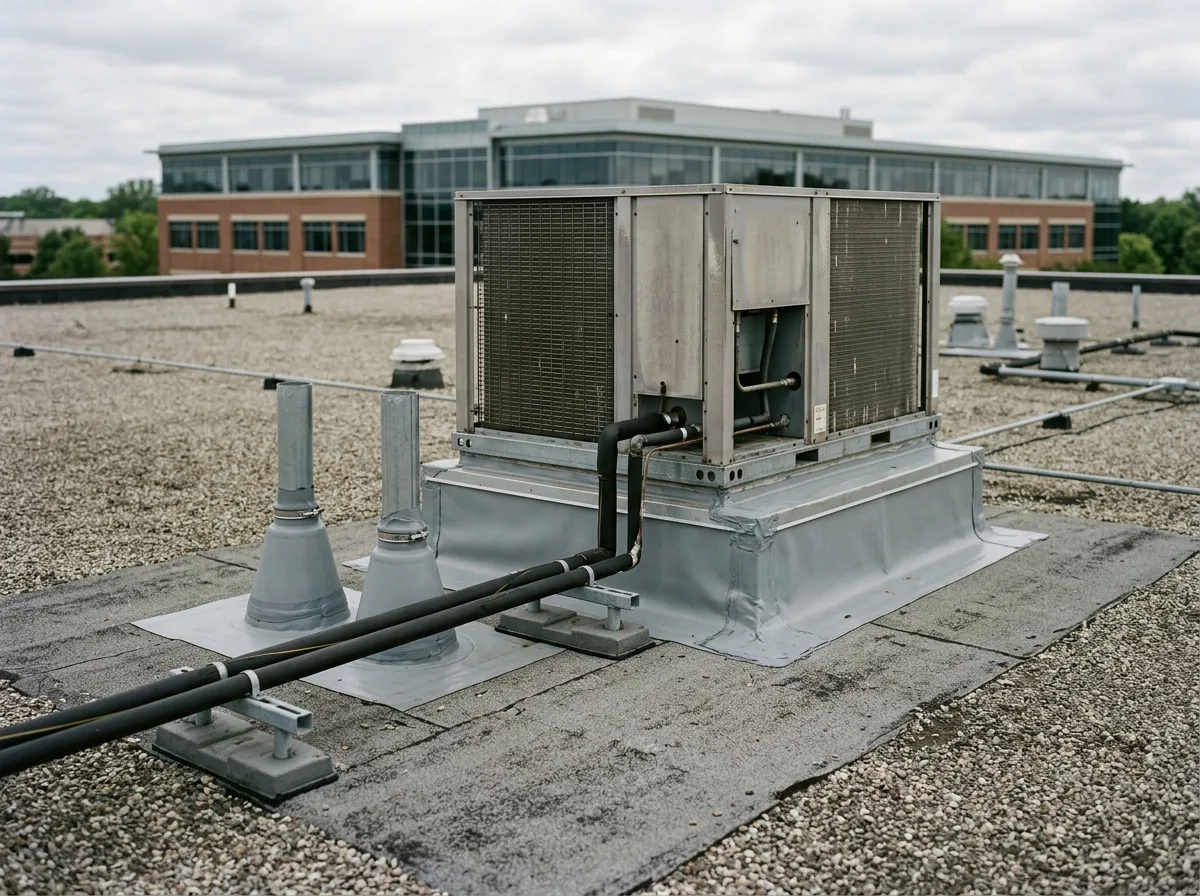
Curbs, Pipe Penetrations and Equipment Supports
Rooftop unit curbs, exhaust fan curbs, pipe boots, pitch pans and equipment rails all break the membrane. Each needs flashing tied into the field sheet and a clamp or counterflashing on top. Pitch pans filled with sealant need topping up as the filler shrinks and pulls away from the pipe. On sloped roofs, a curb or chimney more than 30 inches wide needs a cricket on its uphill side so water is steered around it. New curbs for added equipment fall under this same work; skylights and hatches have their own page.
Why Troy building owners call Troy Commercial Roofing
- Free, no-obligation roof assessment and estimate
- Written scope and price before any work starts
- One local commercial roofing contractor per request, not a call list
- No charge to building owners for the referral
Why Flashing Fails Before the Rest of a Flat Roof
Flashing sits where different materials meet and move differently. Brick, block and steel expand and contract at their own rates, and the membrane, fastened to the deck, moves with neither.
Michigan winters add their own stress. In Detroit's climate normals, the average high for each month from December to March is above 32°F and the average low is under it, so meltwater that soaks into an open lap or a cracked sealant joint freezes and pries it wider. Parapets also hold water: where a parapet traps water against the base flashing, ponding stays in contact with the most vulnerable seam on the roof. Drainage at the walls is covered on roof drain repair.
Flashing Repair or Reflashing During a Reroof
A localized flashing repair makes sense when the field membrane is sound and only one wall, one corner or a few curbs leak. Reflashing the whole perimeter makes sense when the same failure shows up on several walls, which says the material has reached its age rather than one detail being botched.
During a full roof replacement, all flashing is redone. The code bars reinstalling rusted, damaged or deteriorated counterflashing, edging and vent flashing during a reroof, so expect that metal on the bid. If your roof is still under a manufacturer's warranty, ask whether the repair will be made to the maker's details so the coverage stays in force, and ask who notifies the manufacturer.
Questions to Ask Before a Flashing or Parapet Repair
Where the water is getting in
Is the leak at the base flashing, a coping joint, the masonry or a penetration? Ask how that was confirmed.Flashing height
The finished height of new base flashing above the roof surface.Termination and counterflashing
Termination bar, reglet or surface-mount, and how it is sealed.Coping attachment
Continuous cleats and joint covers rather than exposed face fasteners.Edge metal rating
Whether replacement edge metal is an ES-1 tested system.Masonry
Whether the parapet needs a mason first, and who coordinates that.
Send the form with photos of the wall or detail that leaks, if you have them. One independent roofer gets your request and looks at the flashing in person.