
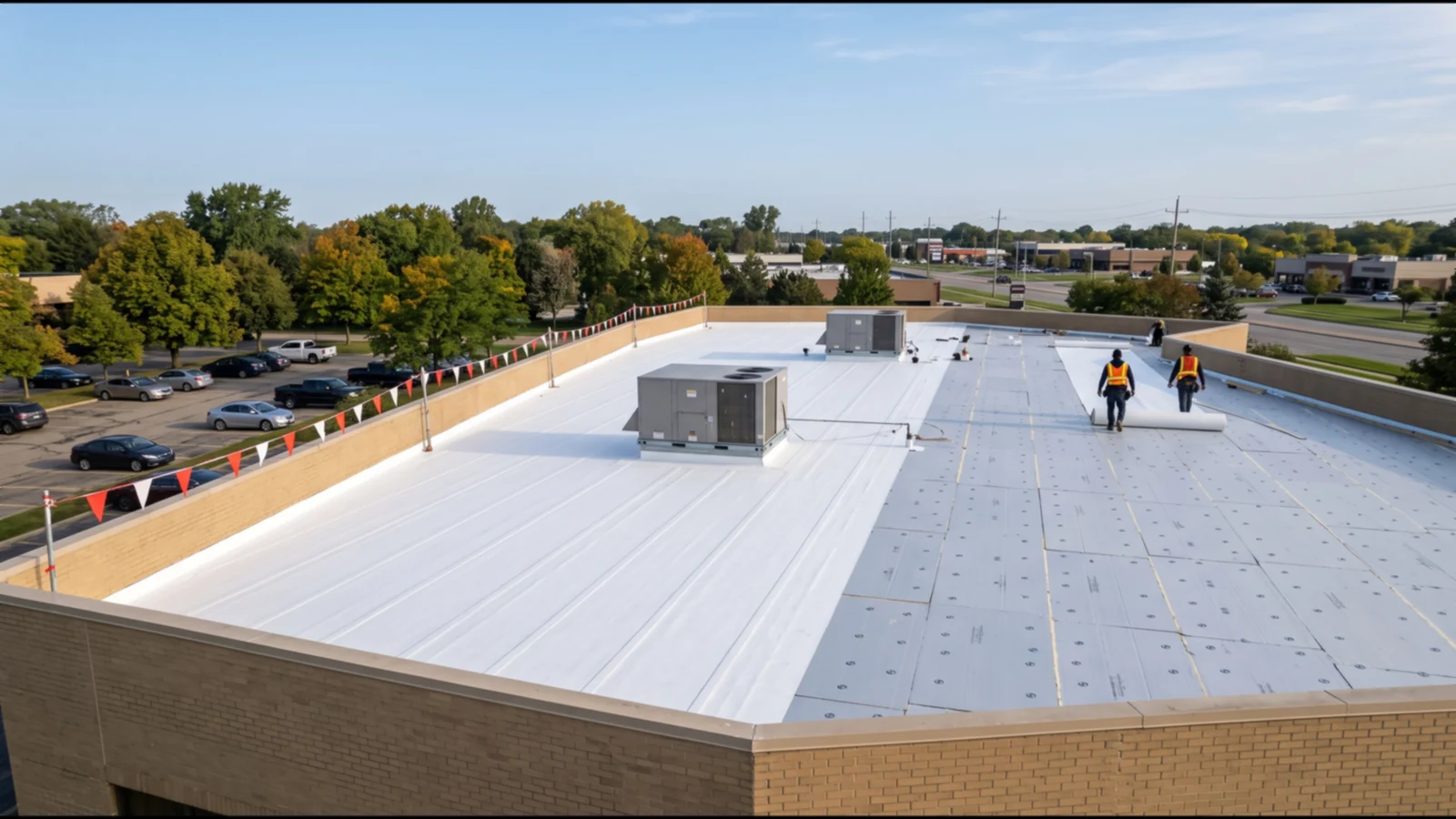
Commercial Roof Repair Types for Troy Buildings
Most repair calls fall into one of five jobs. The method depends on the membrane, so the first question a roofer should answer is what's actually on the roof.
Seam and Lap Repair
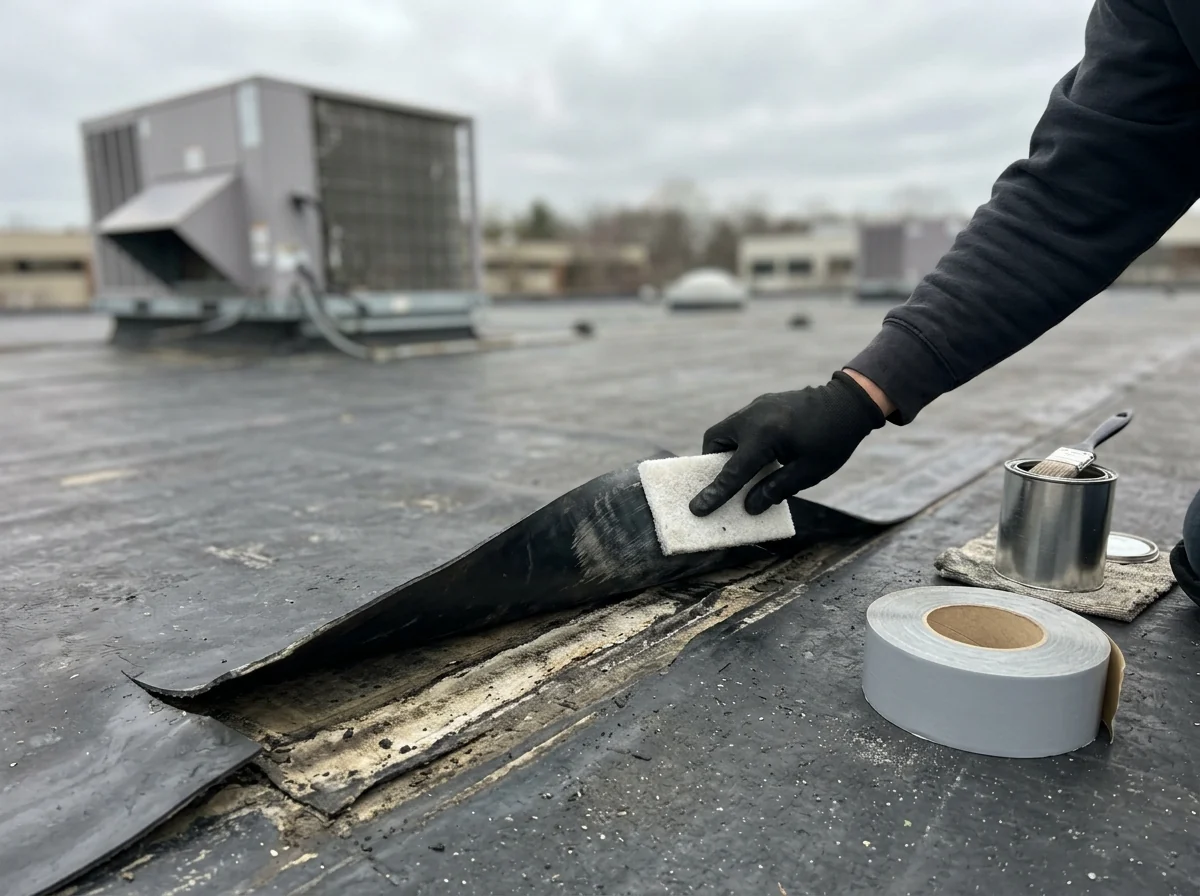
On rubber roofs, open laps are the classic failure. A Roofing Contractor technical column says seam failure accounts for the majority of problems with EPDM systems, often because the talc dusted on the sheet at the factory was never fully cleaned off before the seam was glued. The repair pulls the open lap back to a sound section, cleans and re-adheres it, then covers it with primed tape or a patch.
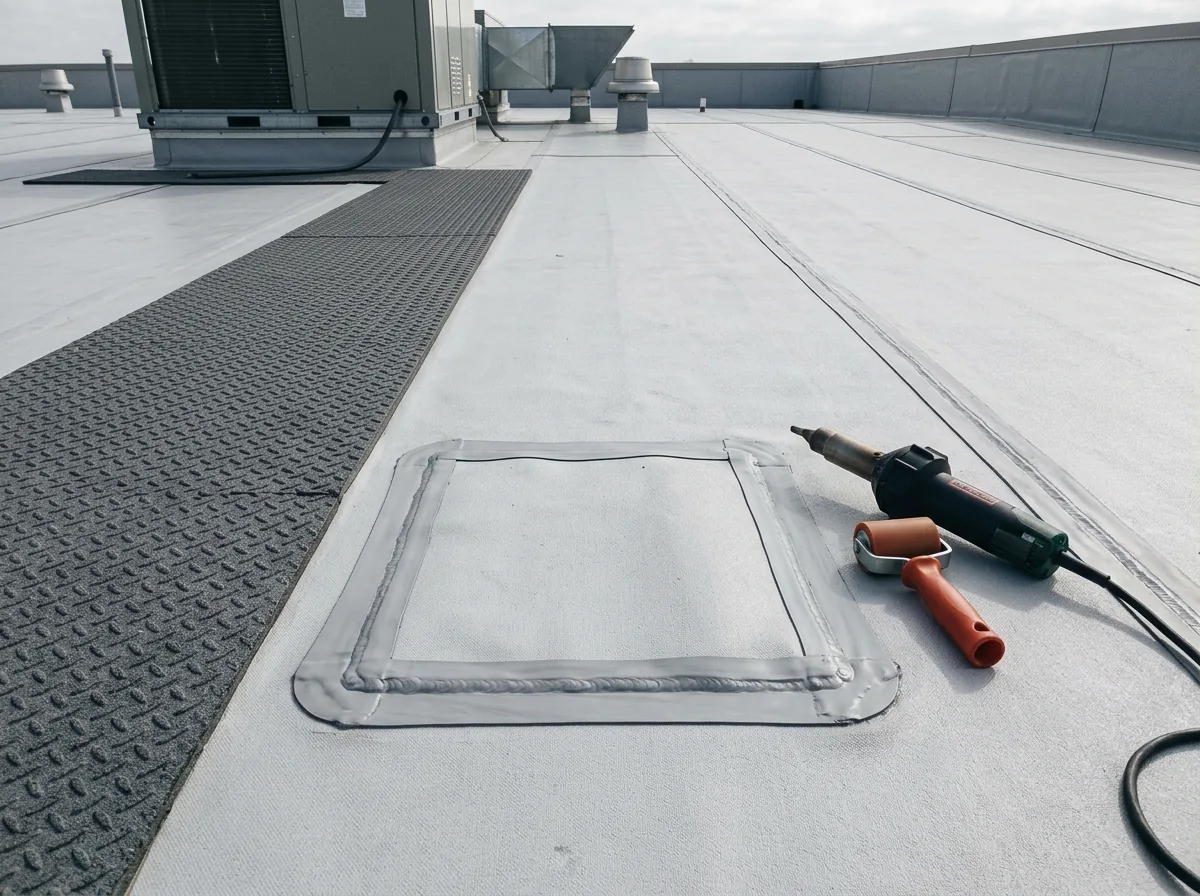
Thermoplastic sheets are welded, not glued, and an old TPO roof won't take a weld like fresh sheet. Carlisle's instructions for welding aged TPO call for scrubbing the area with a weathered-membrane cleaner until the residue comes away, wiping it clean and only then running the hot-air welder. PVC is welded the same way, but Carlisle's data sheet says its weathered-membrane cleaner for TPO and EPDM is not for PVC. Ask whether the new welds will be probed once they cool, and ask which cleaner goes on your sheet.
Flashing and Penetration Repair
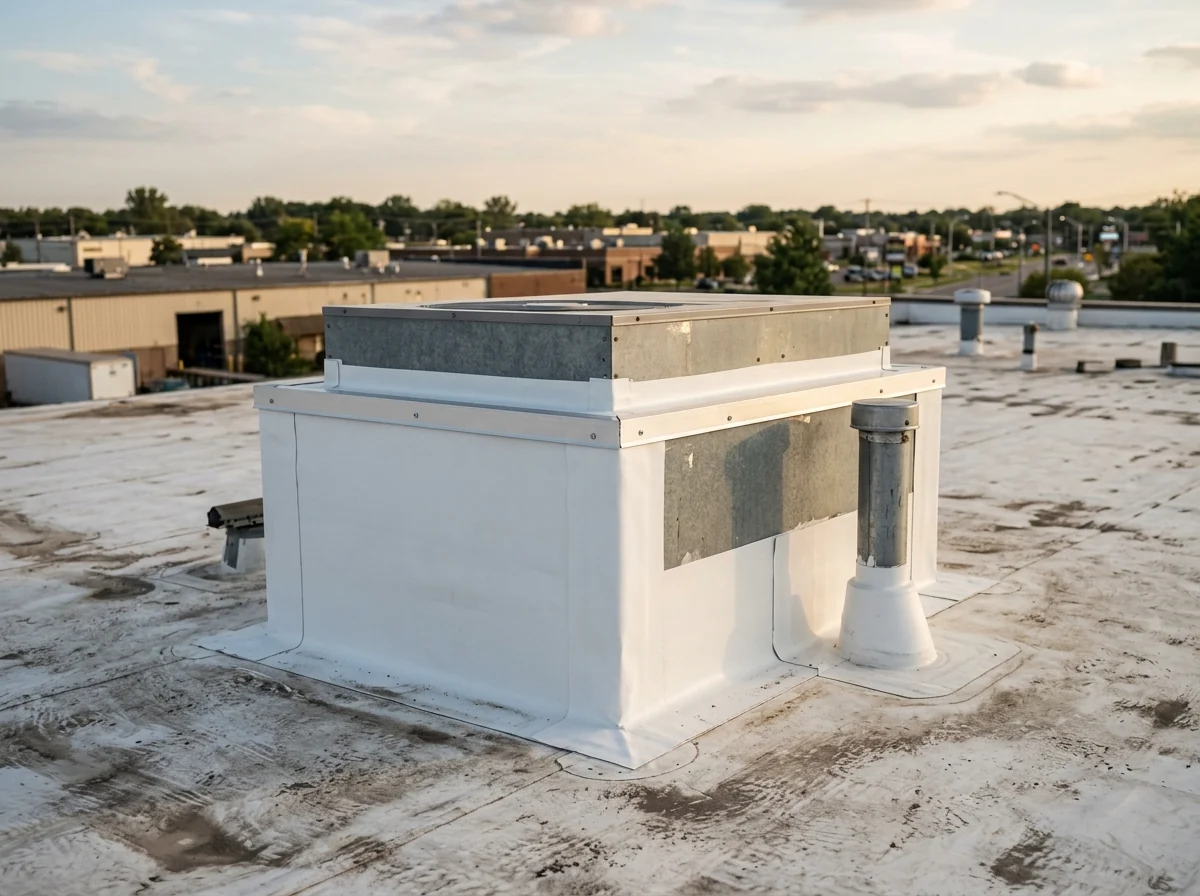
Rooftop units, exhaust fans, gas lines, conduit and plumbing vents all pass through the membrane, and every one is flashed by hand. A flashing repair strips the failed piece, cleans back to sound membrane and installs new flashing in a compatible material. Parapet walls, coping and edge metal have their own page: roof flashing repair.
New penetrations deserve a warning. When a mechanical contractor adds a unit or a conduit run to a warrantied roof, the roofing around it is a warranty matter. Elevate, to take one manufacturer, requires changes after the warranty inspection to be reported by one of its licensed contractors and says skipping that step may jeopardize coverage.
Punctures, Blisters and Splits
Dropped tools, foot traffic to rooftop units and hail all leave holes and cuts. The procedure in that same trade column: clean an area at least 6 inches beyond the defect, cut a patch of like membrane that reaches 4 inches past it on every side, and round the corners so they don't lift. Ballast and any field-applied coating come off first.
If water got through, the membrane gets opened. Wet or damaged insulation comes out, the deck is repaired, and dry insulation of the same thickness goes back before the patch. A patch laid over soaked insulation just seals the water in.
Drain, Scupper and Edge Leaks
Water held back by a clogged strainer or a low spot finds the weakest lap nearby, so the fix is sometimes the drain ring and clamping collar rather than the membrane. Loose or damaged perimeter edge metal is on MuleHide's assessment checklist for the same reason. Drain bodies, strainers and overflow scuppers are covered on roof drain repair.
Section Replacement
When the same bay keeps leaking, or cores show soaked insulation across a wide area, patching stops paying. MuleHide's rule of thumb from its roof assessments: high moisture throughout the roof likely means replacement, while isolated wet areas can often be repaired. Angi's consumer guidance suggests replacing once a repair would cost more than half of a new roof. Our view: on a large commercial roof, make that comparison section by section. Cutting out a wet area and rebuilding it with new insulation and membrane tied into the old roof counts as a repair in its own right, and it keeps the rest of a sound roof in service. For the whole-roof decision, see commercial roof replacement.
Why Troy building owners call Troy Commercial Roofing
- Free, no-obligation roof assessment and estimate
- Written scope and price before any work starts
- One local commercial roofing contractor per request, not a call list
- No charge to building owners for the referral
Commercial Roof Repair Process: Trace the Water First
- 1
Start inside
Note where water shows up, photograph stains and wet ceiling tile, and mark them on a floor plan. Water coming through now is an emergency roof repair job. - 2
Walk the roof
MuleHide's assessment list is a fair guide to what the roofer should check: peeling or chalking coatings, open seams and side laps, loose flashings and projections, damaged edge metal, broken drain parts, and dirt rings that show where water ponds. - 3
Cut a core or scan
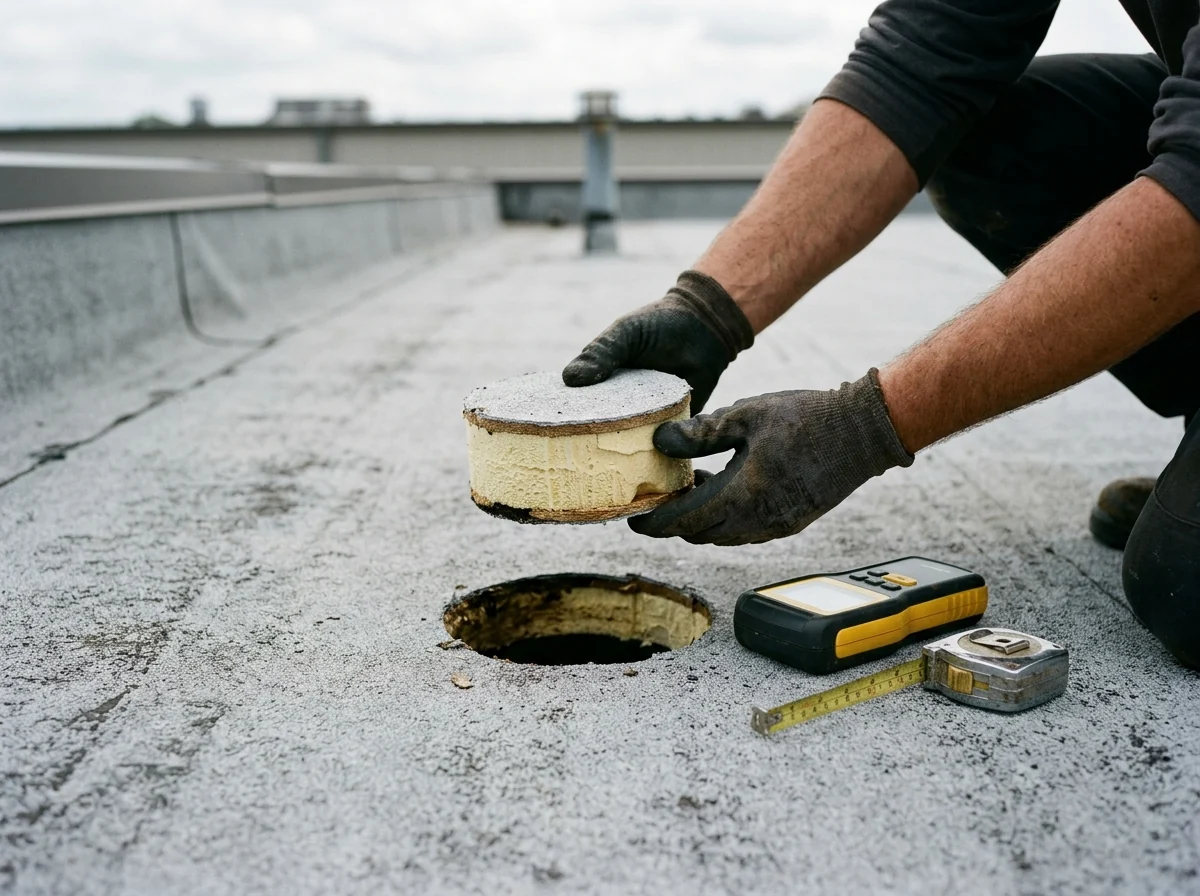
A core removes every layer down to the deck and shows whether the insulation is wet and how many roofs are already on the building. Larger areas get a moisture scan; the methods are on roof leak detection. - 4
Get it in writing
Each repair located on a roof plan or photo, the method and material for each, and a unit price for wet insulation found once the roof is opened.
Send the form or call, and your request goes to one independent local roofer who sets up the visit. The referral is free.
Commercial Roof Repair Cost in Troy
HomeGuide puts flat roof repairs at $2.50 to $10 per square foot, or $300 to $1,100 on average. Minor leak repairs run $150 to $500 by its figures, and extensive leaks with structural damage $1,200 to $3,000. Angi's average for minor flat roof damage is about $400. Both are national estimates built mostly on smaller roofs, so a commercial quote can land well outside them.
On a commercial building, the number moves with how much wet insulation turns up, roof access and any hoist or crane, the count of penetrations that need new flashing, whether the warranty requires the manufacturer's own licensed contractor, and after-hours work around tenants.
Commercial Roof Repairs on a Roof Under Warranty
Find the warranty before calling anyone. A manufacturer's system warranty comes through its licensed installers, and the terms say who may work on the roof. Elevate's, for example, includes a leak-report process and the alteration rule above. Give the roofer the manufacturer's name and warranty number at the first call, so the repair keeps coverage intact. The types of warranty are explained on commercial roof replacement.
Commercial Roof Repair Timing in Michigan Weather
From December through March, Detroit's normal daytime high sits above freezing and the overnight low below it, so meltwater refreezes at seams and drains night after night. Adhesives for fully adhered roofs are cold-weather sensitive, MuleHide notes, which is why some winter repairs are temporary dry-ins with the permanent fix booked for spring. Ask the roofer to say in writing which repairs are temporary. May is the wettest month on the Detroit record, a poor time to learn that a winter patch was never replaced.