
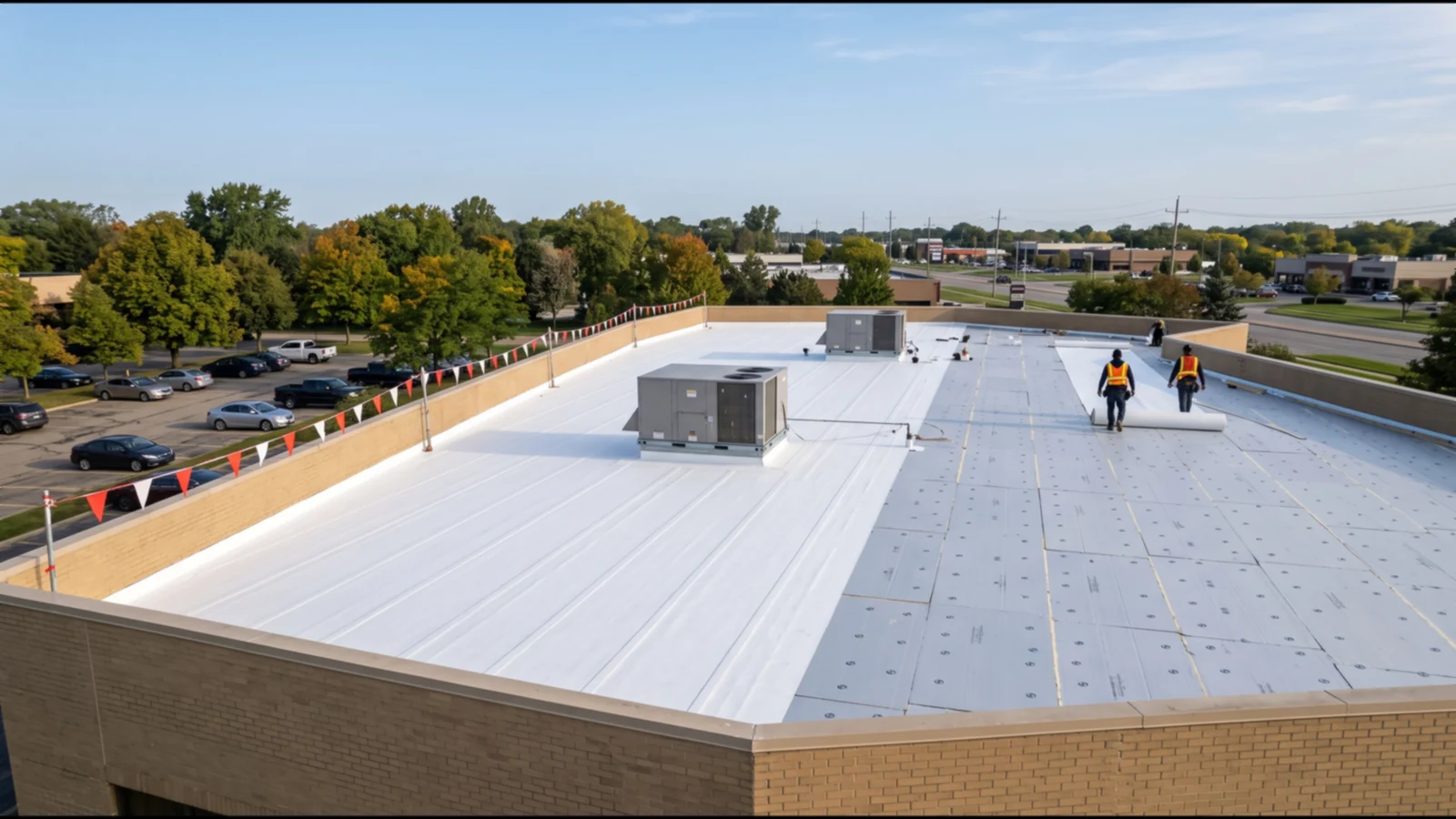
Commercial Roof Inspection Types for Troy Buildings
Twice a year is the baseline: NRCA's recommendation is at least that often, ideally once in spring and once in fall, with an extra visit after severe weather like hail or a tornado. One single-ply manufacturer's owner's manual says the same thing in its own words: every six months, right after heavy rain, high wind or a hail warning, and more often where trees drop leaves on the roof. Each of those visits has a slightly different job.
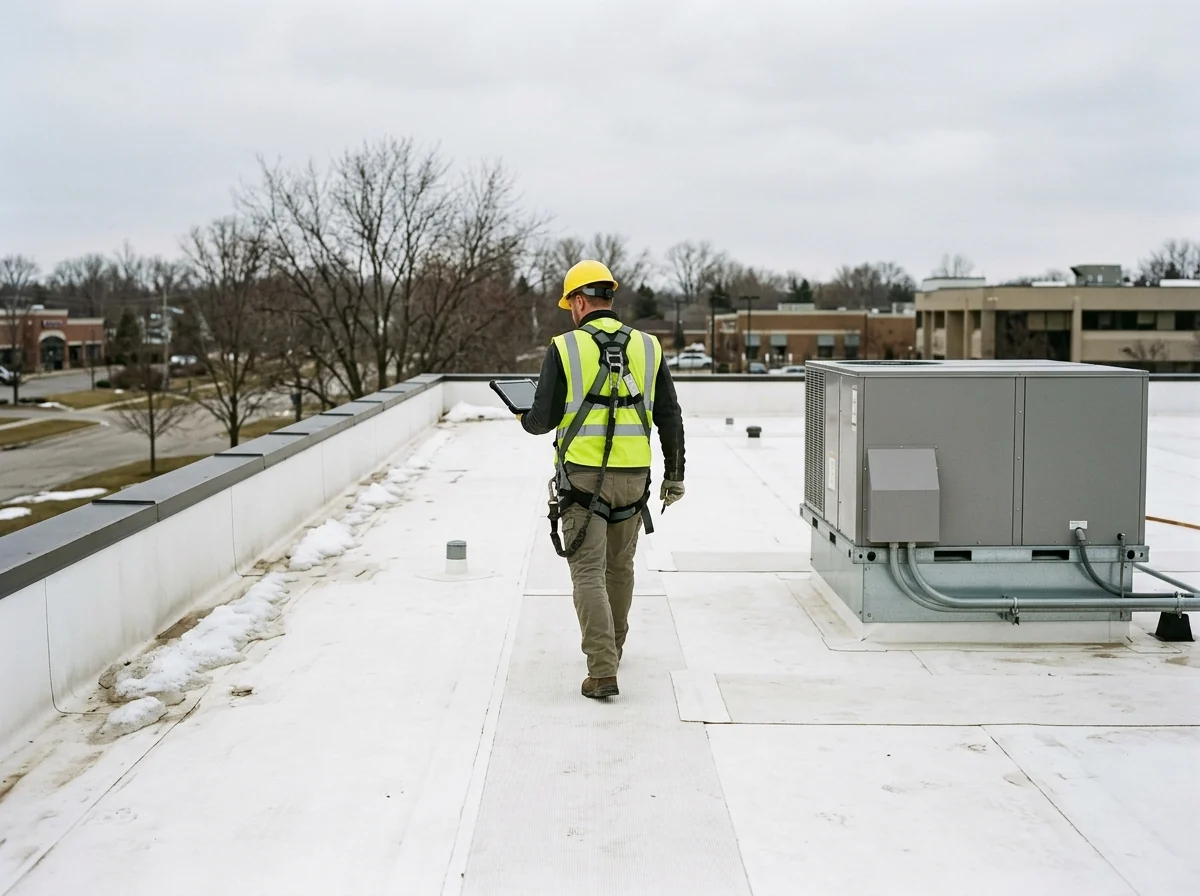
Spring and Fall Commercial Roof Inspections
The routine visit. The inspector walks the whole roof, not only the area above the last leak, and works from the edges inward. The spring visit is about what winter did; the fall visit is about getting drains, scuppers and edge metal ready for snow. Ask for both on a fixed schedule rather than "when someone has time", because the value comes from comparing one report with the last.
Post-Storm Roof Inspections
After a severe thunderstorm the inspection shifts to impact and uplift: bruised or punctured membrane, loose perimeter metal, displaced ballast, damaged rooftop units and debris in drains. If you expect an insurance claim, the photographs and dates matter as much as the repairs. The claim side is covered on the storm damage roof repair page.
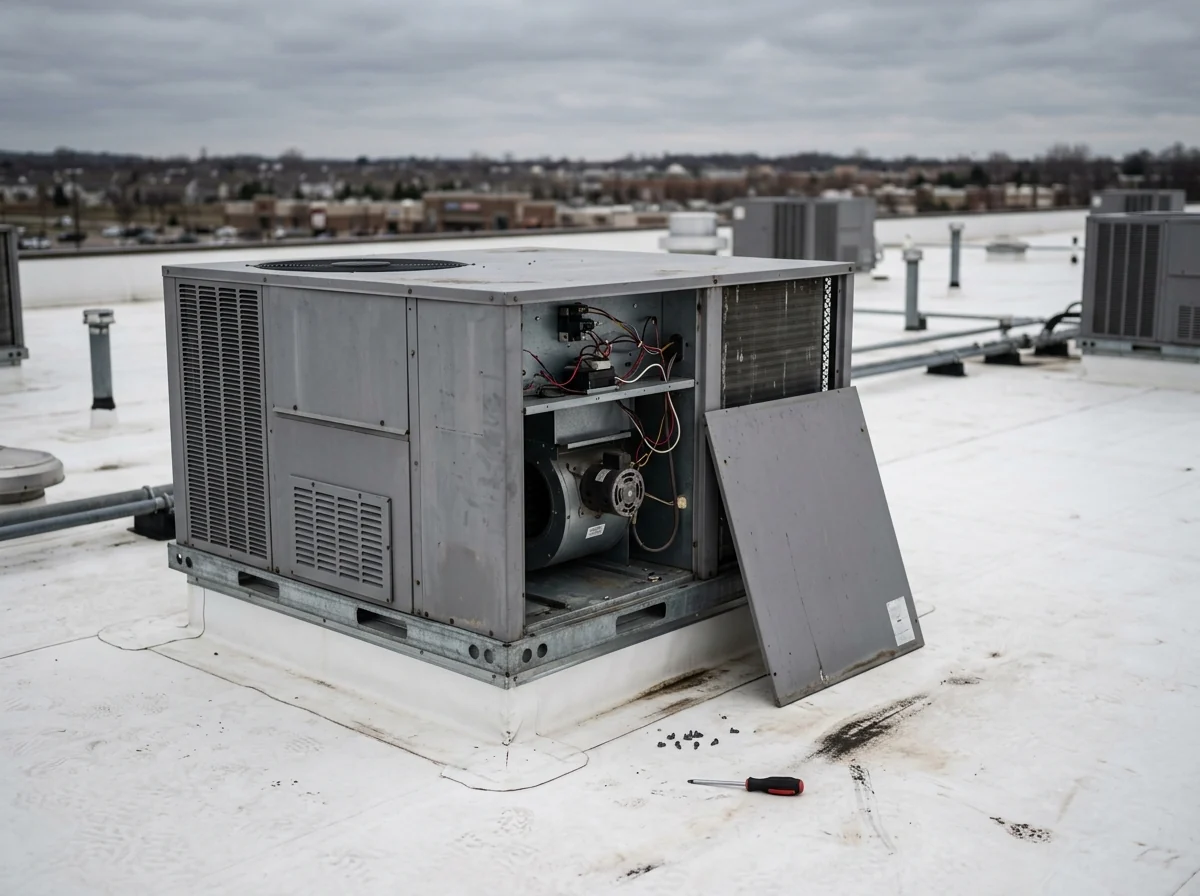
Inspections After Rooftop Equipment Service
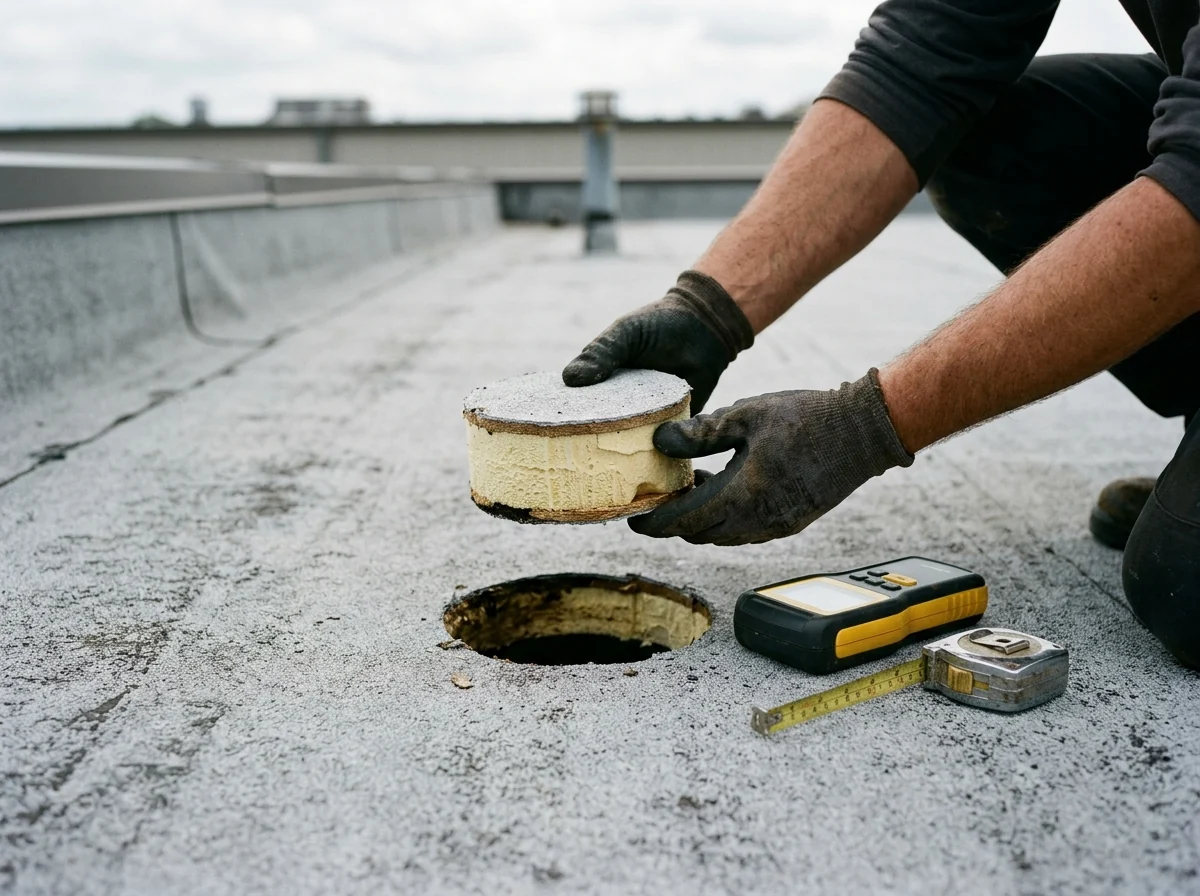
This is the one most buildings skip. The same manufacturer's manual calls for an inspection after regular maintenance of any rooftop unit and tells owners to check flashings and terminations around units for damage from service work. A dropped screw, a slipped utility knife or an access panel laid flat on the membrane can puncture a roof that was fine the week before.
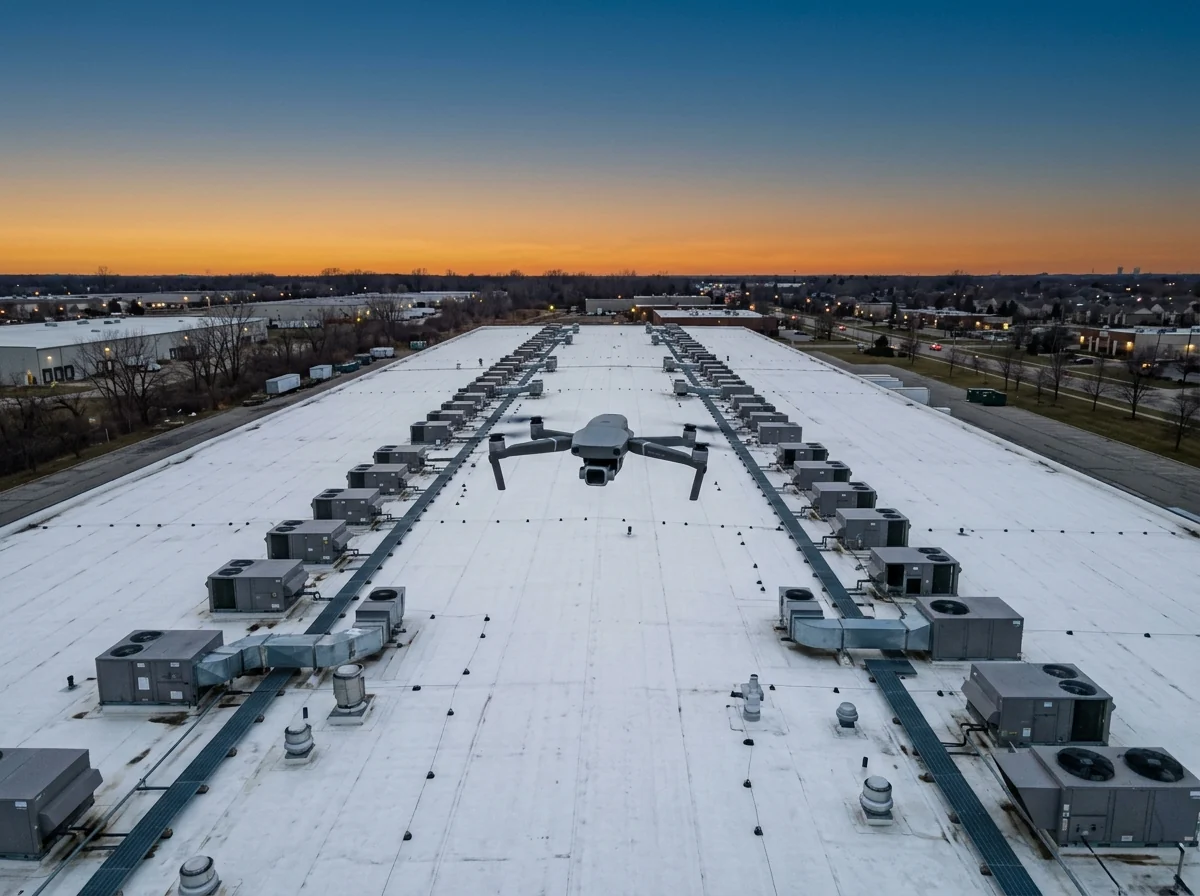
Infrared and Drone Roof Inspections
A drone gives a fast visual of a large or hard-to-reach roof. An infrared camera, flown or carried, reads temperature differences that can point to wet insulation, but it does not see water and its findings have to be confirmed with cores. When the question is whether the roof can take a recover or coating, that becomes a moisture survey, covered on the roof leak detection page.
Why Troy building owners call Troy Commercial Roofing
- Free, no-obligation roof assessment and estimate
- Written scope and price before any work starts
- One local commercial roofing contractor per request, not a call list
- No charge to building owners for the referral
Commercial Roof Inspection Checklist
A thorough walk follows the order in which roofs usually fail. Use this list to judge whether the report you receive actually covered the roof.
Perimeter and edge metal
Wind damage often begins at the roof perimeter, so the inspector should confirm that membrane terminations, edge metal and coping caps are tight, with no lifted corners or open joints.The membrane field
Punctures from wind-blown debris and foot traffic, open laps, blisters, splits, and any spot where the surface is wearing through.Curbs, pipes and penetrations
Pipe boots, pitch pans, curb flashings and counterflashing, especially around units serviced since the last visit.Drains and scuppers
Strainers in place, debris cleared, clamping rings tight, overflow scuppers open. Signs of standing water get noted with location and depth. See roof drain repair for what ponding means and what fixes it.Skylights and hatches
Curb flashing, cracked domes and screens or covers where they're needed.Inside the building
Ceiling stains, wet tiles and rust on deck or joists, matched to the roof plan so each one points to a likely entry area.
Commercial Roof Inspection Cost and the Report
HomeGuide's published figures put a commercial roof inspection at $200 to $600 on average, or about $0.05 to $0.10 per square foot. It lists drone inspections at $100 to $450 and infrared inspections at $400 to $600, and says reports usually arrive 1 to 2 days after the visit. These are national estimates; a written quote for your roof is the real number.
HomeGuide also notes that many commercial roofers inspect for free in hopes of winning the job. That isn't a reason to refuse one, but it is a reason to ask for the findings in writing with photos, so you can get a second price on any repair it recommends.
A report worth paying for includes:
- a roof plan or aerial image with each defect numbered and located;
- dated photos of every item, plus wide shots that show where it is on the roof;
- the roof system, approximate age if known, and overall condition;
- repairs ranked as urgent, this season or monitor, each with a price or a range;
- whether a moisture survey or cores are recommended, and why.
Timing Inspections Around Troy Weather
Detroit's climate normals, the closest the National Weather Service publishes for Troy, put more than 3.2 inches of precipitation in every month from April through September, and the winter months swing above freezing by day and below it at night. Book the spring visit for late March or April, once snow is off the roof and before May, the wettest month in those normals, so seams opened by freeze and thaw get closed before they take on water. Book the fall visit after most leaves have dropped, so the drains are cleared once rather than twice.
Add a visit whenever a storm with hail or damaging wind passes over the building, even if nothing leaks yet. The manufacturer's manual quoted above calls for an inspection right after high winds or a hail warning, not after the first drip.
Keeping Inspection Records
Manufacturer warranties are where records start to matter. NRCA points out that most warranties depend on proper upkeep, and one manufacturer's owner's manual tells owners to keep the warranty and its serial number, inspection logs, rooftop traffic logs, service logs and invoices. The same manual recommends restricting roof access and logging everyone who goes up.
Keep each report in one folder with the warranty. When the building changes hands, or a claim or warranty question comes up, a run of spring and fall reports shows how the roof was cared for. If the inspection turns up routine upkeep rather than repairs, the commercial roof maintenance page covers what a maintenance program includes.