
Roof Drain Repair Services for Troy Buildings
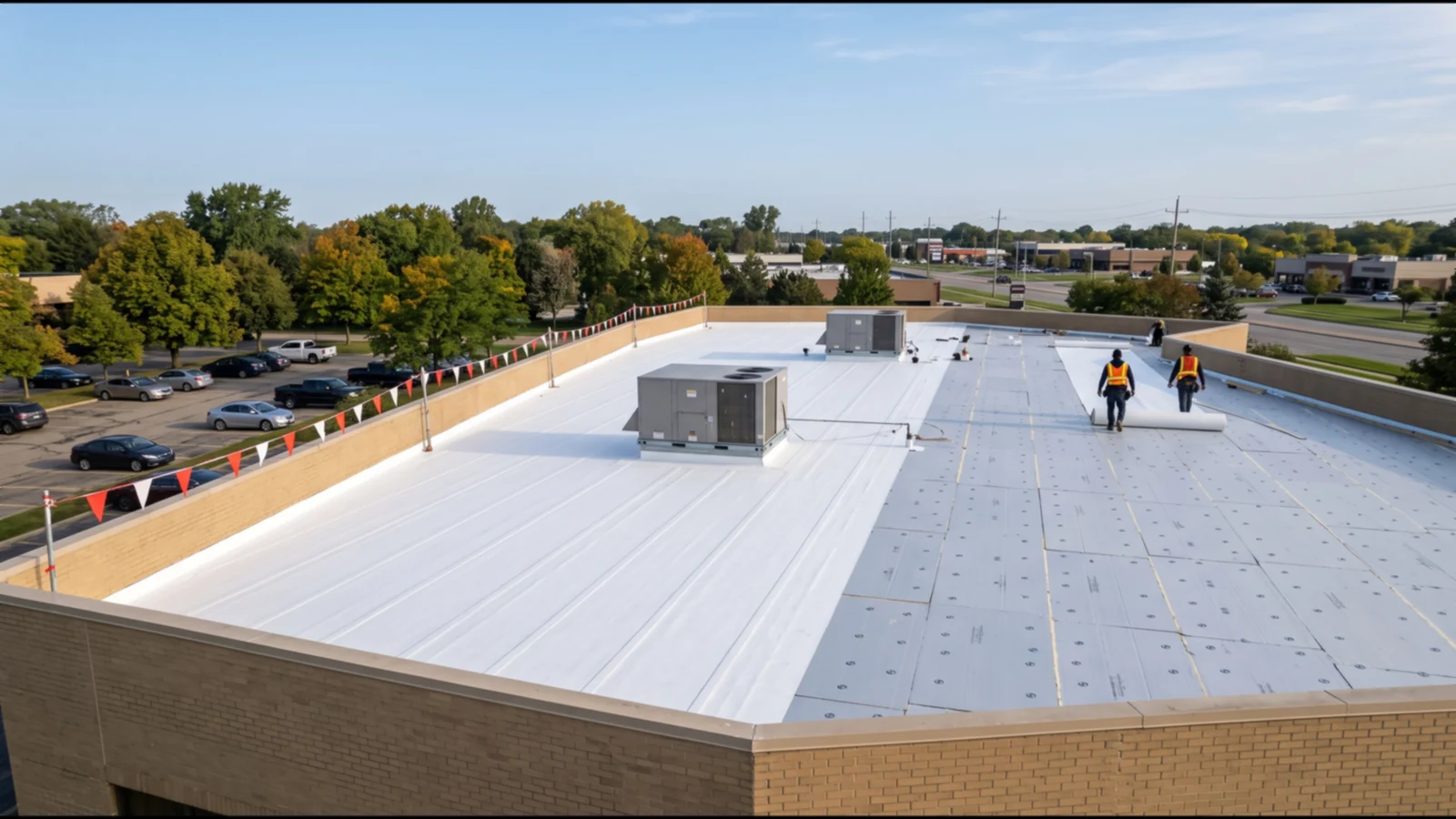
A low-slope roof is a shallow basin with a few holes in it. Each drain repair below deals with a different part of getting water to those holes and out of the building.
Interior Roof Drain Repair
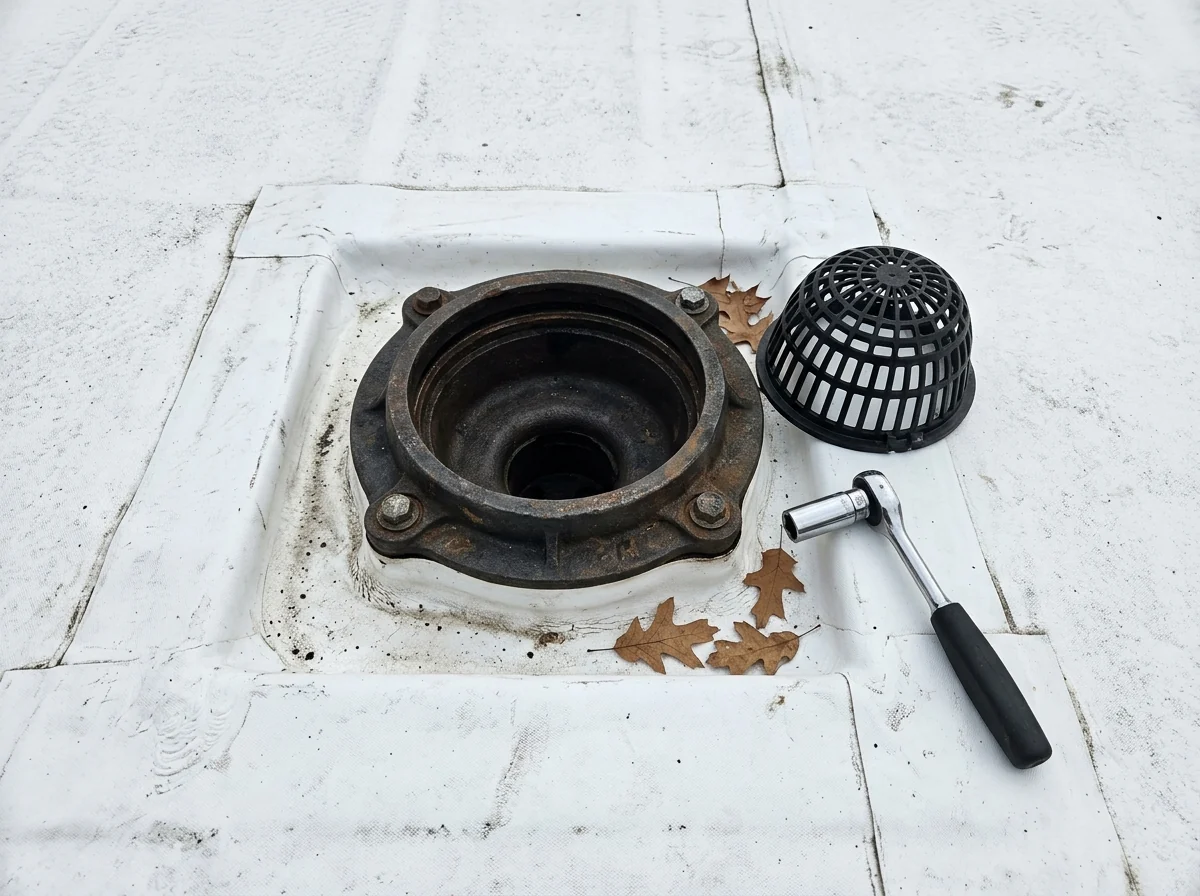
A typical cast iron drain has a body set into the deck, often on a sump receiver that recesses it, a clamping ring whose grooves grip the roof membrane against the body's flange, and a dome strainer locked on top. An extension ring can raise the body to match the insulation thickness. The plumbing code adds one rule worth checking on any repair: the membrane must not obstruct the drain's inside opening.
That clamp is where the membrane meets the plumbing, so it's the first place to look when a drain leaks: loose or missing bolts, a cracked ring, or membrane stuck down into the bowl instead of clamped under the ring. A missing dome causes trouble of its own. One manufacturer's spec sheet describes the dome's job plainly: it keeps debris out of the drain line, where it is far harder to clear than on the roof.
Retrofit Roof Drains
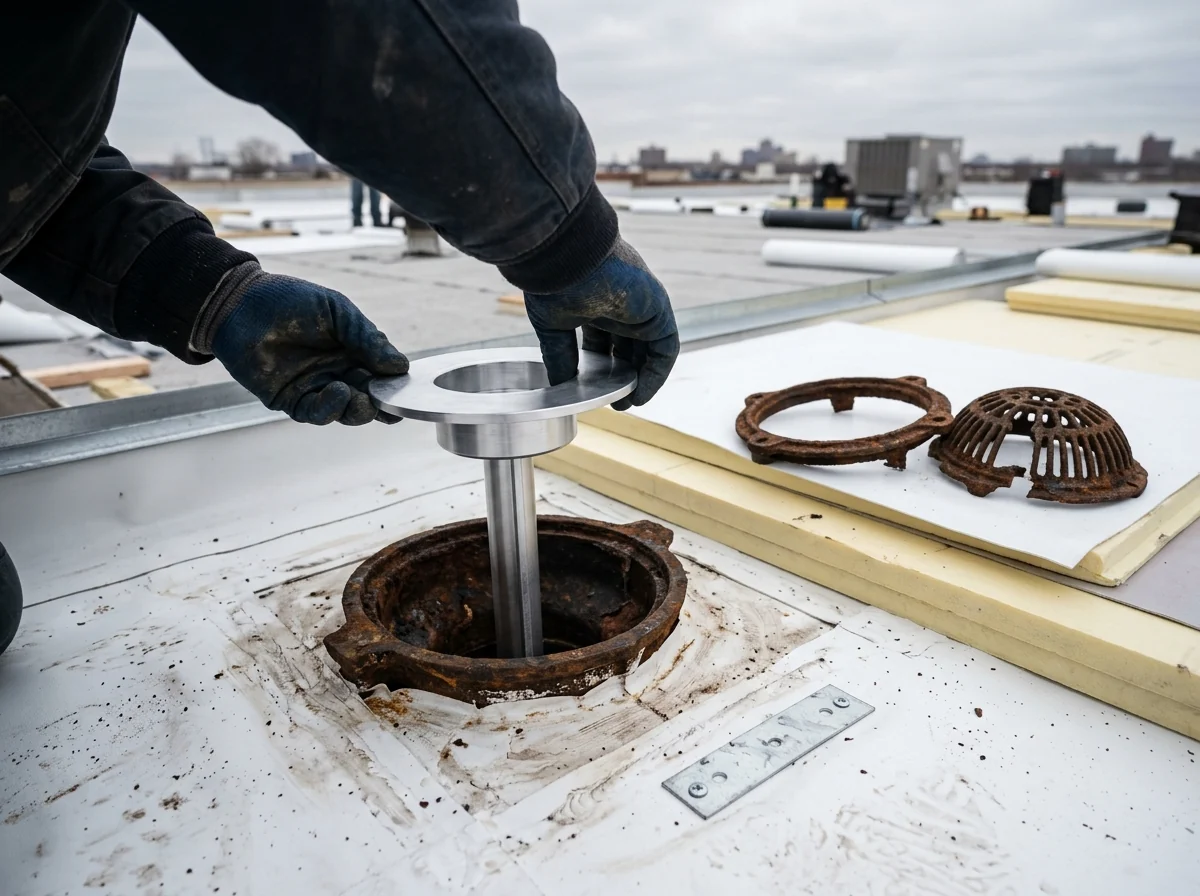
When the old drain body is cracked or corroded, cutting it out of the deck usually means work inside the building, ceiling access and a plumber. A retrofit drain avoids most of that. The old dome and clamping ring come off, the retrofit's stem slides down into the existing leader, a mechanical seal locks it to the cast iron or PVC pipe, and its flange is flashed into the new membrane. Aluminum retrofit drains in the 3- to 6-inch range are a stock item. Ask how the insert's size compares with the original drain's, since it sits inside the old pipe.
Scuppers and Overflow Drains
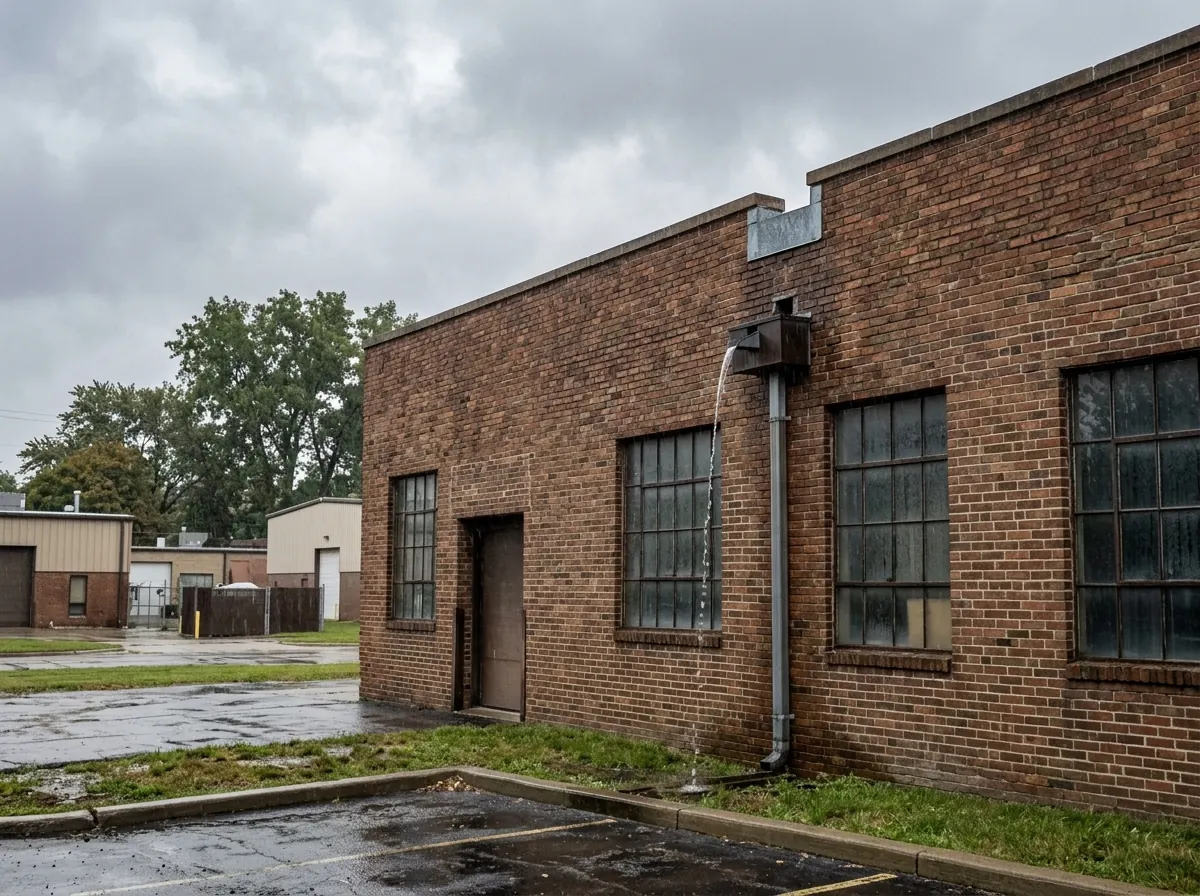
A scupper is an opening through the parapet or roof edge, lined with sheet metal and flashed into the membrane. Some are the primary drainage, feeding a downspout outside; others sit higher as overflows. Overflow drains sit near the primary drains with their inlets set higher. Both usually leak where metal meets membrane, and both collect the same leaves as the primary drains. Exterior gutters and downspouts are covered on commercial gutters.
Crickets, Sumps and Ponding Correction
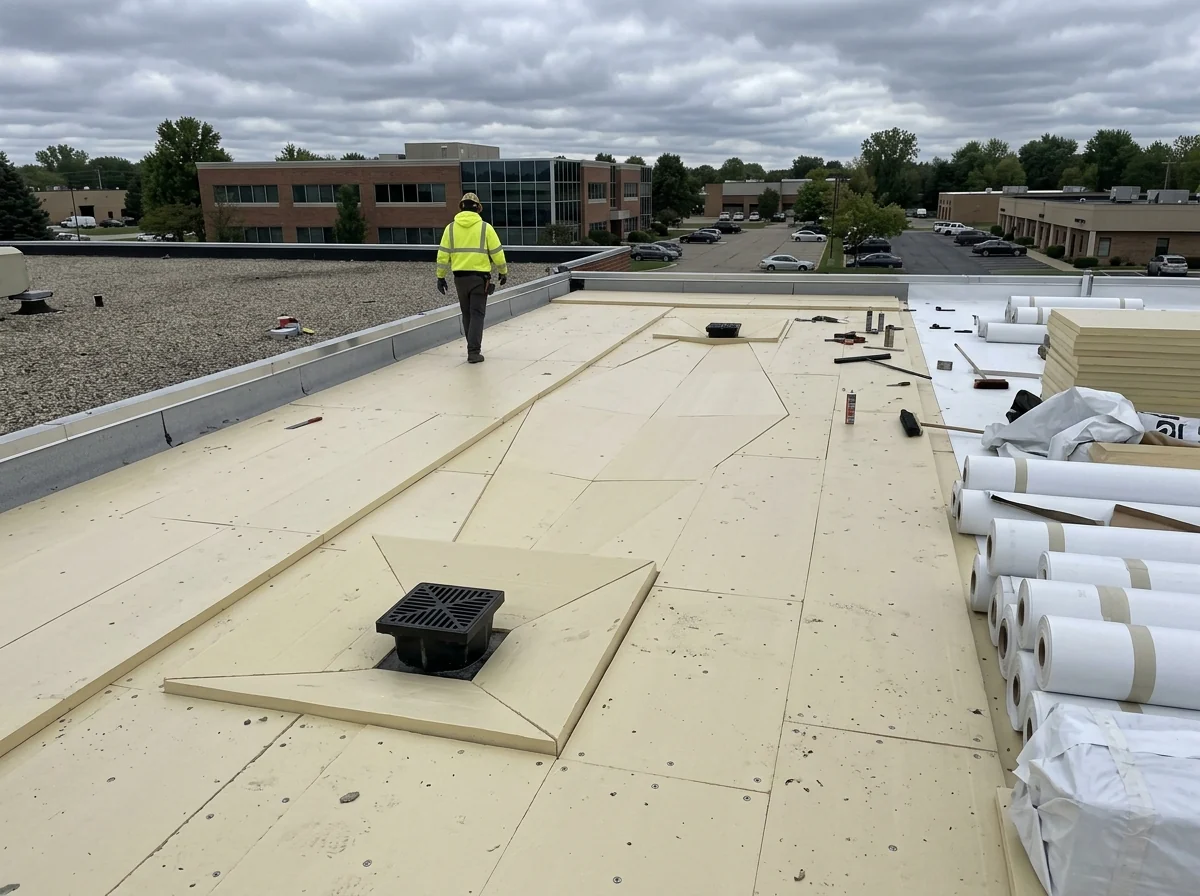
Some ponding isn't a drain problem at all; the water simply can't reach the drain. NRCA's Professional Roofing recommends a square tapered sump around each drain, about the drain bowl's diameter plus 24 inches, and crickets or saddles between drains with about twice the slope of the surrounding roof. These are built from tapered insulation, which is why ponding correction usually happens during a reroof; minimum slope rules are on commercial roof insulation. On a reroof, drains may also need raising or lowering. Adding new drains is possible, NRCA notes, but existing building elements and cost often stand in the way.

Why Troy building owners call Troy Commercial Roofing
- Free, no-obligation roof assessment and estimate
- Written scope and price before any work starts
- One local commercial roofing contractor per request, not a call list
- No charge to building owners for the referral
Ponding Water on a Flat Roof: the 48-Hour Test
The industry draws the line at 48 hours. The NRCA Roofing Manual's test for proper drainage is no water left on the roof 48 hours after rain, in weather that allows drying, and the Asphalt Roofing Manufacturers Association defines ponding water the same way: water that stays 48 hours or longer. Shorter puddles are normal; NRCA and membrane manufacturers accept them as unavoidable. One manufacturer's owner's manual allows 48 to 72 hours.
Past that point the water starts working against the roof. ARMA explains the cycle: standing water adds weight, the weight deflects the deck, and the deflection lets more water collect. Algae and debris in the ponds then clog the drains. Professional Roofing adds that ponding beyond 48 hours can harm the roof assembly itself.
The code treats this as a structural question. A roof has to be designed for the deepest water that could pond on it with every primary drain blocked, up to the level of the overflows, and Michigan's building code requires susceptible roof bays to be checked for ponding instability. The design storm is local. NOAA's rainfall frequency data for Troy put the 100-year storm at 1.47 inches in 15 minutes and 2.67 inches in an hour. Drain piping is sized from the 100-year hourly rate, and the plumbing code says the result has to be checked against the drain maker's published flow for that exact model and size.
That last rule matters in a repair. A replacement drain or retrofit insert that flows less than the original changes the math the building was designed around.
To check your own roof, photograph the low spots from a hatch or upper window the day after a heavy rain, then again two days later. Water still there on the second set of photos is ponding by the industry's definition.
Secondary and Overflow Drainage Requirements
Where parapets or a raised roof edge would trap water if the primary drains backed up, the plumbing and building codes require a second, independent way off the roof: overflow drains or scuppers. The plumbing code spells out how they work:
Separate
If primary and overflow drains come as one assembly, each needs its own inlet and outlet.Visible
Overflow piping discharges on its own, above grade, where occupants or maintenance staff would normally see it.Full size
Overflows are sized for the same rainfall as the primary system, as if the primary drains weren't there.Scupper dimensions
An overflow scupper must be at least 4 inches high, and at least as wide as the circumference of the drain the roof area would need.
The visible outlet is the useful part for a property manager. Water pouring from an overflow pipe or scupper during a storm means the primary drains are blocked or undersized, and it's worth a call that week.
On a reroof, the code doesn't make you add overflows to a roof that already drains, but existing overflow drains can't be taken out unless they're replaced with ones that meet the code. If a bid shows fewer overflows on the new roof plan than the old roof has, ask why.
Questions to Ask on a Roof Drain Repair Bid
Same size and flow?
Will the new drain or insert match the original's size and published flow rate?Clamped, not glued?
Will the membrane be clamped under the ring and kept clear of the drain opening?New dome?
Is a new strainer dome included, and is it the self-locking kind?Sump and taper?
On a reroof, will the drain get a tapered sump, and will extension rings bring it level with the new insulation?The leader?
If water backs up out of the drain, will the pipe below be checked, and by whom?
Tell us where water stands on your roof and for how long, and the request goes to one independent roofer nearby, free of charge.