
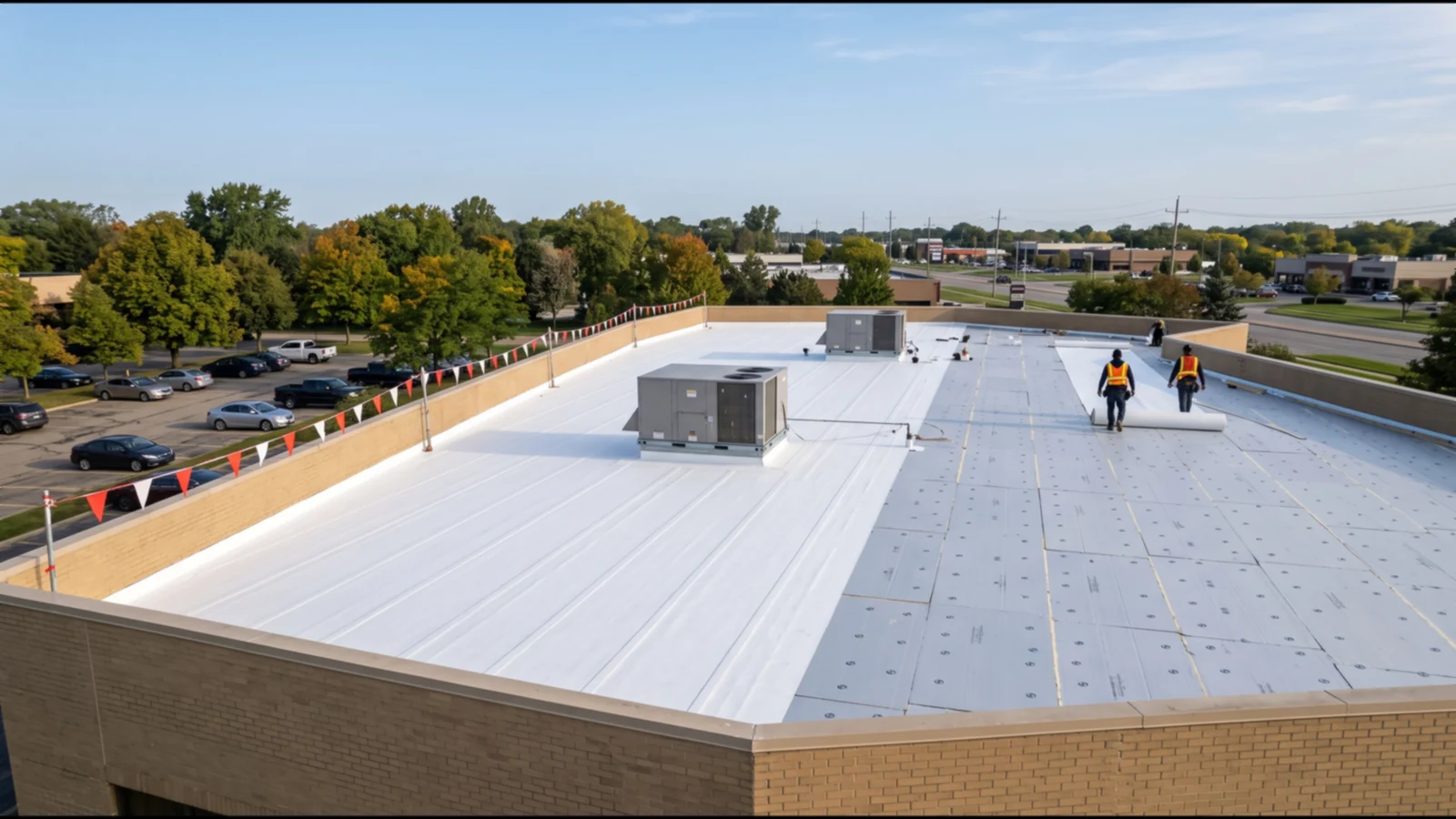
Roof Leak Detection Methods for Troy Buildings
Finding the ceiling stain is the easy part. On a large roof the useful answer is a marked-up roof plan, and getting there usually takes one method that finds breaches and another that measures how far the water has spread.
Infrared Roof Moisture Surveys
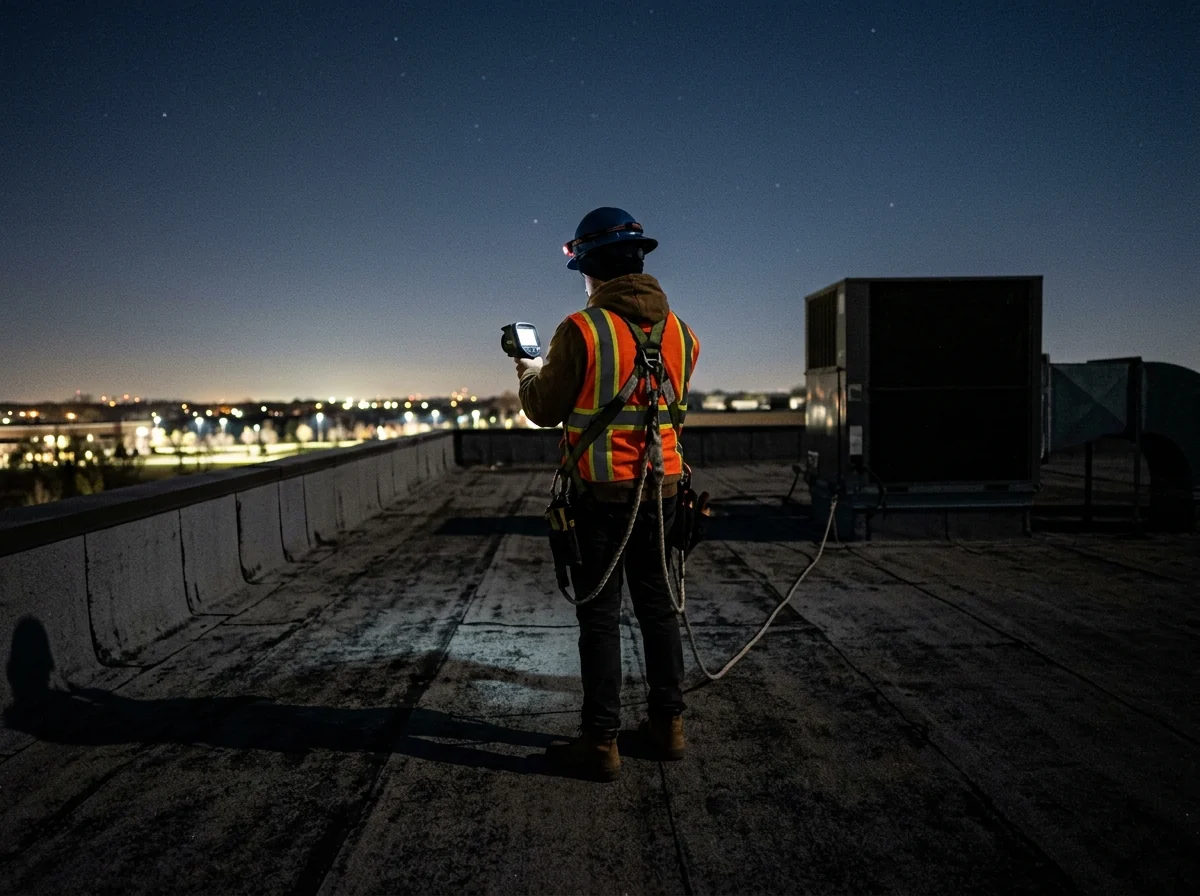
The sun heats the roof all day. After dark, wet insulation holds that heat longer than dry insulation, and a thermal camera shows the warmer patches. The Snell Group, a thermography trainer, sets the conditions: a clear, calm night, an hour or two after sunset, on a roof whose surface, gravel included, is dry. A thermographer and a helper can cover 100,000 to 200,000 square feet in a night, which makes infrared the usual first pass on a big warehouse or distribution roof.
It has blind spots. Ballasted single-ply roofs and newer roofs with low-absorbency insulation are hard to read, and the camera only reads surface temperature; it never sees the water itself. ASTM C1153, the infrared standard, requires every suspect area to be verified, and Professional Roofing notes that verification has to include cores. The suspect areas get painted outlines and numbers on the membrane; make sure the same numbers appear on the report's roof plan.
Electronic Leak Detection (ELD)
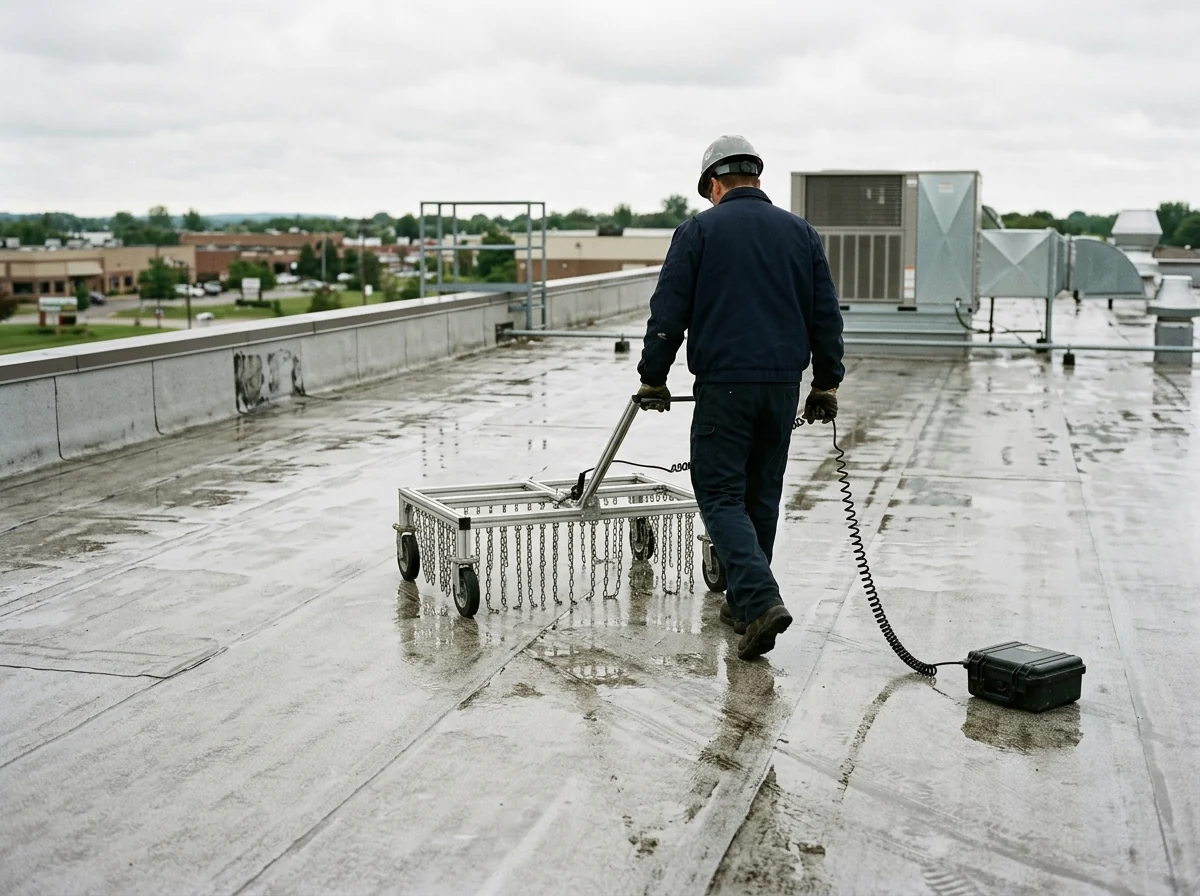
ELD finds the hole itself. A charge is put across the membrane, and where water passes through a breach to a grounded conductive layer underneath, the circuit closes and the operator can pinpoint the spot. ASTM D7877 lists four methods:
- Low-voltage scanning platform. A small platform with hanging chains is pushed over a wetted membrane.
- Low-voltage vertical roller. The same idea for flashings and walls.
- Electric field vector mapping (EFVM). The roof is dampened, a bare wire loop goes around the test area, and the operator follows the current to the breach with two probes.
- High-voltage spark testing. A charged metal broom at 1,000 to 30,000 volts DC passes over a completely dry membrane and sparks at a hole. Carlisle notes more false positives and more injury risk with this one.
ELD has hard limits, and they decide whether it can be used on your roof at all. Every method needs an exposed membrane and a conductive layer directly beneath it, such as a steel deck. EFVM and high-voltage testing don't work on black EPDM, which conducts because of its carbon black, or on modified bitumen with an aluminized coating. ASTM D8231, the low-voltage scanning practice, allows forensic use on existing roofs with stated limitations and says it doesn't replace visual inspection.
Nuclear and Impedance Grid Surveys
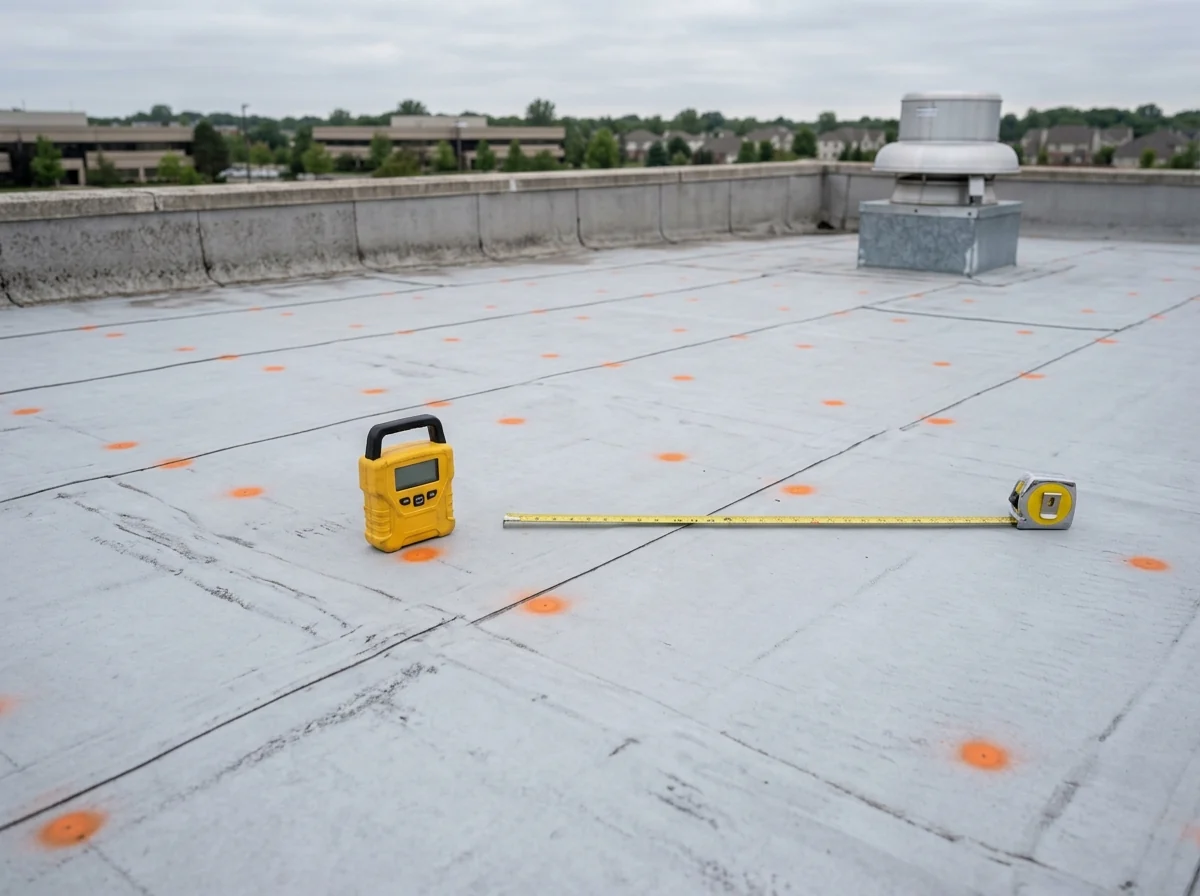
Both methods lay the roof out on a grid, typically with points 5 to 10 feet apart, and take a reading at each point. A nuclear gauge follows ANSI/SPRI/IIBEC NT-1; an impedance scanner follows ASTM D7954. The readings are relative. Both standards say they have to be tied to weighed core samples before anyone can say how wet the insulation is.
Be wary of a "moisture survey" done with a pin meter alone. There is no standard for pin meters on roofing; the one people cite, ASTM D7438, was written for the wood industry. Seasonal vapor drive also leaves a thin film of condensation near the membrane in winter and near the deck in summer, so a pin can read wet when the insulation facer isn't. Professional Roofing warns that false positives like these lead to roofing being torn off for no reason.
Core Cuts and Water Testing
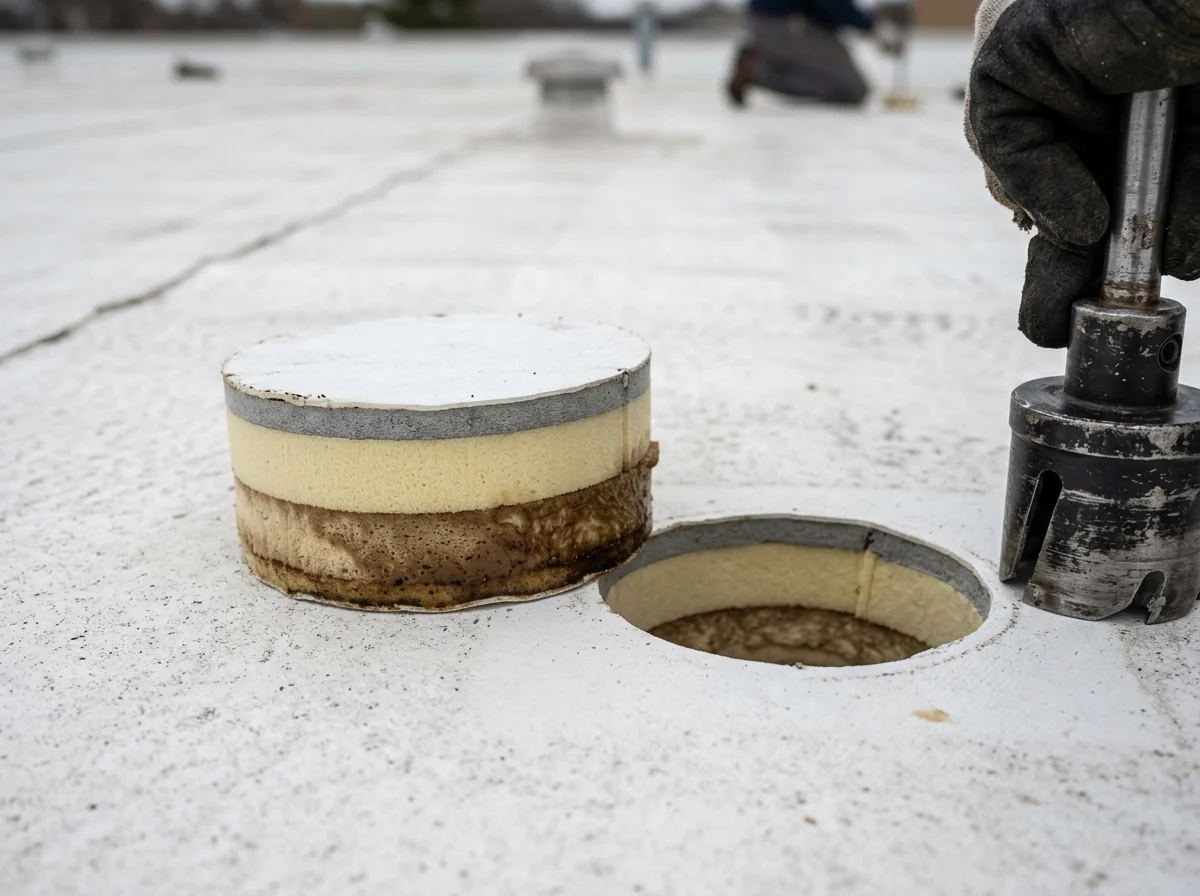
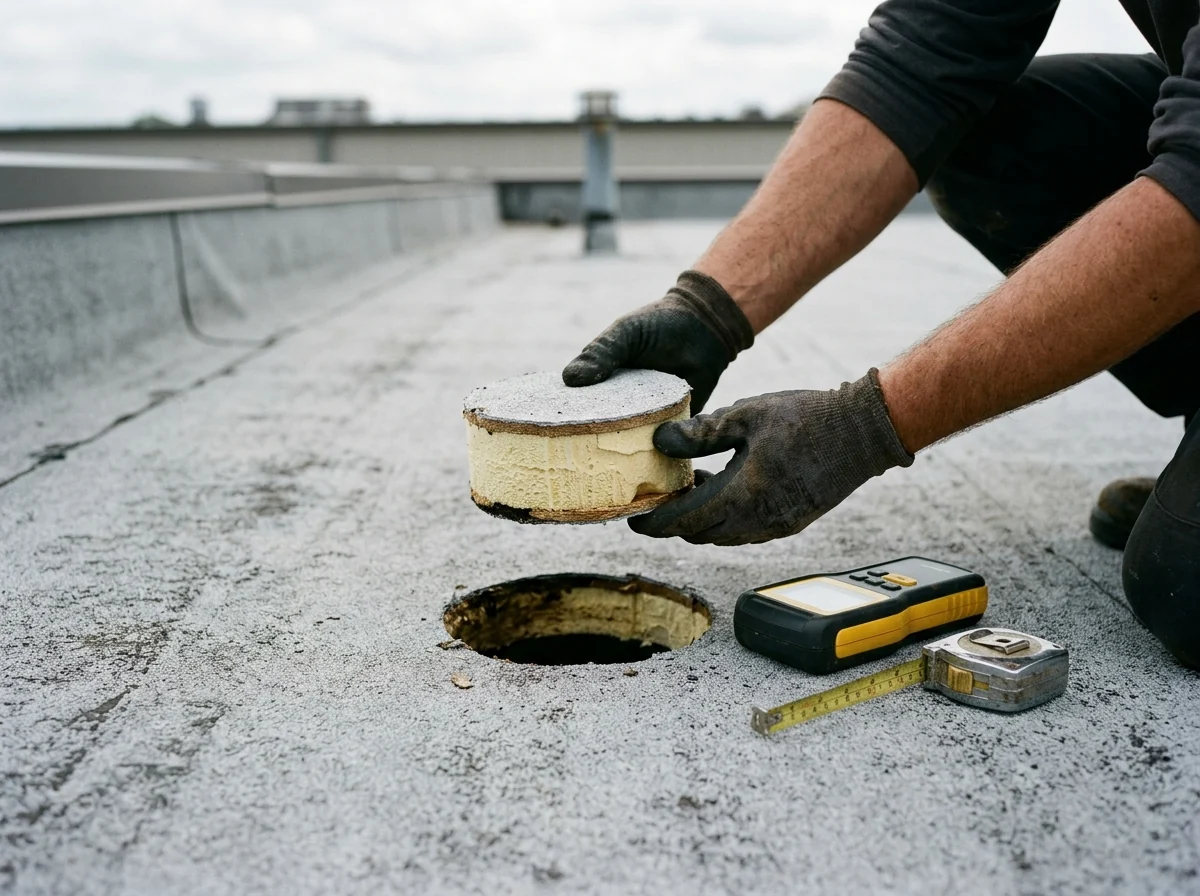
The core is the proof. The plug is weighed wet, dried and weighed again, and moisture content is (wet weight minus dry weight) divided by dry weight, times 100. On nuclear surveys, cores are usually taken at low, middle and high readings, but not at the very highest one. Every opening has to be patched properly afterward.
Flood testing gets suggested more often than it should. ASTM D5957, the flood-test guide, is written for plaza and parking-deck waterproofing and says it isn't meant for building roofs. Carlisle adds that if a serious leak exists, a flood test can put a lot of water into the roof assembly. On an occupied building, that's a hard trade.
Why Troy building owners call Troy Commercial Roofing
- Free, no-obligation roof assessment and estimate
- Written scope and price before any work starts
- One local commercial roofing contractor per request, not a call list
- No charge to building owners for the referral
Moisture Survey Before a Recover or Coating
This is the survey that matters most for your budget. The building code bars a recover over a roof that is soaked through or too far gone to act as a base; the full recover rules are on commercial roof replacement. A coating can go over most existing roofs without a tear-off, but it seals in whatever water is already in the insulation. In both cases, the wet areas have to be found and cut out first, and that's why the survey should come before the bid rather than after the contract.
A survey report you can price from includes:
- a roof plan with each wet area outlined and its square footage;
- the method and the standard followed (ASTM C1153, NT-1 or ASTM D7954), the date and the weather that night;
- core locations with the lab moisture result for each;
a recommendation
Replace the wet areas and recover or coat, or tear off.
With that in hand, ask every bidder to price removal and replacement of wet insulation per square foot. A bid that says "wet areas as found" without a unit price leaves the biggest number open. For the coating side of the decision, see commercial roof coatings and commercial roof restoration.
Leak Detection Timing and Cost in Troy
Weather sets the calendar. An infrared scan needs a dry roof, so a roof still holding snow or meltwater has to wait. Winter doesn't rule infrared out entirely, though: a night scan can also work when the inside of the building is at least 18°F warmer than outdoors, and Detroit's normal January low is 19.2°F. A heated office or plant clears that bar by a wide margin. Spring scans need a dry spell between storms, which gets harder in May, the wettest month in Detroit's normals.
Expect the price to follow roof size, the number of methods, night work and the number of cores. HomeGuide's published infrared inspection figures are on the commercial roof inspection page. Our view: on a roof heading for a recover or coating, a survey costs far less than burying wet insulation under a new roof and paying to tear both off later.
Questions to Ask Before Booking a Leak Survey
Which method, and why for my roof?
A good answer mentions the membrane and what's under it.Which standard will you follow?
C1153 for infrared, NT-1 for nuclear, D7954 for impedance, D7877 or D8231 for electronic.How many cores, where, and will they be weighed?
A survey without cores is an opinion.Does the report include a roof plan with square footage?
That's what turns it into a bid.
If the leak is active right now, start with emergency commercial roof repair; if a storm caused it, storm damage roof repair covers the claim paperwork. For anything else, tell us the roof size, the membrane if you know it and where water shows up inside. One independent local roofer gets the request, and the referral costs nothing.