
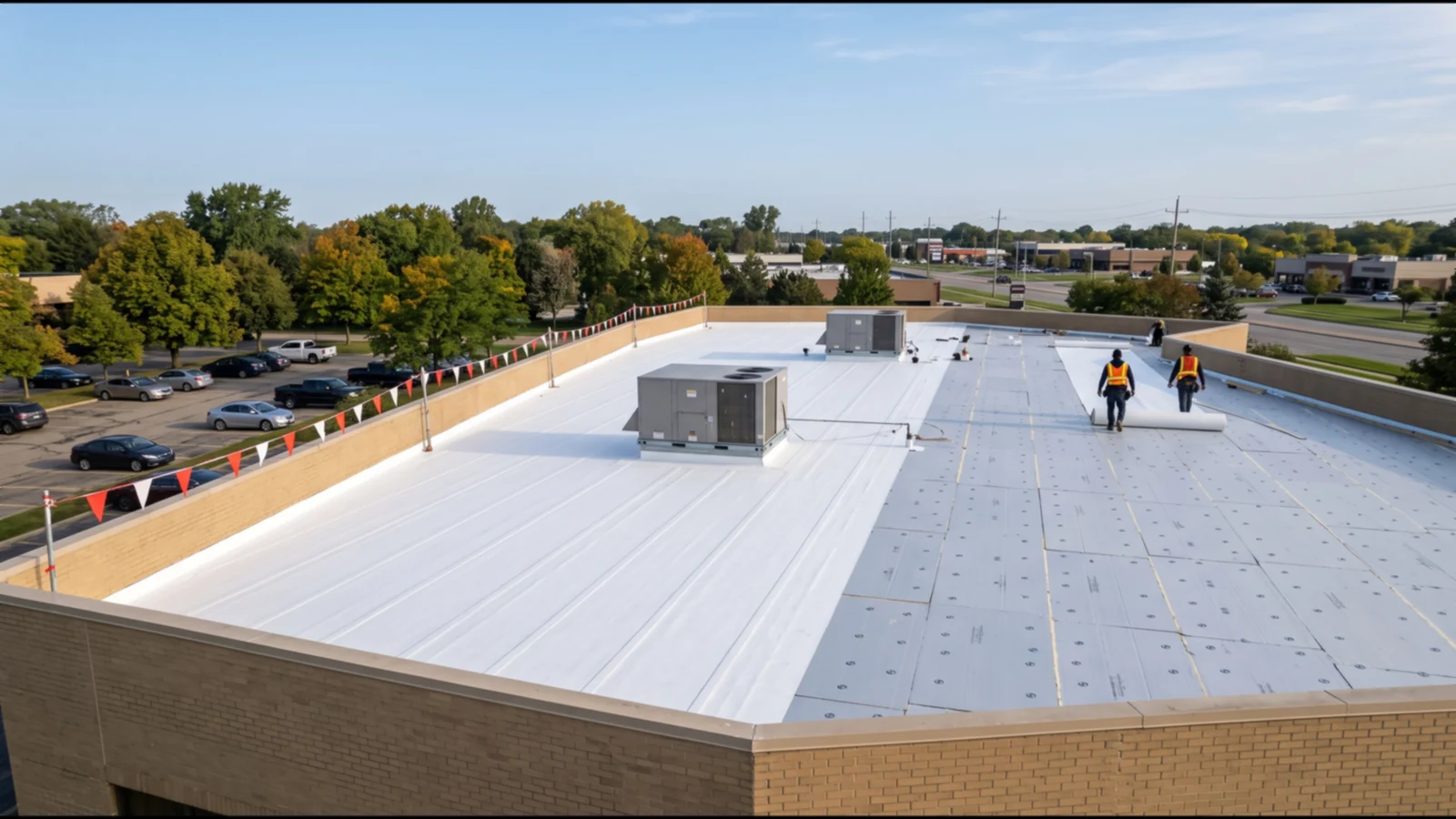
Modified Bitumen Roofing Systems for Troy Buildings
Mod-bit reached the US commercial market in the late 1970s, after the technology was developed in Europe in the 1960s. Two polymers split the market, and each leans toward its own installation methods.
SBS Modified Bitumen
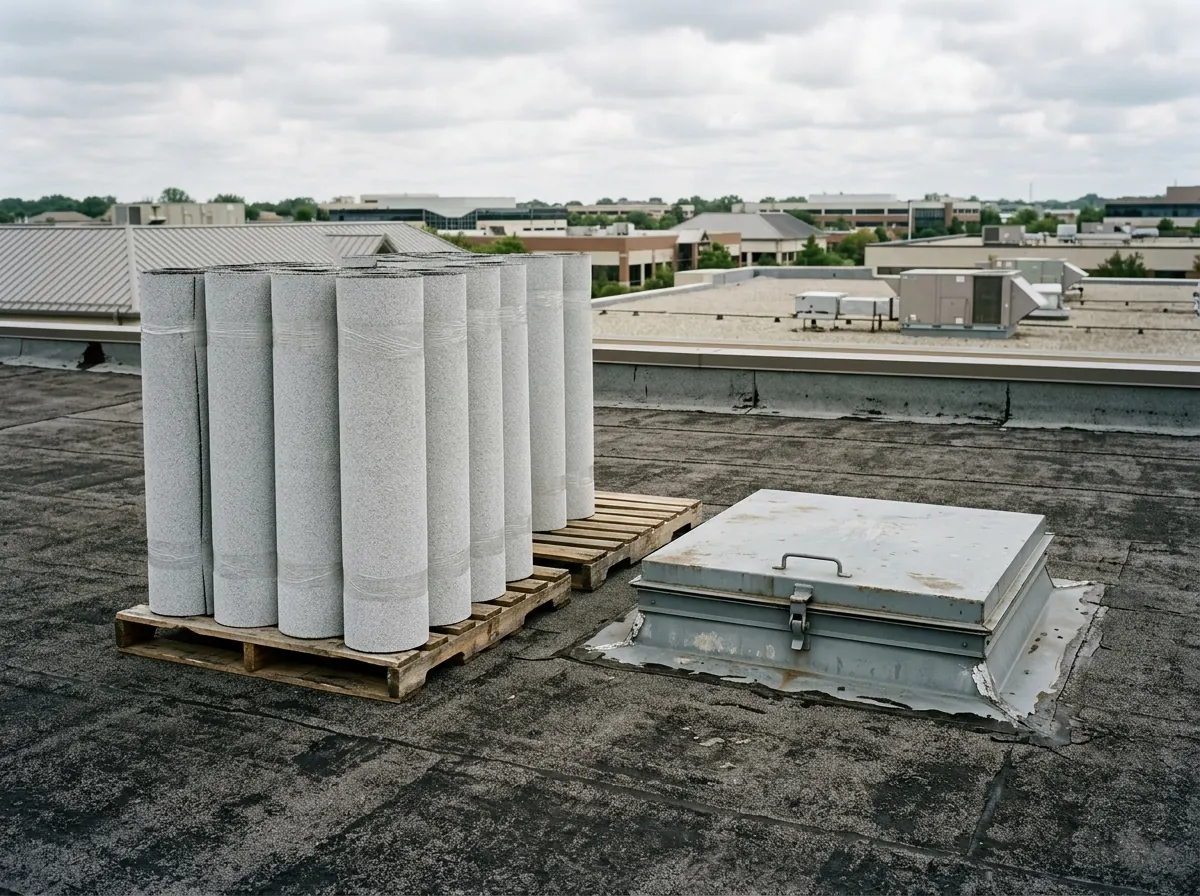
SBS (styrene-butadiene-styrene) sheets carry about 10 to 15 percent rubber polymer in the asphalt. They were developed in France and Germany for colder climates, and in testing SBS asphalt with 10 percent rubber stretched to six times its length without breaking, then recovered its shape. A roof that goes through a Michigan winter of daytime thaw and overnight freeze benefits from that stretch.
SBS is also the flexible one on application. Polyglass lists five ways to install its SBS sheets: self-adhered, torch-applied, cold process adhesive, hot asphalt and mechanical attachment. That range lets a roofer pick the method to suit the building rather than the other way round.
APP Modified Bitumen
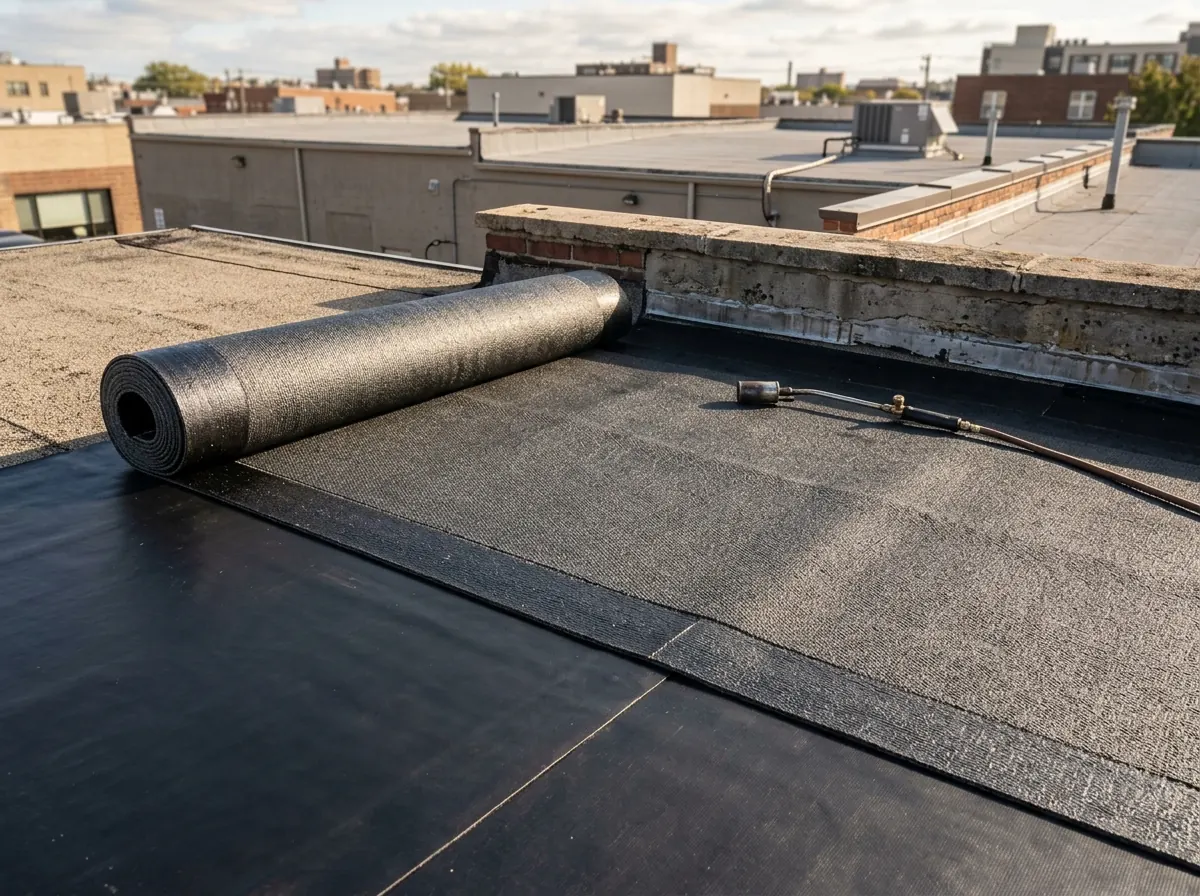
APP (atactic polypropylene) was developed in Italy, with roughly 25 to 30 percent polypropylene blended into the asphalt over a heavy polyester mat. The extra asphalt on the back of an APP sheet is what melts under the torch and bonds it down, so APP is mostly a torch-applied product. Polyglass lists only two methods for its APP sheets, torch and self-adhered, while GAF also offers APP sheets for hot asphalt or cold adhesive. Ask which method the data sheet for the proposed sheet allows.
Torch-Down Roofing
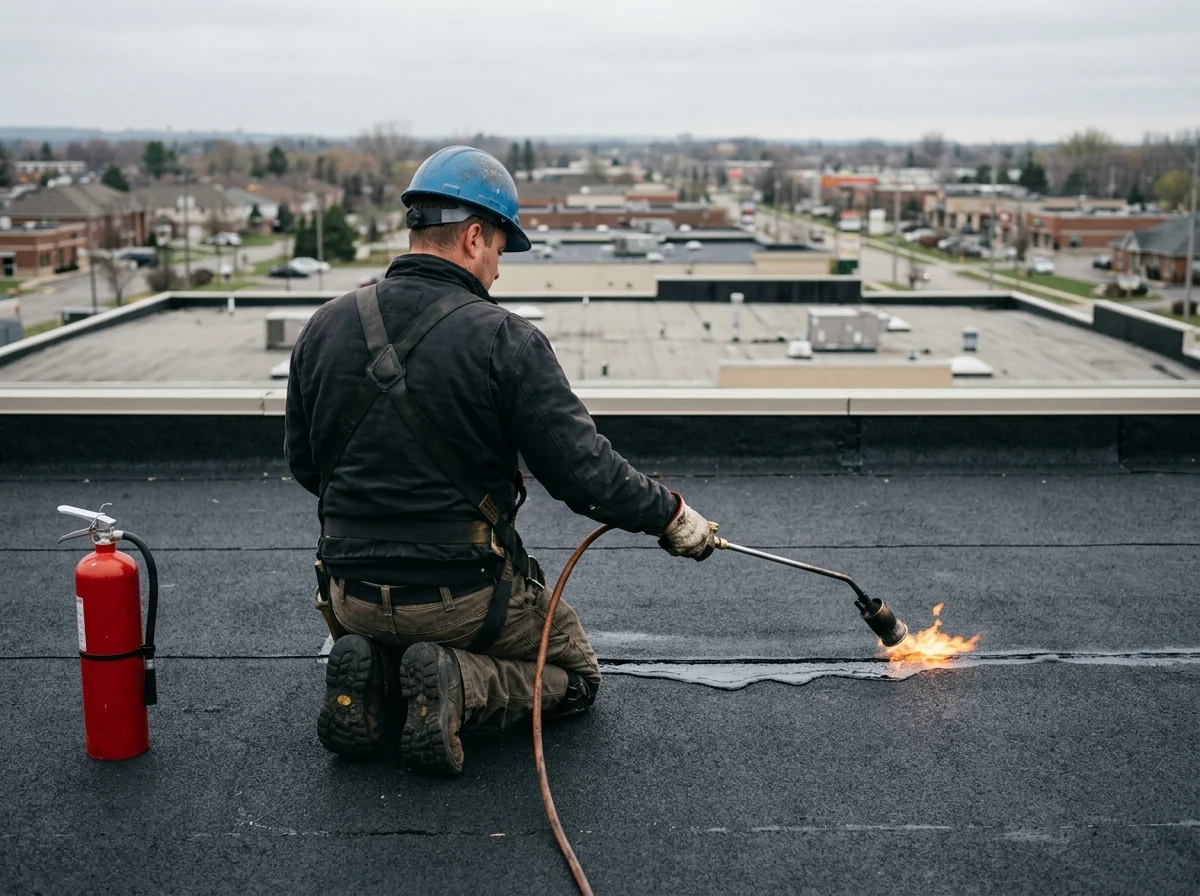
Torch-down is the trade name for heat-welded mod-bit: the installer melts the underside of the sheet with a propane torch and rolls it into place. It's fast and makes a strong lap. It's also open-flame work on an occupied building, which is why fire codes have their own rules for torch-applied roofing.
Fire standards set the fire watch after torching. NFPA 241, the construction fire safety standard, calls for a watch of at least two hours after the torches go out, stricter than the one hour in NFPA 1. Ask who will stay on the roof for that watch and whether the bid includes it.
Cold-Applied and Self-Adhered Mod-Bit
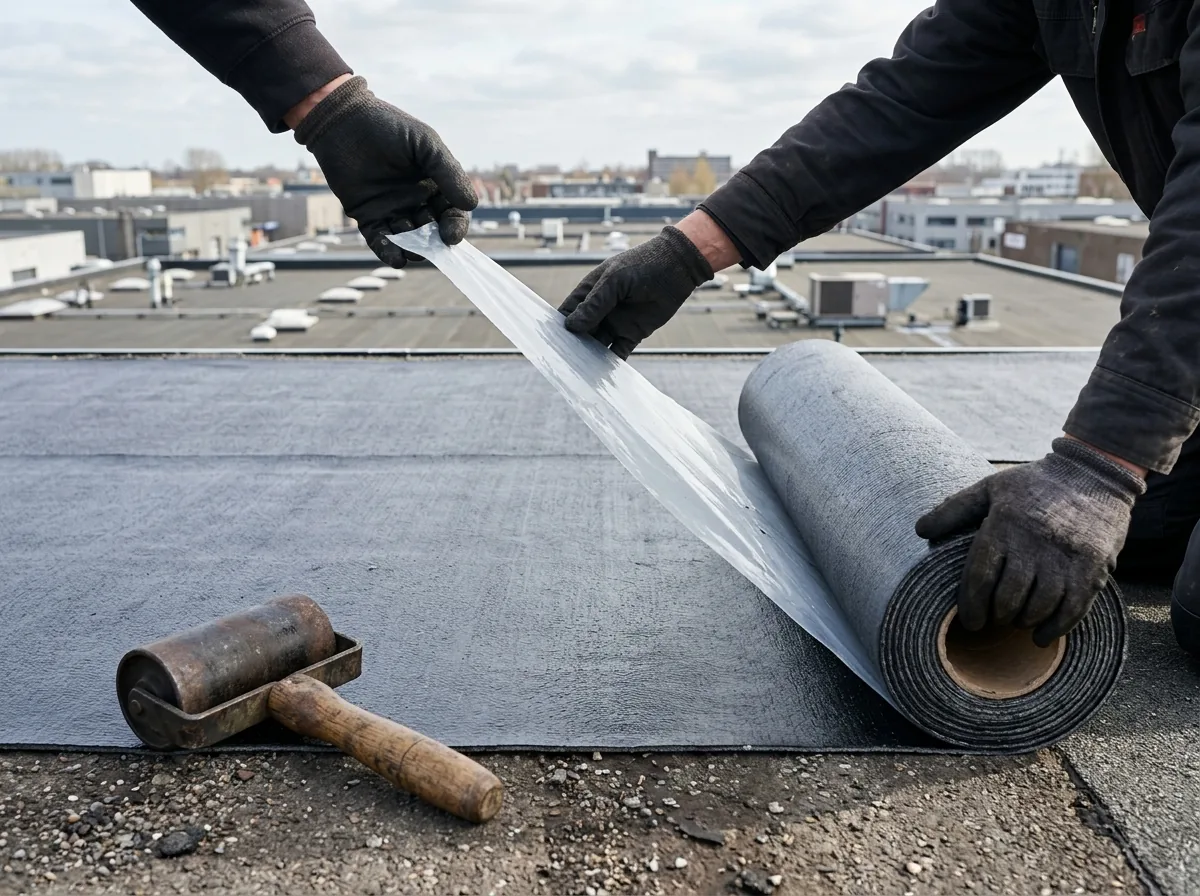
Cold-applied sheets are set in liquid cold adhesive. Self-adhered sheets arrive with a factory-applied adhesive layer on the underside, so the sheet bonds as it's rolled out. Neither needs a flame or a kettle. On a medical office, a school in session or a building with wood blocking at the edges, that's often the safer choice, at some cost in speed and cold-weather flexibility.
Why Troy building owners call Troy Commercial Roofing
- Free, no-obligation roof assessment and estimate
- Written scope and price before any work starts
- One local commercial roofing contractor per request, not a call list
- No charge to building owners for the referral
Modified Bitumen Plies, Cap Sheets and Reflectivity
Modified sheets come 36 to 39 inches wide and 120 to 170 mils thick. Commercial mod-bit goes down in two or more layers, a base and a cap at minimum, so if the cap sheet is cut, the base sheet underneath still sheds water. The code allows the base sheet to be another mod-bit sheet, an ASTM D1970 self-adhered underlayment or an ASTM D4601 glass-fiber base sheet.
Granules protect the cap sheet from sun, and the surface doesn't have to be dark. Cap sheets with factory-applied reflective coatings are sold for low-slope roofs. How those ratings work, and whether white pays off in Troy's climate, is covered on commercial roof coatings.
Mod-bit needs the same drainage slope as the other membranes; the rule and how tapered insulation meets it are on our roof insulation page.
Modified Bitumen Roof Repair
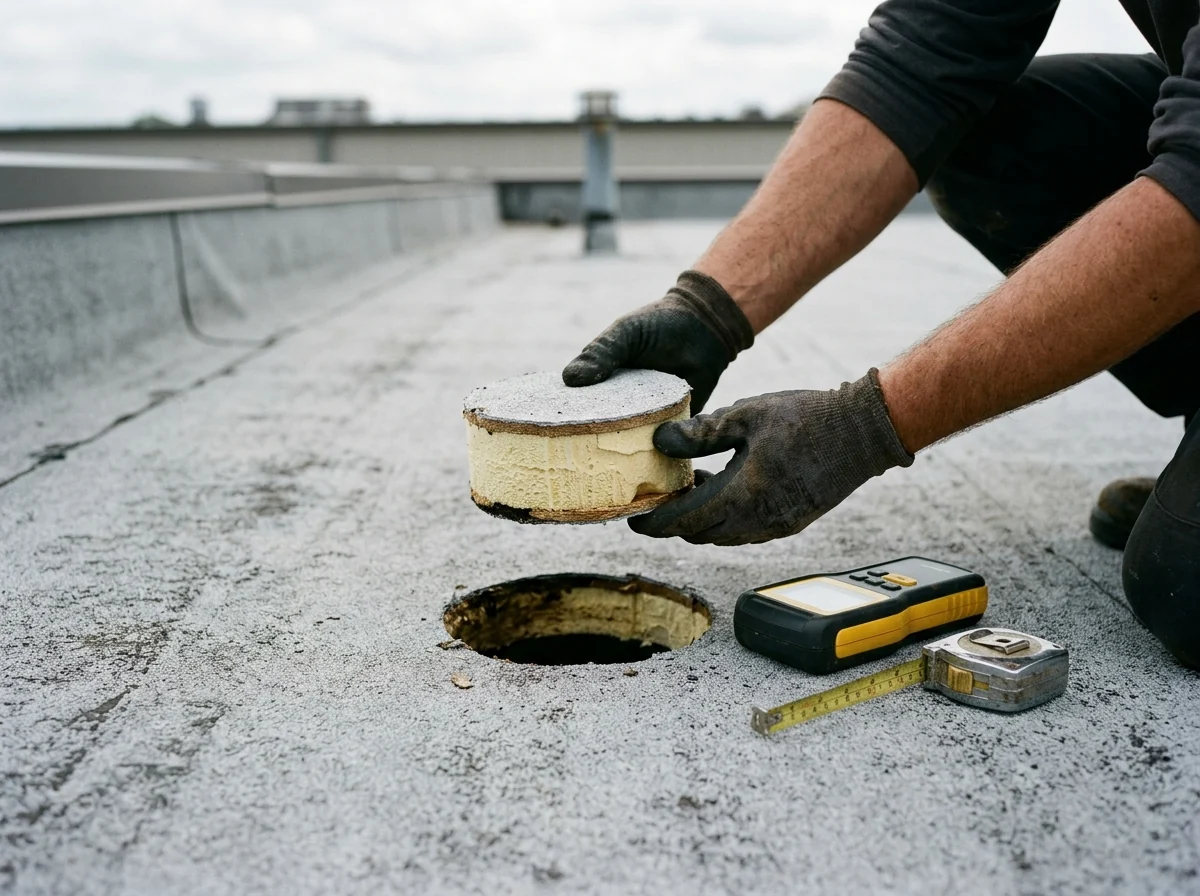
Older mod-bit roofs tend to fail in predictable places: cap sheet laps that open as the asphalt ages, bare spots where granules have washed off, blisters over trapped moisture, and base flashings that sag away from parapet walls. Most can be repaired with a matching cap sheet patch, torched or set in cold adhesive, after the area is cleaned and the blister or split is cut out.
Flashing failures at walls are a separate job; see roof flashing repair. And if wet insulation is suspected under a large area, a moisture survey comes before any repair quote (roof leak detection).
HomeGuide puts installed mod-bit at $4 to $7.50 per square foot, below its ranges for PVC and metal, with a published life of 10 to 20 years. Repair costs depend on access and area. If leftover rolls of your cap sheet are on site after a job, keep a few; matching the granule color on a later patch gets easier.
Questions to Ask on a Mod-Bit Bid
Which polymer and which standard?
SBS or APP, and the ASTM number of the cap and base sheets.Which method, and why?
Torch, hot mop, cold adhesive or self-adhered, and how that choice suits your building and the time of year.How many plies, and what base sheet?
Two layers is the usual minimum; a third adds cost and margin.Fire watch
For torch work, how long someone stays after the torches are off, and who carries the extinguishers.Recover or tear-off?
If the plan is to lay mod-bit over the old roof, check the recover limits on commercial roof replacement.Cap sheet color
Standard granules or a rated reflective cap sheet, priced both ways.
Tell us whether it's a leak, a worn-out roof or a planned replacement, and the request goes to one independent roofer who works on mod-bit. After the roof walk, ask for the method and price in writing.