
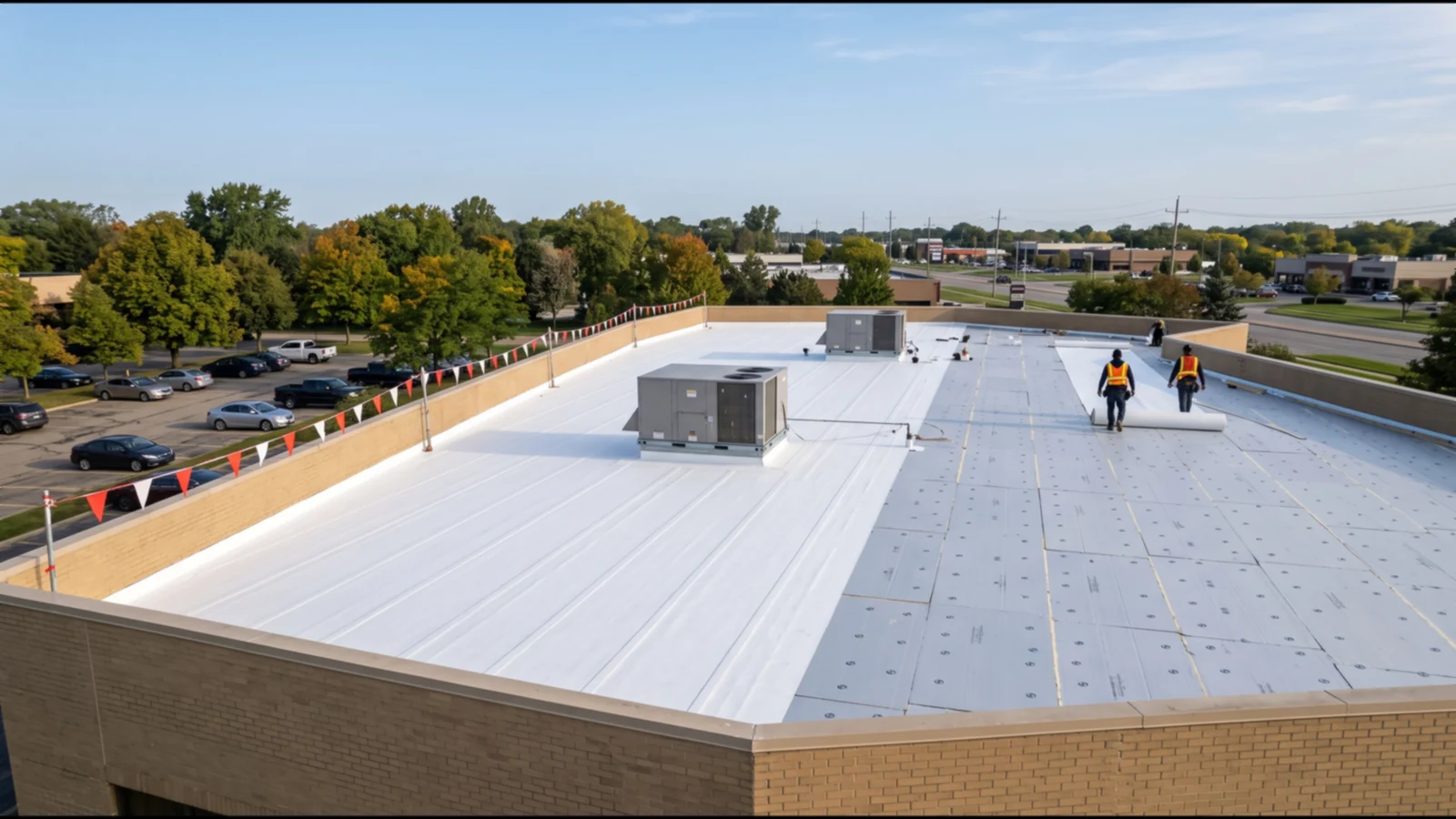
Storm Damage Roof Repair Types for Troy Buildings
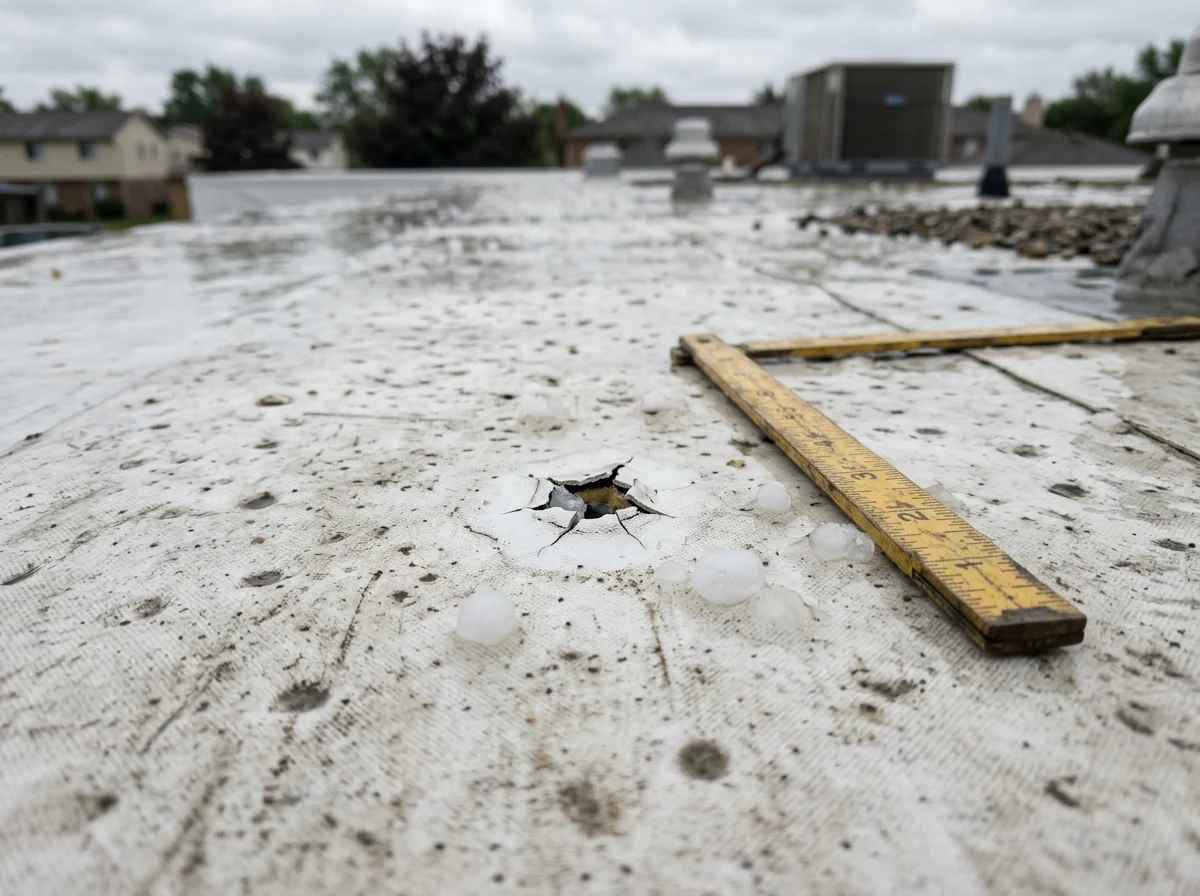
Hail Damage on Commercial Flat Roofs
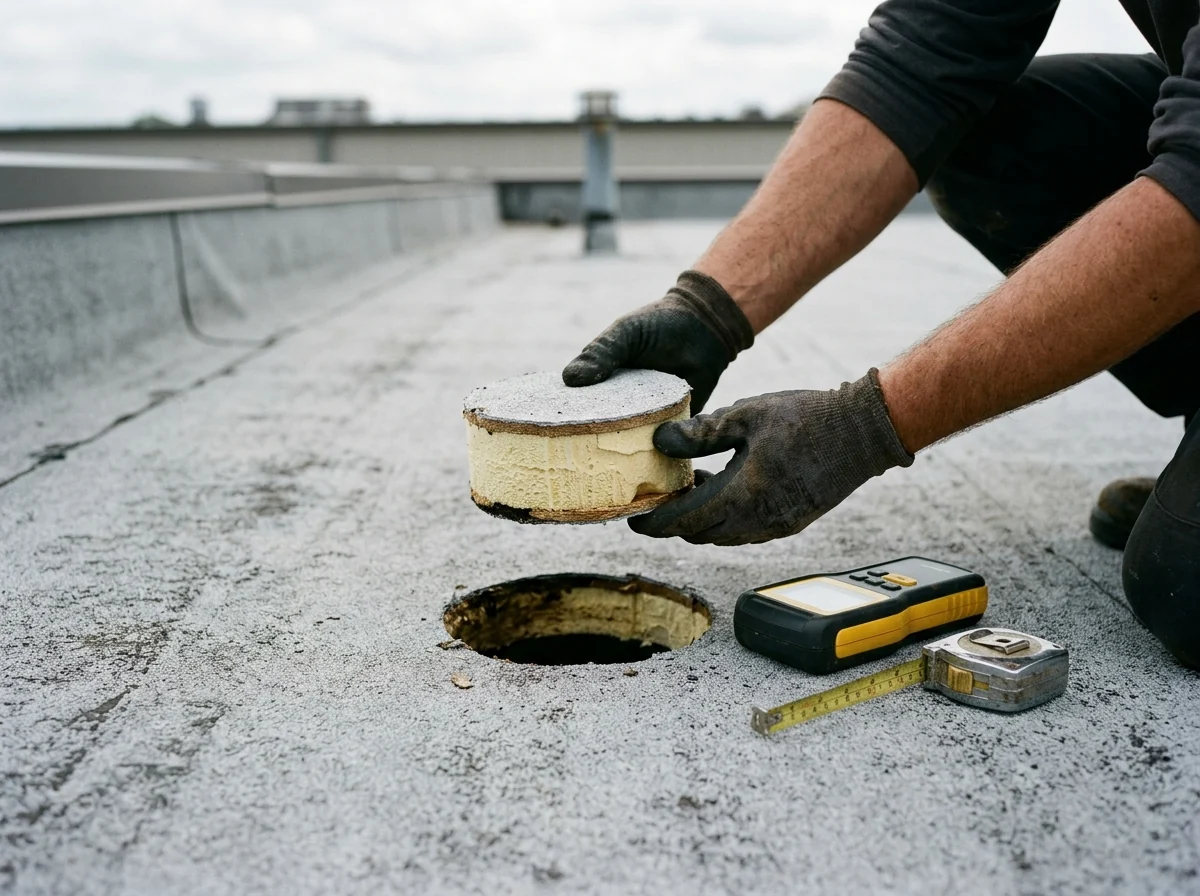
Hail damage on a membrane roof is easy to miss on a walk. Haag, an engineering firm that tests hail damage, says single-ply membranes can be fractured or torn by hailstones, but many resist even large hail while the membrane is fairly new and in good condition. A storm that leaves the sheet intact can still dent the insulation boards underneath. Haag's lab tests often show little or no change in R-value from those dents, though very large hail can crack the insulation.
Age decides a lot. FM Global's hail data sheet treats crazing (very fine surface cracks) or stretching at the edges and seams of a single-ply membrane as signs of embrittlement that leave it especially prone to hail damage. It says the same about alligatored built-up and modified bitumen surfaces. Metal roofs, it says, are rarely breached even by large hail unless they're badly corroded. Dents in metal are mostly a coverage question (see the insurance section below).
Test ratings help when you choose a new roof, not when you judge damage on the old one. FM Approvals classes a membrane roof system as moderate hail (MH) if it survives a 2-inch steel ball dropped 81 inches, about 8 foot-pounds, and severe hail (SH) at 141.5 inches, about 14 foot-pounds. NRCA's vice president of technical services warns against calling any rated system "hail-proof", because lab impacts don't match real hailstones on aged roofs. Ratings for one TPO line are on TPO roofing.
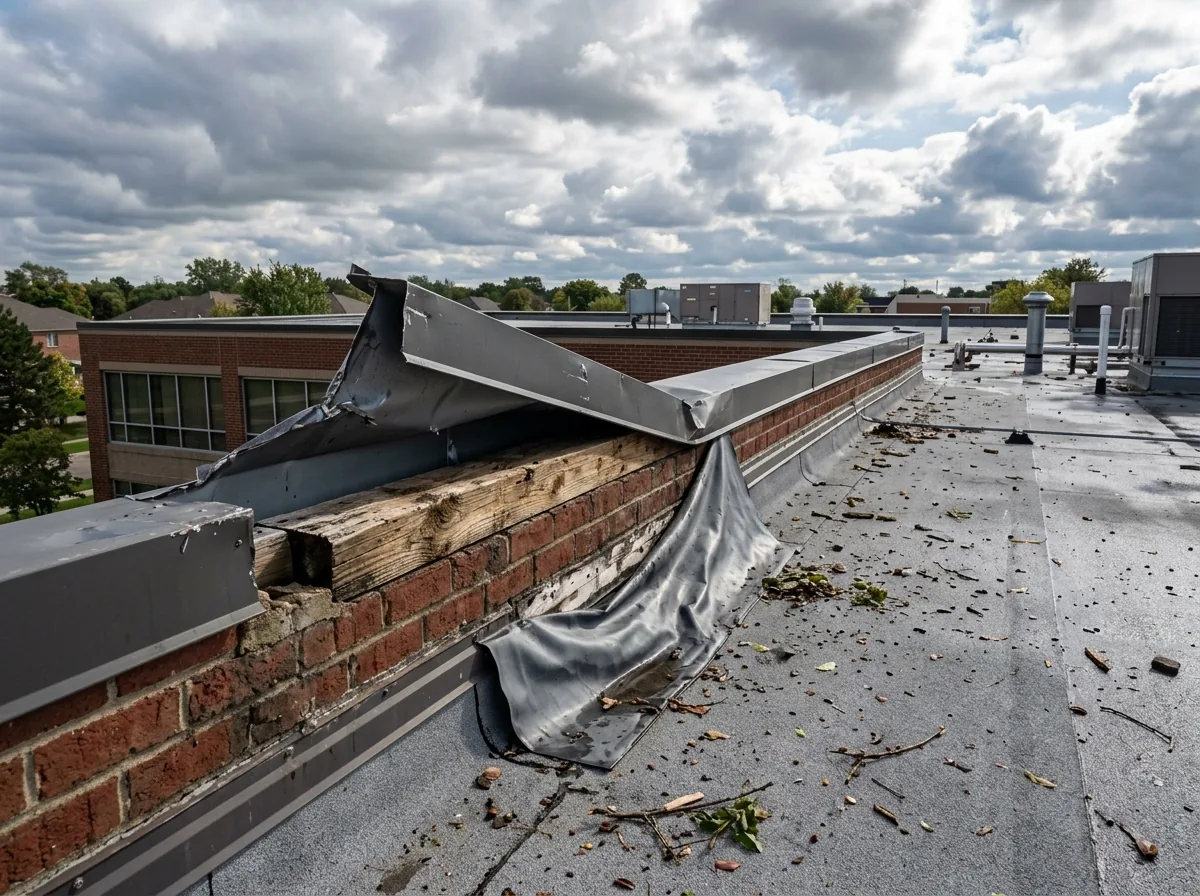
Wind Damage Roof Repair
Carlisle's owner's manual notes that wind damage often begins at the perimeter of the roof, and the building code puts its demands there too. Mechanically attached and adhered roof coverings have to resist the component and cladding wind pressures of IBC Section 1609.5.2, and metal edge systems on low-slope membrane roofs have to be tested to ANSI/SPRI ES-1. When a storm strips coping or edge metal, ask that the replacement be a tested edge system installed to its maker's detail, not a bent piece of flashing screwed back on.
On the roof, the damage looks like lifted or wrinkled membrane near edges and corners, fastener plates loose under the sheet, ballast stone blown off its pattern on a ballasted roof (those are designed to the SPRI RP-4 wind standard), and punctures from flying debris. FEMA adds that a gutter lifted by wind can pull the edge flashing up with it and start the membrane peeling. If the roof is open right now, start with emergency commercial roof repair.
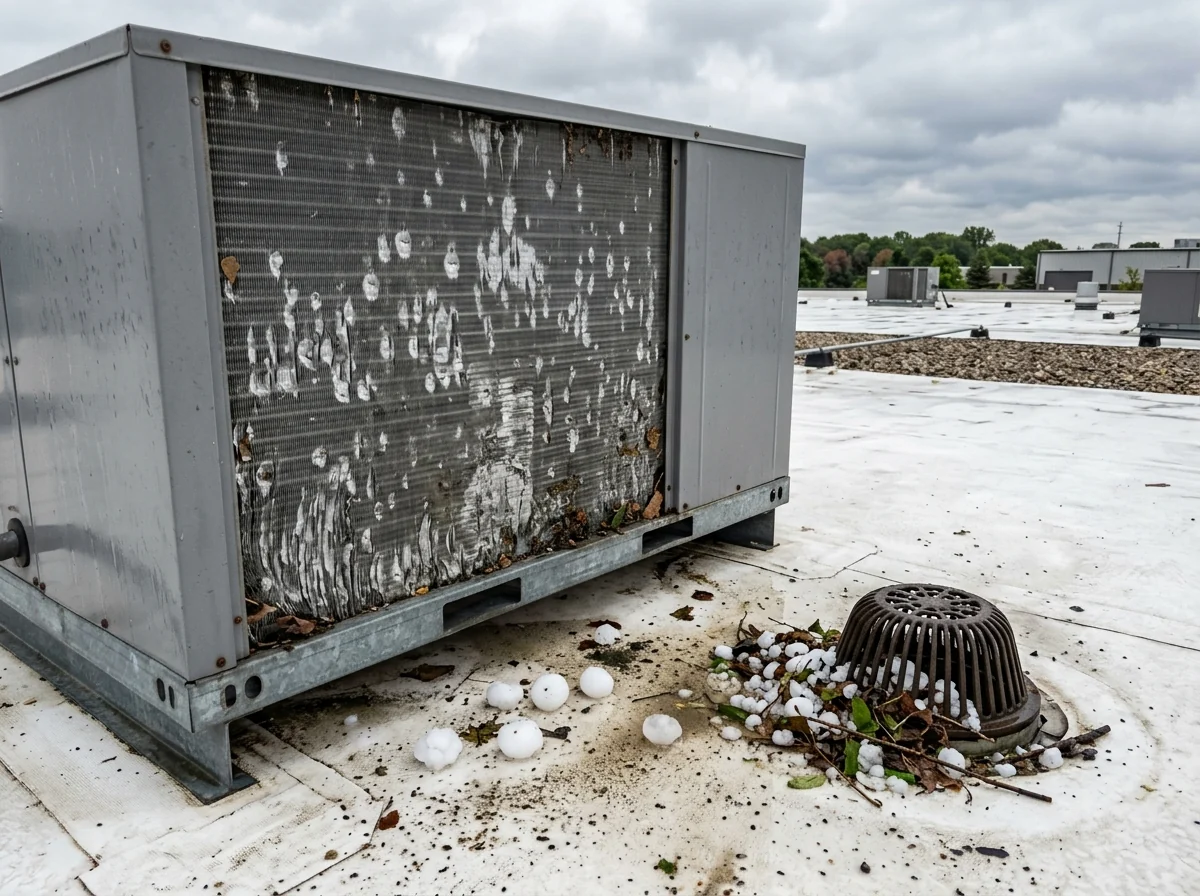
Rooftop Units, Skylights and Drains After a Storm
FM Global calls the cooling fins and condenser coils on rooftop HVAC units extremely susceptible to hail and says hail guards over the fins prevent most of it. It also notes that aged acrylic skylights and smoke vents crack or puncture easily, and that hail often blocks drains and gutters. Put units, skylights and drains on the same damage report as the roof, even if another trade fixes them. Skylights are covered on commercial skylights and drains on roof drain repair.
Why Troy building owners call Troy Commercial Roofing
- Free, no-obligation roof assessment and estimate
- Written scope and price before any work starts
- One local commercial roofing contractor per request, not a call list
- No charge to building owners for the referral
Storm Damage Thresholds and Troy-Area Storm Reports
The National Weather Service counts a thunderstorm as severe when it produces hail at least 1 inch across or winds of 58 mph or more. Either is reason enough to book a roof check, leak or no leak.
Storms that strong do reach Troy. A 58 mph gust was reported at Oakland/Troy Airport on August 27, 2024. One-inch hail was reported at 15 Mile and Telegraph on the June 16, 2026 report day and in Rochester Hills on May 19, 2024, and on April 29, 2025 there were multiple reports of a roof partly removed from a large building near Waterford. Our scan of Storm Prediction Center reports for April through September, 2021 to 2026, counted 71 hail, wind or tornado reports in Oakland County.
A 1-inch hailstone marks a severe storm, not a damaged roof; age and roof type decide the rest. Write down when the storm hit and match it to the SPC's public daily report before you file.
Storm Damage Insurance Claims for Commercial Roofs
The paperwork starts before the roofer arrives.
What a commercial property policy asks of you. The standard ISO Building and Personal Property Coverage Form (CP 00 10) asks the insured to describe how, when and where the damage happened as soon as possible, and to take all reasonable steps to protect the property from further damage while keeping a record of those costs. Where feasible, damaged property is set aside for the insurer to examine, and a signed, sworn proof of loss is due within 60 days after the insurer asks for it. Your own policy may word this differently, so read its "Duties in the event of loss" section.
What Michigan's regulator advises. The Department of Insurance and Financial Services (DIFS) tells owners to protect the property but hold permanent repairs until the insurer has inspected, to record the damage in photos or video, to keep receipts, and to keep damaged items until told otherwise. It warns that people pose as adjusters and contractors after storms, says to call the insurer before hiring anyone, and notes that insurers pay their own adjusters. The D.C. insurance regulator's claim sheet, which also addresses commercial building owners, adds: keep a diary of every conversation with the insurer, get more than one bid, and be wary of anyone demanding payment up front.
What the insurer owes in Michigan. Under MCL 500.2006, an insurer has to tell you in writing what counts as satisfactory proof of loss within 30 days of receiving the claim, unless it settles within that time. Benefits paid to the insured later than 60 days after satisfactory proof of loss carry 12% simple interest a year.
The roof endorsement to look for. Some commercial policies carry ISO endorsement CP 10 36, Limitations on Coverage for Roof Surfacing. One part values roof surfacing at actual cash value instead of replacement cost. The other excludes cosmetic wind or hail damage: marring or pitting that changes how the roof looks but doesn't stop it keeping out the elements. "Roof surfacing" in that form includes metal sheeting, the materials under the surface for moisture protection, and flashing. Dented metal panels that still shed water are the usual example. Check your declarations page before storm season.
Storm Damage Documentation Checklist
- the storm's date and time, and the SPC report that matches it;
- interior photos of leaks and stains, time-stamped, taken before cleanup;
- roof photos: wide shots for location, then close-ups with a scale reference for each hail mark, tear or loose edge;
- insulation samples or cores where hail may have crushed the boards, photographed as they come out;
- damaged rooftop units, skylights and drains, listed separately;
- a written scope that separates storm damage from existing wear, with quantities and a price;
- receipts for emergency work and materials.
Ask the roofer for that report. A good one will number every item on a roof plan and say which findings are storm damage and which are age.
Storm Damage Roof Repair or Replacement
Scattered fractures and a few loose edges are repairs. When deficiencies cover a large area, FM Global recommends a registered roof consultant, since the cover may need replacing, more likely as the roof nears the end of its warranty or expected life. The same data sheet says to consult the membrane manufacturer before repairs, because a re-inspection may be needed to keep warranty coverage. Some manufacturer warranties offer hail cover as an option; Elevate's 30-year Platinum term, for one, offers puncture and hail coverage for 2-inch hail. Read the warranty's hail and wind terms before you file.
If the claim pays for a new roof, the rules on recovering versus tearing off and Troy's permit still apply. Both are on commercial roof replacement.
Send the form or call with the storm date and what you've seen on the roof or inside, and we'll put you in touch with one independent local roofer. The introduction is free.